1900s (20th Century) Maps of Anderson County, Texas
Explore 57 historic maps of Anderson County from the 1900s (20th Century). These maps offer a rare glimpse into what life looked like during the 1900s — showing old roads, neighborhoods, homes, and landmarks that have changed or disappeared over time.
Whether you're researching your family's past, planning a metal detecting trip, or studying how Anderson County's landscape evolved across the 1900s, these high-resolution maps are a powerful tool for exploring the history of this region.
- Focus on a specific era: All maps on this page are from the 1900s, giving you a focused view of this time period.
- See what’s changed: Compare century-old streets, trails, and buildings to today's modern landscape using overlays and satellite layers.
- Research with precision: Use these maps for genealogy, historical research, land use analysis, or educational projects.
- View, download, or print: Maps are fully viewable online in high resolution, and can be downloaded or printed for your own records.
Start exploring Anderson County's history through authentic maps from the 1900s. This is your window into the past.
Anderson County, TX maps
(57)- 1946 Map of Bullard, 1960 Print
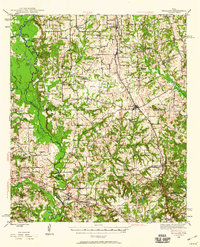 1946 Bullard1960 Print · USGSEast Texas rail and river life converge in the 1940s as the St Louis Southwestern tracks link rural farming hubs. Trace local family history through numerous landmarks like Larissa Cem, the Kickapoo Monument, and Mount Selman.2 unique versions available
 - 1948 Map of Bullard
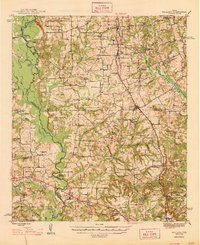 1948 Bullard1948 Print · USGSNortheastern Cherokee and southern Smith counties are captured here in the late forties, showcasing a network of rural schools and rail-fed towns. Genealogists can trace family sites at Larissa Cem, Mount Comfort Ch, and the high ground of Kickapoo Mtn.
 - 1949 Map of Palestine, 1962 Print
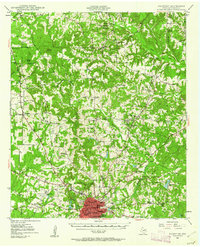 1949 Palestine1962 Print · USGSPalestine and its rural Anderson County surrounds come alive in the late 1940s, highlighting the convergence of the Missouri Pacific railroad and a growing aviation footprint. Genealogists can trace family roots through numerous country landmarks like Broyles Chapel, Hopewell Cem, and Union Academy.3 unique versions available
 - 1949 Map of Frankston, 1964 Print
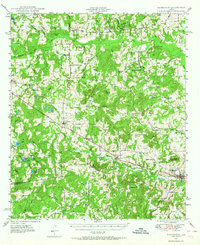 1949 Frankston1964 Print · USGSEast Texas ranching and timber country at the end of the 1940s was defined by the Southern Pacific rail line and small rural school districts. Researchers can find many family landmarks, from Moores Station and Fincastle to the Lapoynor Sch and Alligator Cem.3 unique versions available
 - 1949 Map of Athens, 1966 Print
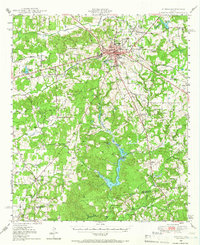 1949 Athens1966 Print · USGSMid-century Henderson County is captured here at a moment when rural life centered on local institutions like Gum Creek Sch and Shelby Chapel. You can trace the path of the Southern Pacific through Athens and locate old family landmarks like Richardson Cem and Beck Chapel.3 unique versions available
 - 1949 Map of Tennessee Colony, 1967 Print
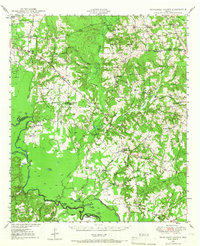 1949 Tennessee Colony1967 Print · USGSAnderson County in the late 1940s shows a landscape of river-bottom lakes and rural communities at the height of the oil boom. Genealogists can locate family landmarks like Judson Cem, Gosman Sch, and the Blackfoot Oil Field.2 unique versions available
 - 1950 Map of Athens
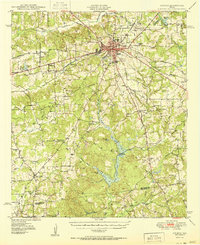 1950 Athens1950 Print · USGSHenderson County center at mid-century, where the rail lines of the St Louis Southwestern and Southern Pacific cross. Genealogists can locate family landmarks like Metzkoff Cem, the Junior College, and Shelby Chapel.
 - 1950 Map of Palestine
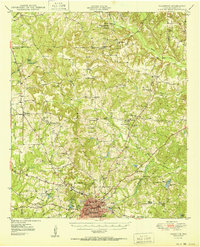 1950 Palestine1950 Print · USGSEast Texas at mid-century was a landscape of rural schools and rail-dependent towns like Montalba and Elmtown. Genealogists and historians can trace family roots through numerous sites like Cuney Academy, Broyles Chapel, and Hopewell Cem.2 unique versions available
 - 1950 Map of Frankston
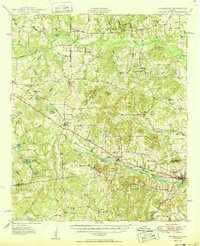 1950 Frankston1950 Print · USGSThe Southern Pacific corridor between Henderson and Anderson Counties comes alive in this mid-century survey. Genealogists and historians can trace family roots at New York and Fincastle, or locate rural landmarks like Central High Sch and Rounsavall Cem.
 - 1950 Map of Tennessee Colony
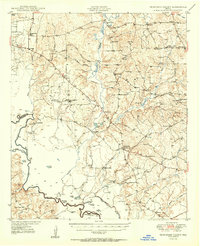 1950 Tennessee Colony1950 Print · USGSMid-century Anderson County is captured here just as the oil industry began to shape the Trinity River basin. Trace old family sites and community roots through landmarks like Tennessee Colony, the historic Tyler Ferry crossing, and rural centers like New Bethel Ch.2 unique versions available
 - 1951 Map of Elkhart, 1952 Print
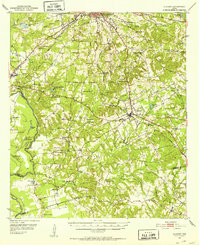 1951 Elkhart1952 Print · USGSEast Texas ranching and oil communities thrive along the river bottoms in the early fifties. Genealogists can trace family roots through numerous rural landmarks like Fort Houston Cem, Myrtle Springs Sch, and Old Salt Works Lake.2 unique versions available
 - 1951 Map of Jacksonville, 1952 Print
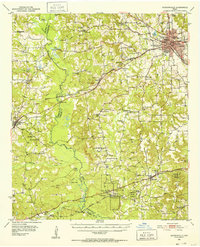 1951 Jacksonville1952 Print · USGSCherokee County thrived as a railroad and collegiate center at the midpoint of the century. Genealogists and historians can trace family roots through numerous rural landmarks like West Shady Grove Cem, Mewshaw, and the Maydelle community.2 unique versions available
 - 1952 Map of Slocum, 1953 Print
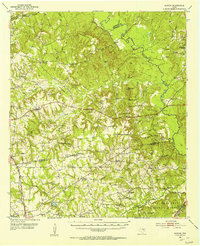 1952 Slocum1953 Print · USGSEast Texas timber and creek country comes alive in the early fifties, showing the rural landscapes of Anderson and Houston counties. Genealogists can locate family sites and pioneer burials at Union Hope Sch & Cem, Livelyville Ch (Cem), and Mound City.2 unique versions available
 - 1953 Map of Palestine, 1964 Print
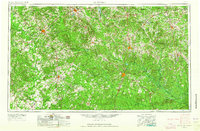 1953 Palestine1964 Print · USGSEast Texas was defined by its deep pine forests and burgeoning energy sector in the mid-1950s. Genealogists and historians can trace the rail-and-river economy through settlements like Tennessee Colony and Pollok or explore the early footprints of the Cayuga Oil Field and Davy Crockett National Forest.2 unique versions available
 - 1954 Map of Dallas, 1963 Print
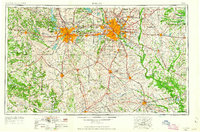 1954 Dallas1963 Print · USGSNorth Texas in the mid-fifties and early sixties reveals a landscape of rapid urban growth and water management. Genealogists and historians can trace the evolution of the metroplex through landmarks like Hensley Field, Boles Orphan Home, and the Texas & Pacific RR.4 unique versions available
 - 1954 Map of Waco, 1964 Print
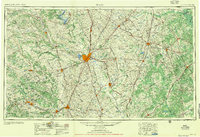 1954 Waco1964 Print · USGSCentral Texas during the mid-fifties shows a landscape defined by the expansion of Fort Hood Military Reservation and the Brazos river system. Trace the rail lines and early airfields like James Connally Air Force Base and settlements like Temple or McGregor.2 unique versions available
 - 1955 Map of Waco
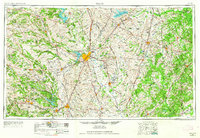 1955 Waco1955 Print · USGSCentral Texas at the peak of the Cold War reveals a landscape defined by military expansion and major water projects. Researchers can trace the footprints of Fort Hood, the waters of Lake Waco, and regional hubs like Temple or Mexia.
 - 1956 Map of Tyler
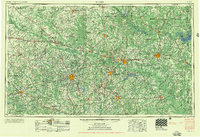 1956 Tyler1956 Print · USGSEast Texas was a powerhouse of oil production and rail transport during the mid-fifties, centered on the sprawling East Texas Oil Field. Researchers can trace the heritage of industrial hubs like Kilgore, military sites such as the Longhorn Ordnance Works, and many rural landmarks like Mount Enterprise.5 unique versions available
 - 1957 Map of Palestine
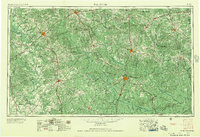 1957 Palestine1957 Print · USGSEast Texas in the mid-fifties reveals a landscape of deep pine forests and winding river valleys before the era of massive reservoir construction. Researchers can trace the legacy of the timber and rail industries through labels for the Missouri Pacific RR, Davy Crockett National Forest, and Nacogdoches.
 - 1958 Map of Dallas
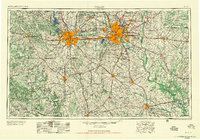 1958 Dallas1958 Print · USGSNorth Texas in the late fifties shows the dramatic expansion of the Metroplex as it absorbs surrounding farm towns. Genealogists and historians can trace old rail lines like the Missouri-Kansas-Texas and locate early lakefront developments at Eagle Mountain Lake and Lake Worth Village.
 - 1960 Map of Creslenn Ranch, 1961 Print
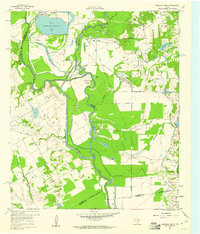 1960 Creslenn Ranch1961 Print · USGSThe Trinity River bottoms and the Cayuga oil country are captured here at the start of the 1960s. Genealogists and local historians can trace the Princeton Cem, the remote Creslenn Ranch, and landmarks like Hall Lake and Trinidad.3 unique versions available
 - 1960 Map of Roustabout Camp, 1961 Print
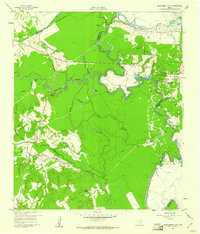 1960 Roustabout Camp1961 Print · USGSThe Trinity River bottoms at the Freestone and Anderson county line show a busy mid-century landscape of energy production and river-fed agriculture. Genealogists and historians can trace industrial camps like Roustabout Camp and Amerada Camp or local landmarks such as Harp Ch.4 unique versions available
 - 1961 Map of Young, 1962 Print
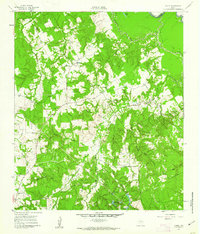 1961 Young1962 Print · USGSFreestone County's rural landscape is captured here in the early sixties, showing the intersection of local agriculture and the petroleum industry. Researchers can find generational landmarks like Rehoboth Cem, Hodge Lodge, and the Stewards Mill Oil Field.3 unique versions available
 - 1964 Map of Long Lake, 1967 Print
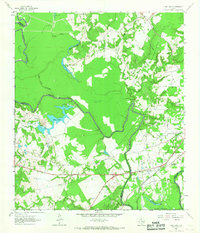 1964 Long Lake1967 Print · USGSAnderson County during the mid-1960s was a landscape defined by the winding Trinity River and a burgeoning energy sector. Genealogists and local historians can pinpoint Mt Pilgrim Ch, the Green Bay High Sch, and the rail infrastructure of the Missouri Pacific.3 unique versions available
 - 1964 Map of Oakwood, 1967 Print
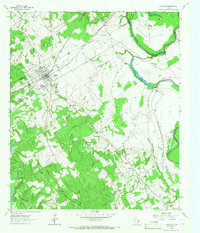 1964 Oakwood1967 Print · USGSOakwood and the rural fringes of Leon County are captured here in the mid-1960s, centered on the Missouri Pacific rail corridor. Researchers can trace family roots through landmarks like Dunbar High Sch, Mount Pisgah Cem, and the Sand Flats settlement.
Showing maps 1-25 of 57
Top cities of Anderson County
Frequently asked questions
- What are the different types of historical maps available for Anderson County?
- What is the oldest map of Anderson County?
- Where can I purchase historical maps of Anderson County for my home or office?
- Where can I download high-res historical maps of Anderson County?
- Are there historical topographic maps available for Anderson County?
- Is there historical aerial imagery available for Anderson County?
- Where are historical maps of Anderson County sourced from?