Old Maps of Brazos County, Texas for Genealogy
Trace your family roots with 125 historic maps of Brazos County. These high-res maps reveal old neighborhoods, homesites, landmarks, and streets — helping you uncover where your ancestors lived and how the area evolved over time.
- Explore historic neighborhoods: Identify where your relatives may have lived in the 1800s or 1900s.
- Compare maps over time: Trace the changes in streets, buildings, and landmarks for multi-generational research.
- Perfect for genealogy & ancestry research: Used by family historians and researchers to map out lineage and migration.
These maps are an incredible resource for exploring your personal connection to Brazos County's past.
Brazos County, TX maps
(125)- 1913 Map of Millican
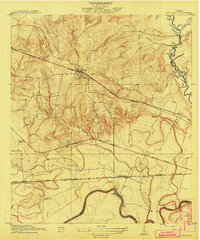 1913 Millican1913 Print · USGSBrazos County at the beginning of the twentieth century was a critical rail junction defined by large-scale valley farming and the winding river border. Researchers can trace historic riverfront operations and rail stops including Millican, Hidalgo Falls, and the Steele Farm.3 unique versions available
 - 1914 Map of Gay Hill
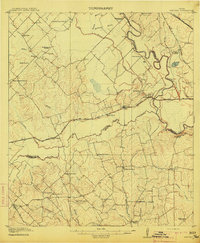 1914 Gay Hill1914 Print · USGSThe Brazos River valley in the early twentieth century shows a thriving rail-and-farm economy across three counties. Genealogists can trace family landmarks and rural school sites like Wiedes Store, Old Gay Hill, and the Allseeing Eye School.2 unique versions available
 - 1914 Map of Navasota
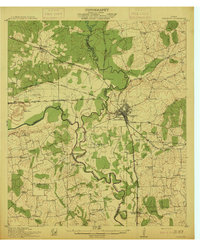 1914 Navasota1914 Print · USGSBefore the modernization of the Brazos valley, this 1910s era survey captures the thriving rail-and-river economy of Grimes and Washington counties. Genealogists can trace early homesteads and community hubs like Wilsons Gin, Prairie Church, and Grange Hall School.2 unique versions available
 - 1925 Map of Iola No 2
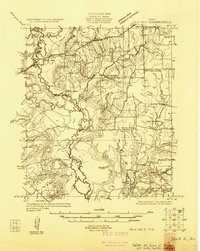 1925 Iola No 21925 Print · USGSThe Navasota River bottomlands at the Madison and Leon county line appear here in the mid-1920s as a landscape of winding oxbows and rural farmsteads. Researchers can locate family landmarks such as Keefer Cemetery, Burns Store, and the Morning Star School site.
 - 1931 Map of Iola
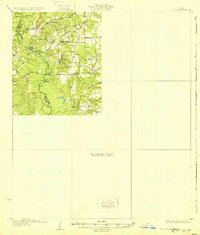 1931 Iola1931 Print · USGSThe Navasota River basin in the mid-1920s shows a landscape of river-bottom lakes and rural outposts. Genealogists can locate family landmarks like Keefer Cem and Nash Cem or the local hub at Burns Store.2 unique versions available
 - 1954 Map of Austin, 1964 Print
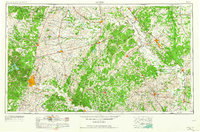 1954 Austin1964 Print · USGSCentral Texas is captured during a period of steady growth as the capital city and its neighboring farm towns began to modernize. Researchers can trace historic rail corridors like the Southern Pacific RR or locate landmarks such as Bergstrom Air Force Base and Pilot Knob.4 unique versions available
 - 1956 Map of Bryan
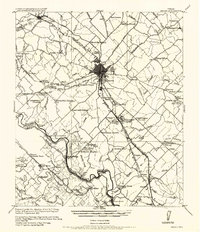 1956 Bryan1956 Print · USGSBrazos County is shown in the era of early college expansion and steam rail, centered on the growing campus of Texas A&M College. Genealogists and historians can trace defunct post offices and rural school sites like Benchley P.O., Woodville School, and the settlement of Boonville.
 - 1956 Map of Caldwell
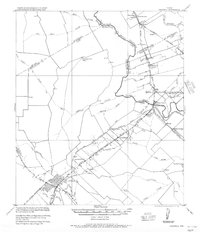 1956 Caldwell1956 Print · USGSThe Brazos Valley at the end of the Great War era shows a landscape defined by cotton gins and river crossings. Trace family roots and vanished landmarks like Moseley's Ferry, Stone City, and the Skrabonek Gin near Caldwell.
 - 1956 Map of Carlos
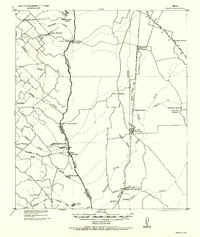 1956 Carlos1956 Print · USGSGrimes and Brazos counties appear here in a transition from military to civil use, mapping the rural landscape along the Navasota River. Genealogists and historians can trace early schoolhouses like Independence S.H. and vanished rail sidings such as Grimes Switch.
 - 1958 Map of Washington, 1960 Print
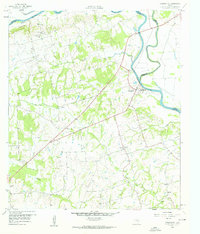 1958 Washington1960 Print · USGSThe confluence of the Brazos and Navasota rivers defines this part of Texas in the late fifties. Genealogists and historians can locate old rural landmarks like Tennyson Cem, St Matthew Sch, and the riverside settlement of Washington.3 unique versions available
 - 1958 Map of Navasota, 1960 Print
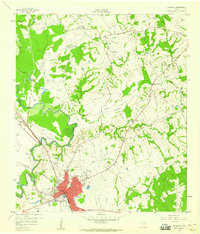 1958 Navasota1960 Print · USGSNavasota thrived as a vital rail junction and river town in the late fifties, serving as a crossroads for several major Texas railroad lines. Genealogists can trace family landmarks and burial sites including Oakland Cemetery, Erwin Cem, and the Salem Missionary Ch.3 unique versions available
 - 1959 Map of Millican, 1960 Print
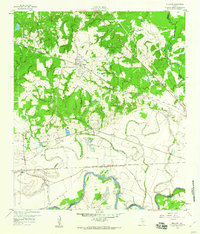 1959 Millican1960 Print · USGSThe Brazos Valley in the late fifties was a crossroads of major rail lines and river commerce. Genealogists and historians can trace the development of rail-side settlements like Millican and Allenfarm, or locate rural landmarks such as Brooks Chapel and Hidalgo Falls.4 unique versions available
 - 1959 Map of Clay, 1960 Print
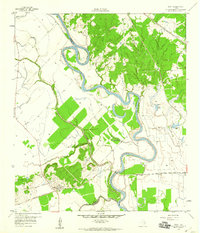 1959 Clay1960 Print · USGSNear the convergence of the Brazos and Yegua, this late-fifties survey reveals a landscape of winding river bends and vital rail junctions. Historians can trace the legacy of local settlements through Betts Ferry Cem, the rail lines of the Missouri Pacific, and the namesake Clay Pit.3 unique versions available
 - 1959 Map of Clear Lake, 1960 Print
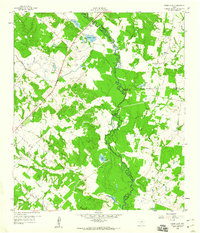 1959 Clear Lake1960 Print · USGSThe Navasota River bottomlands are captured here in the late fifties at the meeting of Brazos, Madison, and Grimes Counties. Researchers can trace rural landmarks like Williamson Cem, find old river transits at Democrat Crossing, or locate Brushy Lake.3 unique versions available
 - 1959 Map of Reliance, 1960 Print
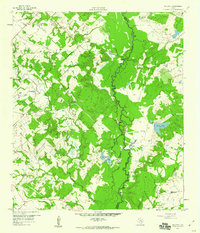 1959 Reliance1960 Print · USGSBrazos and Grimes counties meet along the winding river bottomlands in the late fifties. Genealogists and local historians can trace the rural communities of Reliance and Harvey or locate the Stick Cem and Martin Prairie Ch.4 unique versions available
 - 1959 Map of Ferguson Crossing, 1960 Print
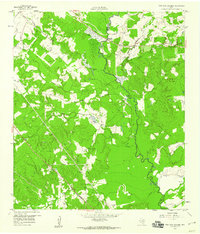 1959 Ferguson Crossing1960 Print · USGSThe Brazos and Grimes county line along the Navasota River comes into focus in the late fifties, showcasing a rural Texas landscape of river bottoms and family landmarks. Genealogists and researchers can locate the Peach Creek Cem, the Rodeo Ground, and the historic namesake of Ferguson Crossing.3 unique versions available
 - 1959 Map of Independence, 1960 Print
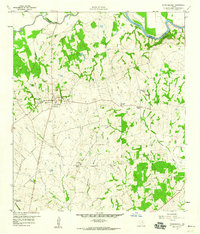 1959 Independence1960 Print · USGSTexas history remains etched into the landscape around Independence in the late fifties, from the original Baylor University State Park to the Gov Sam Houston Home. Trace family roots through rural landmarks like Sandy Hill, Union Hill Ch, and the Summers Cem.3 unique versions available
 - 1961 Map of Mumford, 1964 Print
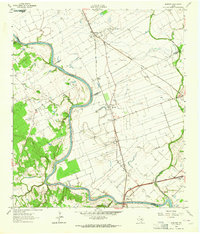 1961 Mumford1964 Print · USGSThe Brazos River valley in the early sixties is a landscape of rural junctions and historic outposts at the meeting point of four counties. Researchers can locate the Fort Tenoxtitlan (Site), the rail sidings at Mudville, and local landmarks like Smith Sch.3 unique versions available
 - 1961 Map of Wellborn, 1965 Print
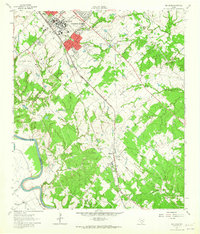 1961 Wellborn1965 Print · USGSBrazos County during the early 1960s showcases the growing footprint of Texas A & M University alongside traditional rail-side settlements. Genealogists and historians can trace rural life through landmarks like Salem Ch, the College Station Cem, and old stops along the Missouri Pacific railroad.4 unique versions available
 - 1962 Map of Edge, 1964 Print
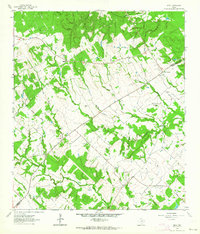 1962 Edge1964 Print · USGSRobertson and Brazos counties in the early sixties remain a landscape of small rural settlements and family cemeteries. Genealogy researchers can trace local roots at Edge, Shiloh Ch, and the historic Kings Highway that cuts through the region.2 unique versions available
 - 1962 Map of Wheelock, 1964 Print
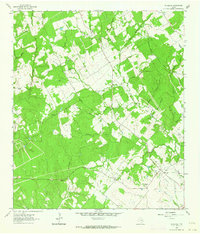 1962 Wheelock1964 Print · USGSIn the early 1960s, the Robertson and Brazos county line was a landscape of rural schoolhouse-era churches and family cemeteries. Researchers can find ancestral sites at Wheelock Cem, Cavit Cem, and the historic Henry Prairie Ch.3 unique versions available
 - 1962 Map of Tunis, 1964 Print
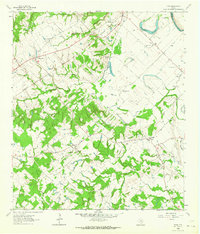 1962 Tunis1964 Print · USGSBurleson County in the early sixties reveals a landscape of river-bottom farms and small rail-stop communities. Genealogists and historians can trace family roots through sites like Salem Cem, the New Jerusalem Ch, and the settlement of Cooks Point.2 unique versions available
 - 1962 Map of Chances Store, 1964 Print
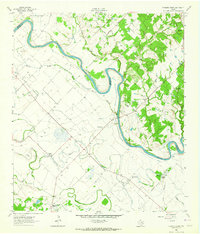 1962 Chances Store1964 Print · USGSBrazos and Burleson counties are shown here in the early sixties as the Brazos River meanders through a landscape of rural stores and family farms. Researchers can locate the Newsome Cemetery, Jones High School, and community landmarks like Chances Store and Grant.5 unique versions available
 - 1962 Map of Bryan East, 1964 Print
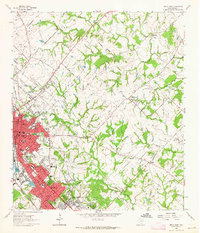 1962 Bryan East1964 Print · USGSThe Bryan and College Station area is captured during a period of significant mid-century growth. Genealogists and local historians can trace family-named landmarks such as Kizer Cem, explore the rural settlement at Boonville, and locate early schools like Fannin Sch.5 unique versions available
 - 1962 Map of Bryan West, 1965 Print
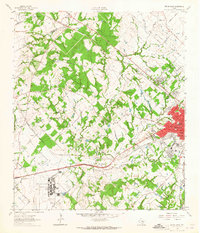 1962 Bryan West1965 Print · USGSBrazos County in the early sixties shows the westward expansion of Bryan toward the Little Brazos River. Trace family roots at Rest-Ever Memorial Cem or explore the rail-side life in Smetana and Benchley.4 unique versions available
Showing maps 1-25 of 125
Top cities of Brazos County
- College Station historical maps
- Bryan historical maps
- Millican historical maps
- Kurten historical maps
- Wixon Valley historical maps
Frequently asked questions
- What are the different types of historical maps available for Brazos County?
- What is the oldest map of Brazos County?
- Where can I purchase historical maps of Brazos County for my home or office?
- Where can I download high-res historical maps of Brazos County?
- Are there historical topographic maps available for Brazos County?
- Is there historical aerial imagery available for Brazos County?
- Where are historical maps of Brazos County sourced from?