1930s Maps of Cameron County, Texas
Explore 31 historic maps of Cameron County from the 1930s. These maps offer a rare glimpse into what life looked like during the 1930s — showing old roads, neighborhoods, homes, and landmarks that have changed or disappeared over time.
Whether you're researching your family's past, planning a metal detecting trip, or studying how Cameron County's landscape evolved across the 1930s, these high-resolution maps are a powerful tool for exploring the history of this region.
- Focus on a specific era: All maps on this page are from the 1930s, giving you a focused view of this time period.
- See what’s changed: Compare century-old streets, trails, and buildings to today's modern landscape using overlays and satellite layers.
- Research with precision: Use these maps for genealogy, historical research, land use analysis, or educational projects.
- View, download, or print: Maps are fully viewable online in high resolution, and can be downloaded or printed for your own records.
Start exploring Cameron County's history through authentic maps from the 1930s. This is your window into the past.
Cameron County, TX maps
(31)- 1930 Map of Padre Island No. 1
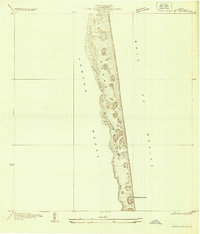 1930 Padre Island No. 11930 Print · USGSThe South Texas coast in 1930 appears as a quiet landscape of shifting sands and tidal reaches. Researchers can trace the early topography of Padre Island, the vast Laguna Madre shoreline, and the curious site of an (Abandoned Hotel).
 - 1930 Map of Los Fresnos
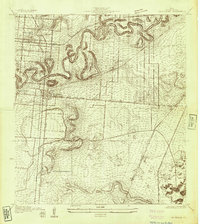 1930 Los Fresnos1930 Print · USGSCameron County's agricultural and rail landscape is captured here in the early thirties. Genealogists can trace early homesteads near Los Fresnos or locate landmarks like the Palo Alto Battlefield Monument and White House Sch.
 - 1930 Map of West Brownsville
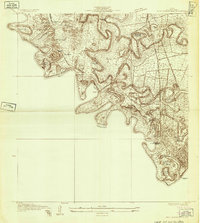 1930 West Brownsville1930 Print · USGSThe Texas-Mexico border landscape is captured here in the early twentieth century as the river winds through Cameron County. Genealogists and historians can trace family-named lands like Carmen Ranch and landmarks such as Barreda Sch and the International Bridge.
 - 1930 Map of Barreda
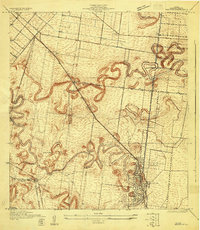 1930 Barreda1930 Print · USGSCoastal South Texas is seen here during the irrigation boom of the early thirties, showing the intricate oxbows and ranch lands. Researchers can trace the St Louis Brownsville and Mexico Railway past Barreda and the Old Military Road.
 - 1930 Map of La Leona
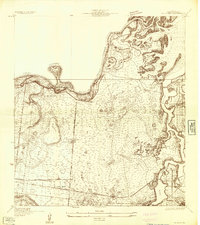 1930 La Leona1930 Print · USGSCoastal Texas ranching and tidal waterways are frozen in time during this pre-war survey of the Rio Grande Valley. Genealogists and historians can trace the footprint of early holdings like La Leona Ranch and Los Coyotes Ranch along the Arroyo Colorado.
 - 1930 Map of Padre Island No. 2
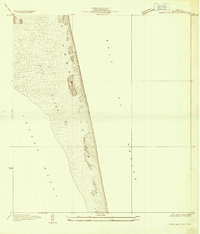 1930 Padre Island No. 21930 Print · USGSThe Texas coast near Cameron County appears in its raw state in the early thirties, before major coastal development reached these shores. Researchers can study the primitive shoreline of Padre Island and the expansive Mud Flats bordering the Laguna Madre.
 - 1930 Map of Laguna Atascosa
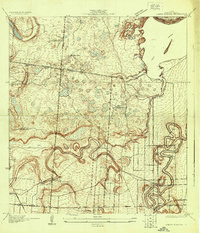 1930 Laguna Atascosa1930 Print · USGSDeep in South Texas in the early thirties, this survey reveals a landscape of working cattle ranches and coastal lagoons. Genealogists and historians can trace family holdings like El Alazan Ranch and San Pedro Ranch or locate the old San Jose settlement.
 - 1930 Map of East Brownsville
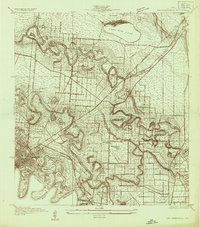 1930 East Brownsville1930 Print · USGSBrownsville and the Rio Grande borderlands are captured here just as early flight and rail were transforming the South Texas landscape. Researchers can locate Fort Brown, trace the winding Resaca de la Palma, and find old rural schools like Jardin Sch.
 - 1932 Map of Combes
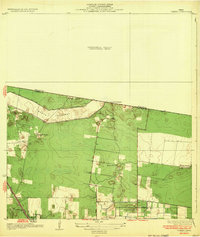 1932 Combes1932 Print · USGSThe lower Rio Grande Valley comes into focus in the early 1930s, showing a landscape of family ranches and new flood control infrastructure. Genealogists and historians can trace the Missouri Pacific No 96 rail line through Combes and find rural landmarks like Briggs Coleman Sch and La India Ranch.2 unique versions available
 - 1932 Map of Rio Hondo
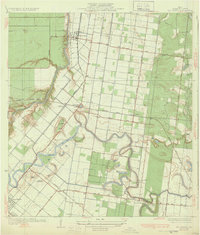 1932 Rio Hondo1932 Print · USGSCoastal Texas ranching and rail commerce meet in the early 1930s as irrigation begins to reshape the landscape around Rio Hondo. Genealogists and historians can trace family-named landmarks and rural hubs like Las Yescas Ranch, Lozano, and the Mexican Christian Ch.3 unique versions available
 - 1932 Map of Harlingen
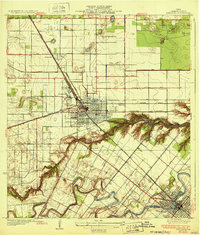 1932 Harlingen1932 Print · USGSThe Rio Grande Valley comes into focus as a bustling agricultural and rail hub in the early thirties. Trace family roots and old property lines near Harlingen, San Benito, and the Palmetal Sch along the Arroyo Colorado.3 unique versions available
 - 1933 Map of Santa Rosa
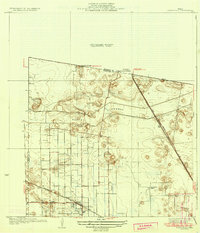 1933 Santa Rosa1933 Print · USGSThe Rio Grande Valley landscape comes into focus in the early thirties as irrigation and flood control reshape the coastal plain. Researchers can trace the footprints of family estates like Santa Rita Ranch and the vital paths of the Missouri Pacific railroad.3 unique versions available
 - 1933 Map of Paso Real
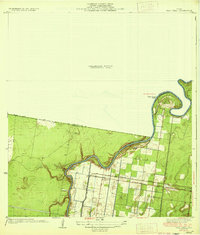 1933 Paso Real1933 Print · USGSDeep in the Rio Grande Valley in the early 1930s, this area shows a landscape shaped by the Arroyo Colorado. Genealogists and historians can trace the Ferry at Paso Real, the Missouri Pacific railroad line, and old settlements like Fernando.2 unique versions available
 - 1934 Map of Port Isabel
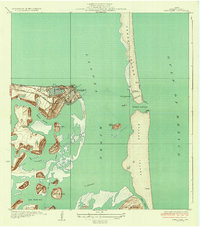 1934 Port Isabel1934 Print · USGSCoastal Cameron County in the early thirties reveals a burgeoning maritime hub at the edge of the Laguna Madre. Trace the early infrastructure of Port Isabel, from the Rio Grande Valley RR terminus to the Plank Road on Padre Island.2 unique versions available
 - 1934 Map of La Coma
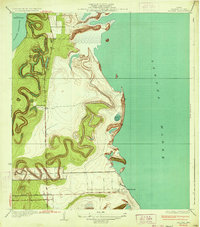 1934 La Coma1934 Print · USGSCoastal Cameron County comes to life in the early thirties, showing the intricate resacas and shoreline settlements before the modern era. Genealogists and historians can trace the tracks of the Missouri Pacific RR past Abney and locate the historic La Coma Ranch.3 unique versions available
 - 1935 Map of Padre Island No 1
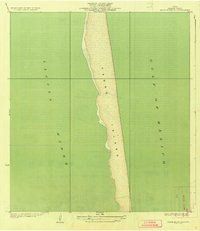 1935 Padre Island No 11935 Print · USGSThe South Texas barrier coast appears in its pre-development state during the mid-1930s, showing the wild stretch of Padre Island. Researchers can trace the original shoreline and the vast waters of the Laguna Madre and the Gulf of Mexico.2 unique versions available
 - 1935 Map of Padre Island NO. 2
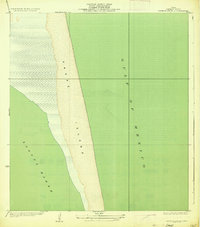 1935 Padre Island NO. 21935 Print · USGSThe Texas coast near Cameron County appears in its natural state in the mid-1930s, long before modern development. Researchers can trace the unbridged shoreline of Padre Island between the Gulf of Mexico and the Laguna Madre.2 unique versions available
 - 1935 Map of Buena Vista
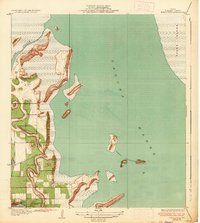 1935 Buena Vista1935 Print · USGSThe South Texas coast near the Rio Grande Valley is captured here in the mid-1930s, showing a wild landscape of dunes and lagoons. Trace old property lines at Buena Vista Ranch or explore the unbridled shoreline of Padre Island.2 unique versions available
 - 1936 Map of La Leona
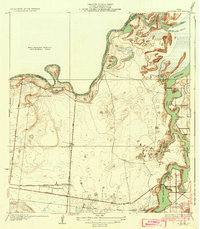 1936 La Leona1936 Print · USGSCoastal Cameron County was a land of sprawling ranch outposts and tidal waterways in the mid-1930s. Genealogists and historians can trace family landholdings at Boca Chica Ranch or La Leona and follow the old Missouri Pacific rail corridor.3 unique versions available
 - 1936 Map of La Feria
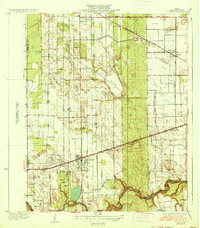 1936 La Feria1936 Print · USGSThe lower Rio Grande Valley comes to life in this mid-1930s survey of the irrigated farmlands and rail towns of Cameron County. Genealogists and local historians can trace the early streets and family farms near La Feria, Bixby, and the Wilson Sch country school site.3 unique versions available
 - 1936 Map of Laguna Atascosa
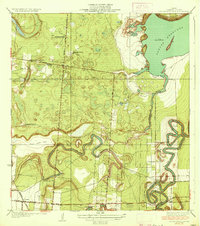 1936 Laguna Atascosa1936 Print · USGSCoastal Cameron County in the mid-1930s was a landscape of ancestral ranches and winding waterways. Genealogists and historians can trace family landholdings like La Tina Ranch and Palo Blanco Ranch or follow the path of the Missouri Pacific Railroad past Lacoma.2 unique versions available
 - 1936 Map of Los Fresnos
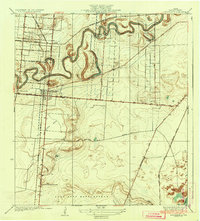 1936 Los Fresnos1936 Print · USGSThe Lower Rio Grande Valley landscape comes into focus during the 1930s, highlighting a network of irrigation ditches and historical battle sites. Researchers can trace the winding Resaca de los Cuates or locate vanished landmarks like the Palo Alto Battlefield Monument and White House Sch.3 unique versions available
 - 1936 Map of West Brownsville
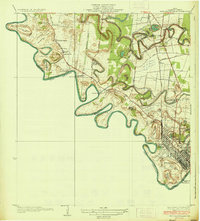 1936 West Brownsville1936 Print · USGSThe Texas-Mexico border landscape comes alive in the mid-1930s, showing the early urban development of the Lower Rio Grande Valley. Researchers can trace the region's ranching heritage and vital water infrastructure through labels like Barreda Sch, Villa Nueva, and the sprawling Resaca de la Palma.2 unique versions available
 - 1936 Map of Palmito Hill
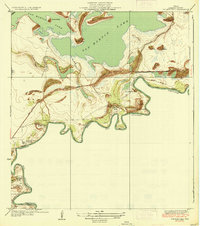 1936 Palmito Hill1936 Print · USGSCoastal Cameron County comes alive in the mid-1930s, showing the ridges and riverbanks where the Civil War drew to a close. Genealogists and historians can trace family raches like Old Palmito Ranch and Los Sauces Ranch near the Palmito Hill Battlefield.2 unique versions available
 - 1936 Map of Barreda
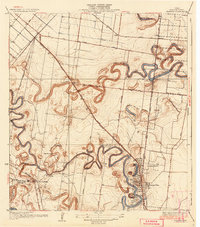 1936 Barreda1936 Print · USGSThe Lower Rio Grande Valley's unique oxbow landscape is captured here in the mid-1930s, showing a network of resacas and early irrigation works. Researchers can trace family-named lands like Soldado Ranch and Naranjas Ranch or locate the old Airways Beacon near Olmito.2 unique versions available
Showing maps 1-25 of 31
Top cities of Cameron County
- Brownsville historical maps
- Harlingen historical maps
- San Benito historical maps
- La Feria historical maps
- Cameron Park historical maps
- Los Fresnos historical maps
See more
Frequently asked questions
- What are the different types of historical maps available for Cameron County?
- What is the oldest map of Cameron County?
- Where can I purchase historical maps of Cameron County for my home or office?
- Where can I download high-res historical maps of Cameron County?
- Are there historical topographic maps available for Cameron County?
- Is there historical aerial imagery available for Cameron County?
- Where are historical maps of Cameron County sourced from?