1950s Maps of Comanche County, Texas
Explore 15 historic maps of Comanche County from the 1950s. These maps offer a rare glimpse into what life looked like during the 1950s — showing old roads, neighborhoods, homes, and landmarks that have changed or disappeared over time.
Whether you're researching your family's past, planning a metal detecting trip, or studying how Comanche County's landscape evolved across the 1950s, these high-resolution maps are a powerful tool for exploring the history of this region.
- Focus on a specific era: All maps on this page are from the 1950s, giving you a focused view of this time period.
- See what’s changed: Compare century-old streets, trails, and buildings to today's modern landscape using overlays and satellite layers.
- Research with precision: Use these maps for genealogy, historical research, land use analysis, or educational projects.
- View, download, or print: Maps are fully viewable online in high resolution, and can be downloaded or printed for your own records.
Start exploring Comanche County's history through authentic maps from the 1950s. This is your window into the past.
Comanche County, TX maps
(15)- 1950 Map of Mullin
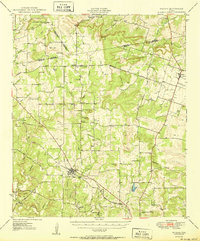 1950 Mullin1950 Print · USGSThe crossroads of Mills and Brown counties come into focus at the mid-century, centered on the rail hub of Mullin. Researchers can trace old family sites and rural institutions like Williams Ranch, Rock Springs Cem, and the Villa Siding railroad stop.2 unique versions available
 - 1954 Map of Brownwood, 1955 Print
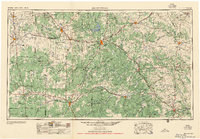 1954 Brownwood1955 Print · USGSCentral Texas in the early fifties shows a landscape of rail-linked cattle towns and winding river valleys before modern highway expansion. Genealogists and historians can trace family-named peaks and vanished rail stops like Trickham, Santa Anna, and the Brady Mountains.3 unique versions available
 - 1954 Map of Abilene, 1966 Print
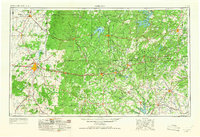 1954 Abilene1966 Print · USGSThe Texas Big Country comes into focus in the mid-1950s as petroleum and new water projects reshape the landscape. Local historians can trace the Butterfield Trail, find the Fort Phantom Hill Ruins, and locate numerous small communities along the Texas & Pacific line.2 unique versions available
 - 1956 Map of Gustine
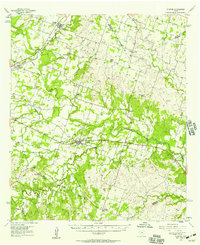 1956 Gustine1956 Print · USGSMid-century Comanche County is seen here just as the highway network was being formalized around the Leon River valley. Genealogists can trace family names through numerous rural sites like Graham Chapel Cem, Energy Sch, and the town of Gustine.
 - 1956 Map of Gentrys Mill, 1957 Print
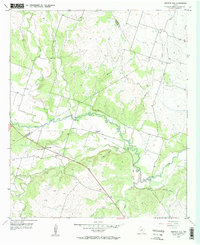 1956 Gentrys Mill1957 Print · USGSHamilton and Comanche counties appear in the mid-fifties as a landscape of established family farms and transitioning transit lines. Researchers can locate several remote burial sites like Toliver Cem and trace the path of the Old Railroad Grade past Springtown (Aband).2 unique versions available
 - 1956 Map of Gustine, 1957 Print
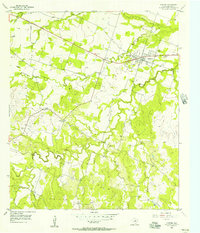 1956 Gustine1957 Print · USGSComanche County during the mid-fifties is centered here around the town of Gustine and its surrounding ranchlands. Genealogists and researchers can trace local landmarks like Whitney Cem, the Petitt Sch (Aband), and the settlement at Fleming.
 - 1956 Map of Pottsville, 1957 Print
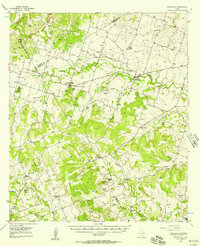 1956 Pottsville1957 Print · USGSHamilton County ranching and rural life are preserved here in the mid-1950s, showing the landscape before modern consolidation. Researchers can trace family sites like the Cottage Hill Cem, locate the Indian Cave, or find the now-abandoned McGirk Sch.
 - 1956 Map of Hico, 1957 Print
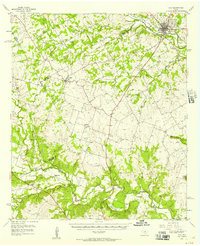 1956 Hico1957 Print · USGSThe Bosque River valley and the railroad town of Hico are shown here in the mid-fifties, capturing a landscape of small farming communities and historic routes. Genealogists can locate numerous rural burial sites like Tillinghouse Cem and the Springtown (Site of).2 unique versions available
 - 1956 Map of Lamkin, 1957 Print
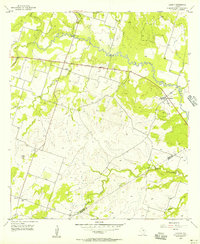 1956 Lamkin1957 Print · USGSThe Leon River valley at the Comanche and Hamilton county line reveals a quiet ranching landscape in the mid-fifties. Genealogists can trace the rural communities of Lamkin and Energy, locating landmarks like the Energy Cemetery and the Community Tabernacle.2 unique versions available
 - 1956 Map of Proctor, 1957 Print
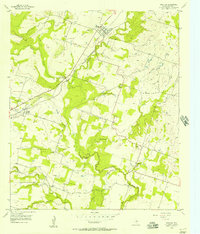 1956 Proctor1957 Print · USGSIn the mid-1950s, the Comanche County landscape was a network of rail-side towns and riverbottom farms. Researchers can trace family history at Graham Chapel Cem or locate former community hubs like Hasse Sch (Abnd) and Board Ch.2 unique versions available
 - 1956 Map of Edna Hill, 1957 Print
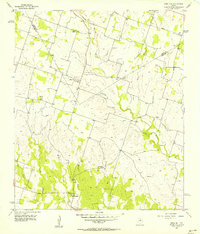 1956 Edna Hill1957 Print · USGSTexas ranching country along the Erath and Comanche county line comes to life in the mid-1950s. Researchers can locate the settlement and church at Hazeldell, find family burials at Barbee Cemetery, and trace the winding paths of Resley Creek and Joplin Creek.2 unique versions available
 - 1956 Map of Carlton, 1957 Print
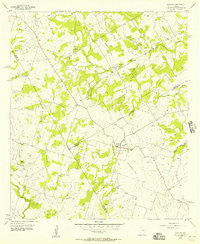 1956 Carlton1957 Print · USGSThe rural landscape of the Hamilton and Comanche County borders is captured here in the mid-fifties, centered on the community of Carlton. Genealogists and historians can trace family-named sites like Turnbow Cemetery, the local High Sch, and the path of an Old Railroad Grade.3 unique versions available
 - 1956 Map of Pottsville, 1957 Print
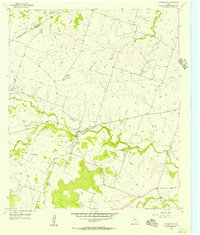 1956 Pottsville1957 Print · USGSHamilton County ranching and energy extraction intersect in the mid-1950s near the community of Pottsville. Genealogists can trace family names at Immanuel Cem or locate the rural School and Immanuel Ch along Cowhouse Creek.
 - 1956 Map of Indian Gap, 1957 Print
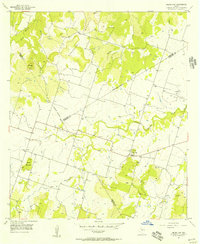 1956 Indian Gap1957 Print · USGSHamilton County ranching and early energy development meet in the mid-fifties near the settlement of Indian Gap. Genealogists and local historians can trace family ties at the Spivey-Baxter Cemetery, the Land School, and the St Johns Cem.
 - 1958 Map of Abilene
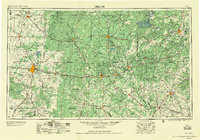 1958 Abilene1958 Print · USGSMid-century West Texas comes alive in this survey of the Abilene and Stephenville region during a period of steady oil expansion and military growth. Genealogists and local historians can trace the paths of the Texas & Pacific RR through historic towns, locate the Fort Griffin Ruins, and find smaller settlements like Desdemona and Lueders.
End of results
Showing maps 1-15 of 15
Top cities of Comanche County
Frequently asked questions
- What are the different types of historical maps available for Comanche County?
- What is the oldest map of Comanche County?
- Where can I purchase historical maps of Comanche County for my home or office?
- Where can I download high-res historical maps of Comanche County?
- Are there historical topographic maps available for Comanche County?
- Is there historical aerial imagery available for Comanche County?
- Where are historical maps of Comanche County sourced from?