Old Maps of Hackberry, Texas for Academic Research
Study the evolution of Hackberry with 8 high-resolution historic maps. Whether you're teaching, researching, or modeling changes in land use, these maps provide essential visual documentation of urban, environmental, and geographic change.
- Analyze long-term change: Track patterns in development, transportation, and natural features.
- Ideal for environmental or urban studies: Support academic projects with primary historical map data.
- Use in the classroom or lab: Educators and researchers rely on these maps to bring historical context to life.
These maps are a powerful tool for teaching, research, and visualizing how Hackberry has changed over the decades.
Hackberry, TX maps
(8)- 1954 Map of Lubbock, 1958 Print
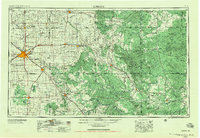 1954 Lubbock1958 Print · USGSThe High Plains and Caprock region of West Texas come alive in the mid-1950s, showing a landscape defined by oil discovery and the Brazos River headwaters. Genealogists and historians can trace rail-connected towns like Roaring Springs, find the Pleasant Valley church, or locate family-named landmarks such as Soldier Mound.4 unique versions available
- 1968 Map of Chalk, 1970 Print
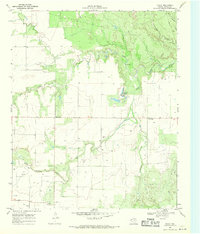 1968 Chalk1970 Print · USGSCottle County ranching and oil country come into focus during the late sixties, showing a landscape defined by water and industry. Trace the legacy of Chalk and Hackberry or locate historical Oil Wells and the North Wichita River.2 unique versions available
- 1985 Map of Dickens
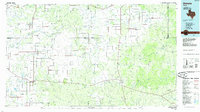 1985 Dickens1985 Print · USGSThe West Texas ranchlands near the Dickens and King County lines are shown here in the mid-eighties as a network of rural settlements and canyon terrain. Trace family roots or land boundaries near Roaring Springs, Soldier Mound, or the Fort Worth and Denver Railroad.2 unique versions available
- 2010 Map of Chalk, 2010 Print
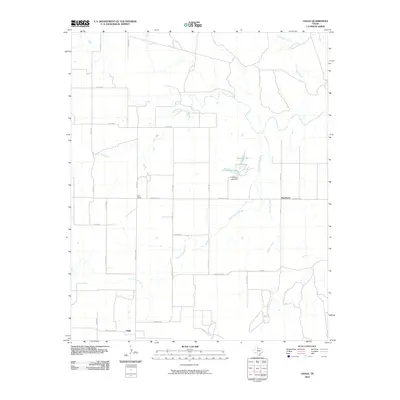 2010 Chalk2010 Print · USGSCottle County ranching country is captured here during the first decade of the new millennium. Researchers can trace the local road networks surrounding Chalk and Hackberry or locate landmarks like the L V Worley Lake Dam and the North Wichita River.
- 2012 Map of Chalk, 2012 Print
 2012 Chalk2012 Print · USGSCottle County ranching country is captured here during the early twenty-first century, showing the small communities of Chalk and Hackberry. Local historians can trace the paths of the N Wichita River and landmarks like Salt Spring or Worley Lake.
- 2016 Map of Chalk, 2016 Print
 2016 Chalk2016 Print · USGSCottle County ranchlands are documented here in the mid-2010s, showing the enduring rural layout of West Texas. Genealogists and researchers can trace local water sources like Salt Spring and landmarks such as L V Worley Lake and Chalk.
- 2019 Map of Chalk, 2019 Print
 2019 Chalk2019 Print · USGSCottle County ranching country is mapped here in recent years, showing the isolated communities of Chalk and Hackberry. Local historians can trace the intricate drainage of the N Wichita River and find landmarks like Worley Lake and Salt Spring.
- 2022 Map of Chalk, 2022 Print
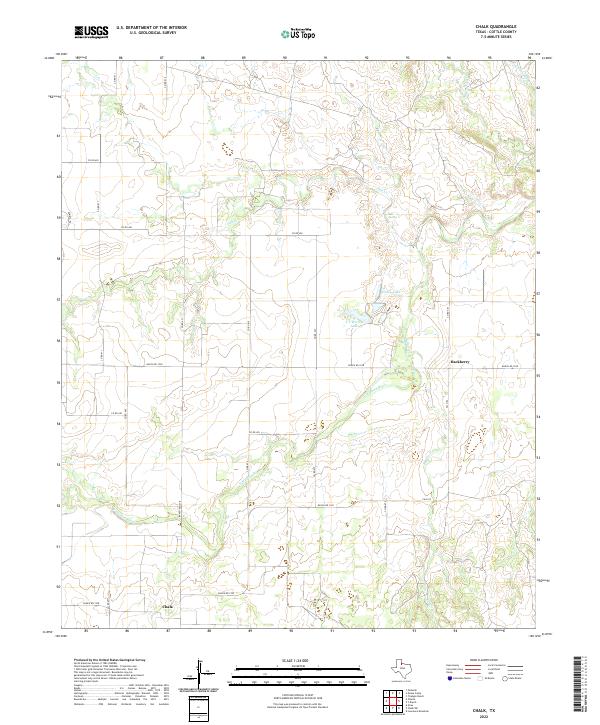 2022 Chalk2022 Print · USGSCottle County ranch lands are documented in this recent survey of the North Texas plains. Researchers can trace the drainage of the N Wichita River and locate rural hubs like Chalk and Hackberry, alongside family landmarks such as Worley Lake.
End of results
Showing maps 1-8 of 8
Top cities near Hackberry
Frequently asked questions
- What are the different types of historical maps available for Hackberry?
- What is the oldest map of Hackberry?
- Where can I purchase historical maps of Hackberry for my home or office?
- Where can I download high-res historical maps of Hackberry?
- Are there historical topographic maps available for Hackberry?
- Is there historical aerial imagery available for Hackberry?
- Where are historical maps of Hackberry sourced from?