Old Maps of Ector County, Texas for Metal Detecting
Plan your next treasure hunt with 126 historic maps of Ector County. Find old homesites, ghost towns, trails, and gathering spots that may be lost to time — perfect for identifying promising metal detecting locations.
- Locate forgotten sites: Uncover places like long-lost settlements, abandoned rail lines, or gathering spots.
- Plan better hunts: Use map overlays combined with LiDAR or satellite views to narrow in on historically rich areas.
- Made for detectorists: Thousands of hobbyists use these maps to discover relics, coins, and hidden history.
Use these historic maps to boost your research and find new opportunities beneath the surface of Ector County.
Ector County, TX maps
(126)- 1954 Map of Hobbs, 1963 Print
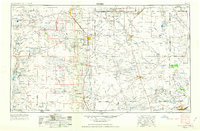 1954 Hobbs1963 Print · USGSThe High Plains and Permian Basin transition is captured here at the height of the mid-century energy boom. Genealogists and industrial historians can trace the foundations of Humble City, locate the Potash Mine and Plant, and follow the Texas-New Mexico RR.2 unique versions available
 - 1954 Map of Pecos, 1964 Print
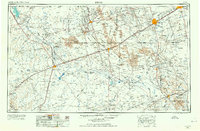 1954 Pecos1964 Print · USGSMid-century West Texas reveals a landscape of expanding oil fields and cattle ranching along the winding Pecos River. Local historians can trace family ranch lands like Goodrich Ranch, follow the Texas and Pacific rails, or locate the historic Horsehead Crossing.3 unique versions available
 - 1957 Map of Pecos
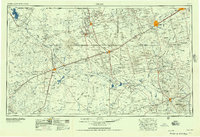 1957 Pecos1957 Print · USGSWest Texas in the mid-fifties is a landscape of desert oil fields and vital rail corridors. Researchers can trace the sprawling Pyote Air Force Base, the historic Horsehead Crossing, and the rail stops at Mentone and Saragosa.
 - 1958 Map of Hobbs
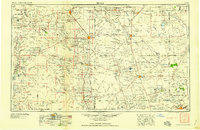 1958 Hobbs1958 Print · USGSThe High Plains of the Texas-New Mexico border are shown here during the height of the mid-century oil boom. Genealogists and historians can trace the development of Hobbs, Lovington, and Jal, alongside ranching landmarks like James Ranch and the early Texas-New Mexico Railway.
 - 1964 Map of Odessa NE, 1966 Print
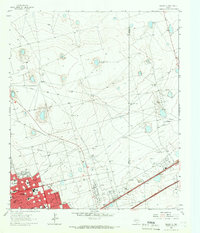 1964 Odessa NE1966 Print · USGSOdessa and the Permian Basin plains are seen here during a period of rapid mid-century growth. Researchers can trace the development of neighborhood institutions like Permian High Sch and Sunset Memorial Gardens or the limits of the Headlee Field.4 unique versions available
 - 1964 Map of Odessa SW, 1966 Print
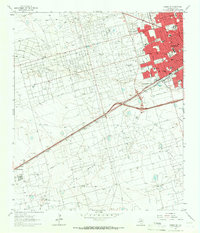 1964 Odessa SW1966 Print · USGSOdessa's midcentury expansion meets the booming oil fields of the Permian Basin in the 1960s. Genealogists and historians can trace the development of local neighborhoods through Odessa College, the Odessa Meteor Crater, and the industrial Carbon Black Plant.4 unique versions available
 - 1964 Map of Odessa NW, 1966 Print
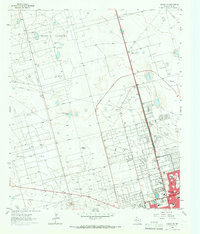 1964 Odessa NW1966 Print · USGSOdessa pushes into the Permian Basin during the mid-sixties oil boom, transforming the arid landscape into an industrial and suburban hub. Genealogists and historians can trace the growth of neighborhoods like Greenfield Acres or locate local landmarks including Goliad Sch and the Drive-in Theater.4 unique versions available
 - 1964 Map of Odessa SE, 1966 Print
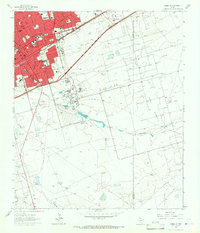 1964 Odessa SE1966 Print · USGSThe expansion of the Permian Basin energy sector is on full display in the mid-1960s as residential neighborhoods push into the West Texas scrub. Trace the local infrastructure from Blackshear Stadium to the sprawling Headlee Oil Field and the Walters Ranch.3 unique versions available
 - 1964 Map of Turnbaugh Corner, 1966 Print
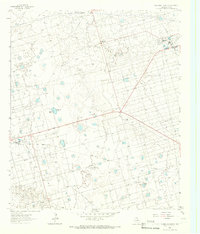 1964 Turnbaugh Corner1966 Print · USGSEctor County was a landscape of intensive energy production and ranching in the early sixties. Researchers can trace the midcentury petroleum infrastructure of the Lawson Oil Field alongside ranching landmarks like the Slater Ranch and Turnbaugh Corner.2 unique versions available
 - 1964 Map of Douro, 1967 Print
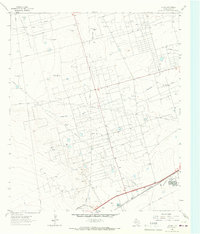 1964 Douro1967 Print · USGSEctor County oil country is shown in the 1960s as a complex network of extraction and rail transport. Genealogists and historians can trace Old Buchanan Ranch (Headquarters) and industrial sites like the Carbon Black Plant near Douro.3 unique versions available
 - 1964 Map of Metz, 1967 Print
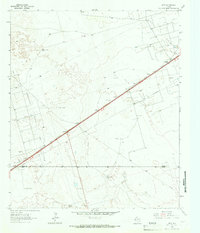 1964 Metz1967 Print · USGSThe West Texas oil country of Ector and Crane counties is documented here during the mid-1960s. Genealogists and historians can trace the Texas and Pacific line through Metz and Judkins, or locate named water sources like the Old Headquarters Windmills.2 unique versions available
 - 1964 Map of Red Lakes, 1967 Print
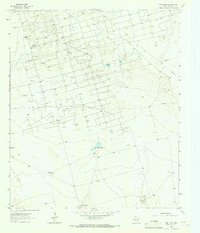 1964 Red Lakes1967 Print · USGSMid-century Ector County was a landscape of expanding energy infrastructure and vital desert water sources. Researchers can trace the layout of the T X L Oil Field and Lawson Oil Field alongside local landmarks like Red Lakes and Steel Rim Windmill.
 - 1964 Map of Penwell, 1967 Print
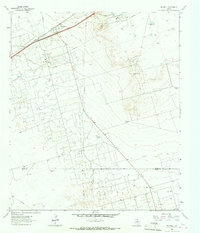 1964 Penwell1967 Print · USGSWest Texas ranching and oil production define this mid-sixties survey of the Penwell area as it developed along the Texas and Pacific line. Researchers can trace the layout of the local Refinery, find the C-Bar Ranch, and locate named water sources like Bradley Barn Well.2 unique versions available
 - 1964 Map of Clark Brothers Ranch, 1967 Print
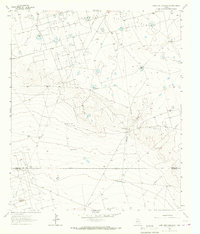 1964 Clark Brothers Ranch1967 Print · USGSWest Texas ranching and petroleum production meet in the mid-1960s as this area of the Permian Basin expands. Trace the footprint of family operations and industry through the Clark Brothers Ranch, Simms Tank, and the sprawling South Cowden Oil Field.2 unique versions available
 - 1965 Map of South Cowden Ranch, 1967 Print
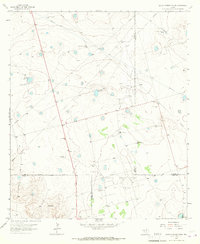 1965 South Cowden Ranch1967 Print · USGSThe West Texas range meets the mid-century oil boom in the mid-1960s, where vast energy fields intersect with historic cattle operations. Genealogists and historians can trace ranch boundaries and water sources like South Cowden Ranch, Hillbilly Windmill, and Railway Ranch.2 unique versions available
 - 1965 Map of Goldsmith, 1967 Print
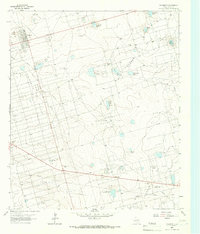 1965 Goldsmith1967 Print · USGSGoldsmith and the surrounding Ector County oil patches are shown at their mid-century peak during this 1960s survey. Researchers can trace the industrial landscape of the Goldsmith Oil Field and North Cowden Oil Field alongside local landmarks like Oil Camp and James Lake.3 unique versions available
 - 1967 Map of North Cowden, 1970 Print
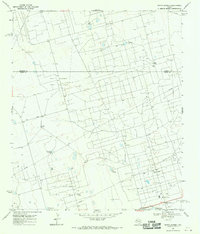 1967 North Cowden1970 Print · USGSThe West Texas oil fields were in full production by the late sixties, reshaping the landscape of Ector and Andrews counties. Genealogists and researchers can trace local ranching history through sites like Flynt Ranch and oddly named landmarks like the Rich Uncle Windmill.2 unique versions available
 - 1968 Map of Coyote Corner, 1970 Print
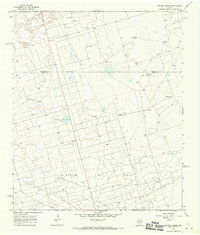 1968 Coyote Corner1970 Print · USGSThe West Texas oil patch comes alive in the late sixties as drilling infrastructure expands across the Ector and Andrews county line. Genealogists and historians can locate family holdings like Wyche Ranch or trace industrial sites in the Goldsmith Oil Field and around Coyote Corner.
 - 1968 Map of Hackberry Lake, 1970 Print
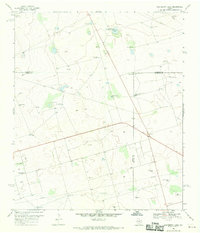 1968 Hackberry Lake1970 Print · USGSIn the Permian Basin during the late sixties, this area shows the intersection of the cattle-ranching past and the oil-industry future. Trace family-named landmarks like Morris and Hunter Well, or locate the specific placement of the Hackberry Windmill.2 unique versions available
 - 1968 Map of Gardendale, 1970 Print
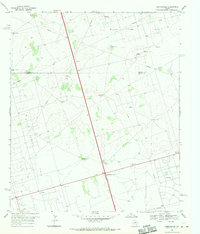 1968 Gardendale1970 Print · USGSThe West Texas oil fields of Andrews and Ector counties are captured here in the late sixties as industrial infrastructure expanded across the basin. Genealogists and historians can locate ranching landmarks like Circle Bar Ranch and early oil towns such as Scharbauer City and Gardendale.2 unique versions available
 - 1968 Map of Cowden Place, 1971 Print
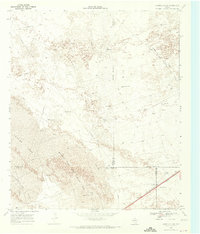 1968 Cowden Place1971 Print · USGSThe West Texas dunes and oil fields come into focus in the late sixties at the borders of Winkler, Ector, and Ward Counties. Researchers can trace the water and oil infrastructure of the era through sites like Cowden Place, Little Diamond Windmill, and Williams Ranch.
 - 1971 Map of Notrees, 1974 Print
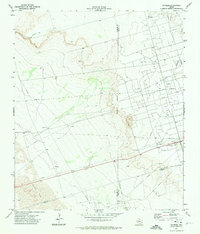 1971 Notrees1974 Print · USGSThe West Texas oil patch comes into sharp focus in the early seventies, centered on the small crossroads of Notrees. Researchers can trace the industrial footprint of the T X L Oil Field and map the expanse of Shifting Sand along the county line.
 - 1971 Map of Bedford Ranch, 1974 Print
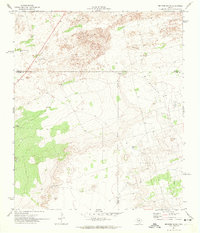 1971 Bedford Ranch1974 Print · USGSWinkler and Andrews counties come alive in the early seventies, where the cattle-ranching West meets the industrial Permian Basin. Trace the landscape of the Goldsmith Oil Field and And Ector Oil Field alongside local landmarks like Bedford Ranch and the Green Gate Windmill.
 - 1971 Map of Amburgey Ranch, 1974 Print
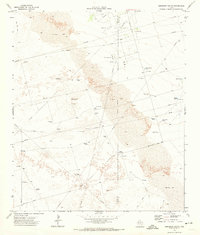 1971 Amburgey Ranch1974 Print · USGSThe West Texas ranchlands of Winkler and Ector Counties are captured here in the early 1970s as the local oil economy expanded across the dunes. Researchers can trace historic water sources and ranching sites like Amburgey Ranch, White Horse Tank, and Wheeler Windmill.
 - 1986 Map of Odessa
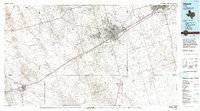 1986 Odessa1986 Print · USGSThe Permian Basin’s oil-driven landscape is revealed in the mid-eighties, showing the sprawl of Odessa and Midland. Trace the growth of energy infrastructure at the South Cowden Oil Field or explore the unique Sand Dunes of Monahans Sand Hills State Park.2 unique versions available
Showing maps 1-25 of 126
Top cities of Ector County
Frequently asked questions
- What are the different types of historical maps available for Ector County?
- What is the oldest map of Ector County?
- Where can I purchase historical maps of Ector County for my home or office?
- Where can I download high-res historical maps of Ector County?
- Are there historical topographic maps available for Ector County?
- Is there historical aerial imagery available for Ector County?
- Where are historical maps of Ector County sourced from?