Old Maps of Foard County, Texas
Explore 153 old maps of Foard County, spanning from 1927 to today. These high-resolution historic maps reveal how streets, neighborhoods, landmarks, and natural features evolved over time — perfect for genealogy, metal detecting, research, and local history exploration.
What you can do with these maps:
- See how Foard County changed over time: Compare historical maps to modern-day views to trace roads, homesites, rail lines & more.
- View detailed metadata: Each map includes creators, publishers, year, scale, and archive source.
- Overlay maps with satellite & LiDAR: Visualize the past alongside modern tools to explore terrain & human change.
- Trusted historical sources: Maps sourced from the USGS, Library of Congress, and other archives.
- Access maps your way: View online, download high-res files, or order prints for personal or research use.
Start exploring old maps of Foard County to uncover forgotten places, hidden landmarks, and the deep history beneath your feet.
Foard County, TX maps
(153)- 1927 Map of Quanah 3-a
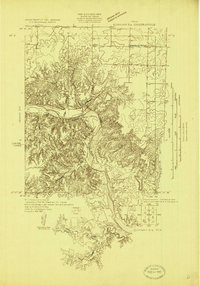 1927 Quanah 3-a1927 Print · USGSThe river breaks of North Texas are captured in the late 1920s as the Pease River divides Hardeman Co and Foard Co. Genealogists and local historians can locate the Forestburg School and trace the winding paths of Groesbeck Creek.
 - 1927 Map of Quanah 3-b
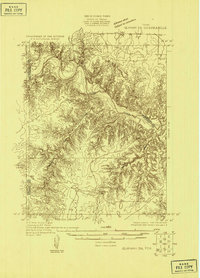 1927 Quanah 3-b1927 Print · USGSThe North Texas plains meet the winding Pease River during the late 1920s as the regional county lines were being precisely defined. Researchers can trace the exact boundaries of Cottle, Hardeman, and Foard counties across this early aerial-assisted survey.
 - 1932 Map of Vivian
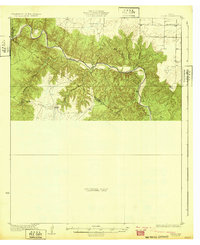 1932 Vivian1932 Print · USGSThe winding valley of the Pease River dominates this north Texas landscape as it appeared in the early thirties. Local history researchers can trace early county lines and rural landmarks like the Forestburg Sch and Teacup Mountain.2 unique versions available
 - 1954 Map of Lubbock, 1958 Print
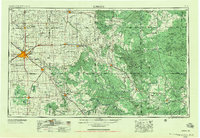 1954 Lubbock1958 Print · USGSThe High Plains and Caprock region of West Texas come alive in the mid-1950s, showing a landscape defined by oil discovery and the Brazos River headwaters. Genealogists and historians can trace rail-connected towns like Roaring Springs, find the Pleasant Valley church, or locate family-named landmarks such as Soldier Mound.4 unique versions available
 - 1954 Map of Plainview, 1966 Print
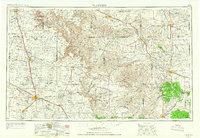 1954 Plainview1966 Print · USGSThe Texas Panhandle and the rugged Caprock Escarpment appear in detail as the region's agricultural and rail networks reached their mid-century peak. Trace family roots and old land patterns through the canyons and plains near Plainview, Palo Duro State Park, and Childress.3 unique versions available
 - 1954 Map of Wichita Falls, 1966 Print
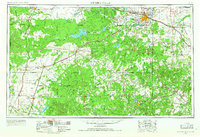 1954 Wichita Falls1966 Print · USGSNorth Texas in the mid-fifties is captured here as a landscape of expanding oil fields and vital rail corridors. Genealogists and historians can trace family roots through rural landmarks like Bacon Chapel and the rail-side growth of Seymour and Archer City.3 unique versions available
 - 1955 Map of Lawton, 1958 Print
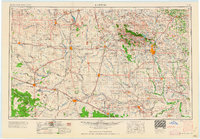 1955 Lawton1958 Print · USGSSouthwestern Oklahoma and North Texas are shown here in the mid-fifties, dominated by the Wichita Mountains and the vital Red River watershed. Genealogists and historians can trace the foundations of Lawton alongside rural landmarks like Rainy Mountain Church and Pleasant Hill School.5 unique versions available
 - 1958 Map of Wichita Falls
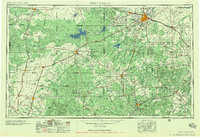 1958 Wichita Falls1958 Print · USGSNorth Texas during the late fifties reveals a landscape defined by the booming petroleum industry and established rail hubs. Researchers can trace the development of Wichita Falls and discover rural landmarks like Barton's Chapel or the Hull-Silk Oil Field.
 - 1958 Map of Plainview
 1958 Plainview1958 Print · USGSThe High Plains and Caprock Escarpment meet in the late fifties, showcasing the ranching and rail networks of the Texas Panhandle. Trace family roots and vanished stops along the Panhandle and Santa Fe railroad through Plainview, Silverton, and Matador.
 - 1958 Map of Vernon, 1959 Print
 1958 Vernon1959 Print · USGSWilbarger County is captured in the late fifties as the local economy balanced ranching traditions with growing civic infrastructure. Researchers can locate family landmarks such as Lockett High Sch, the Santa Rosa Roundup Rodeo Grounds, and Pleasant Home Ch.2 unique versions available
 - 1958 Map of Medicine Mound, 1959 Print
 1958 Medicine Mound1959 Print · USGSHardeman and Foard Counties are shown here in the late fifties, defined by the winding Pease River and the iconic Medicine Mounds. Researchers can locate the Pease River Battlefield, the town of Margaret, and the Panhandle and Santa Fe rail line.
 - 1960 Map of Teacup Mountain, 1962 Print
 1960 Teacup Mountain1962 Print · USGSFoard and Hardeman counties are captured in the early sixties as they were shaped by the winding Pease River. Local historians can trace family landmarks and geographic features like Teacup Mountain, Sugarloaf Mountain, and the remote Oil Well site.
 - 1966 Map of Truscott North, 1968 Print
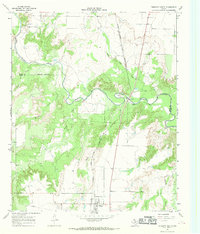 1966 Truscott North1968 Print · USGSKnox County and Foard County meet in this mid-1960s survey of the rolling breaks along the North Wichita River. Researchers can trace the Atchison Topeka and Santa Fe rail line and locate landmarks like the settlement of Truscott and the Gaging Sta.2 unique versions available
 - 1966 Map of Santa Rosa Lake SW, 1968 Print
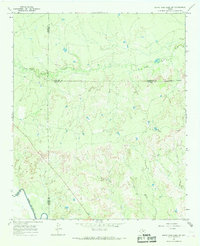 1966 Santa Rosa Lake SW1968 Print · USGSThe Rolling Plains of North Texas are captured here in the mid-1960s, showing the rugged ranch lands where Baylor, Foard, and Wilbarger counties intersect. Genealogists and researchers can trace local landmarks like Corral and Waggoner or follow the paths of South Beaver Creek and the North Wichita River.
 - 1966 Map of Soap Creek, 1968 Print
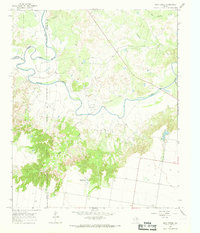 1966 Soap Creek1968 Print · USGSThe confluence of the Wichita River forks in North Texas is captured here in the mid-1960s. Family historians and researchers can locate the Henson Cem and trace the Arledge Ranch Landing Strip among the drainage of Soap Creek.
 - 1966 Map of Colwell Creek, 1969 Print
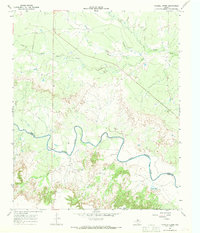 1966 Colwell Creek1969 Print · USGSNorth Texas ranch land and the winding breaks of the North Wichita River are captured here in the mid-1960s. Genealogists and local historians can trace family landmarks like Massingill, K Camp, and the uniquely named Ignorant Ridge.
 - 1966 Map of Halsell Ranch, 1969 Print
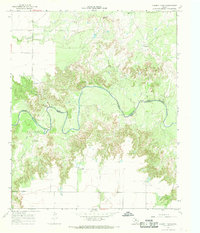 1966 Halsell Ranch1969 Print · USGSRanching life on the Foard and Knox County line is documented here during the mid-sixties, centered on the North Wichita River. Researchers can locate specific pastoral landmarks like the Halsell Ranch, West Camp, and the essential Deadman Windmill.
 - 1966 Map of Big Four Ranch, 1969 Print
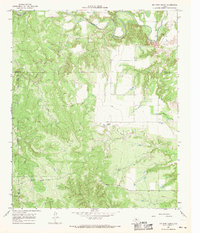 1966 Big Four Ranch1969 Print · USGSSpanning the tri-county border of Foard, King, and Knox in the mid-sixties, this map reveals the ranching heart of North Texas. Genealogists and researchers can trace family-named landmarks like Masterson and the historic Big Four Ranch among the forks of the Wichita River.
 - 1966 Map of Crowell, 1969 Print
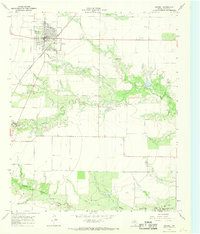 1966 Crowell1969 Print · USGSCrowell and the rolling plains of Foard County are captured in the mid-sixties, showing a landscape defined by the Atchison Topeka and Santa Fe rail line. Researchers can trace the legacy of the area through Crowell Cem, the County Airfield, and the winding Beaver Creek.
 - 1966 Map of Thalia, 1969 Print
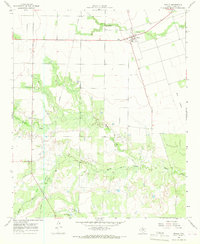 1966 Thalia1969 Print · USGSThe rural plains of Foard County are captured here in the mid-1960s, centered on the settlement of Thalia. Genealogists and researchers can trace local water sources like Three-Quarter Tank and the winding course of Middle Beaver Creek.
 - 1966 Map of Santa Rosa Lake NW, 1969 Print
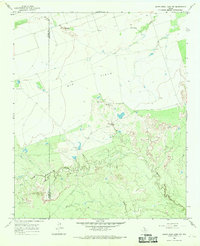 1966 Santa Rosa Lake NW1969 Print · USGSTexas ranching and agricultural life near the Wilbarger and Foard county line are preserved here in the mid-sixties. Local researchers can locate working landmarks like Iron Pens, Slay Camp, and the winding banks of Beaver Creek.
 - 1966 Map of Lowrance Mountain, 1969 Print
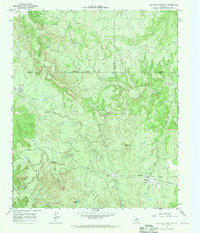 1966 Lowrance Mountain1969 Print · USGSThe Wichita River breaks of King County are captured here in the mid-1960s, showing a remote ranching landscape transitioning into the oil and gas era. Researchers can locate the Lowrance Ranch and its landing strip or trace water sources like Pouring Spring and Marys Lake.2 unique versions available
 - 1967 Map of Triangle Ranch, 1969 Print
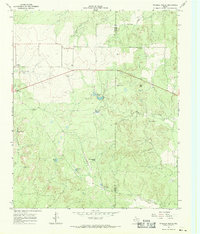 1967 Triangle Ranch1969 Print · USGSCottle County ranching country is captured here in the late sixties, showing the vast livestock operations that define this Texas region. Researchers can locate the Ogden (Site), trace family landmarks like Marys Peak, and find remote outposts like Polk Hole Windmill.2 unique versions available
 - 1967 Map of Baker, 1969 Print
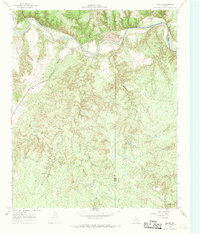 1967 Baker1969 Print · USGSCottle County ranch lands are documented here in the late sixties, where the railroad and river define the northern frontier. Researchers can trace the Quanah Acme and Pacific rail line past Baker or locate the Y L Ranch and its Landing Strip among the creek prongs.2 unique versions available
 - 1968 Map of Y Ranch, 1970 Print
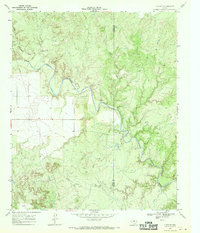 1968 Y Ranch1970 Print · USGSCottle and Foard counties are captured in the late sixties as the ranching economy and oil industry shaped the West Texas landscape. Researchers can locate the Y Ranch headquarters, the local Landing Strip, and several Oil Wells along the North Wichita River.2 unique versions available
Showing maps 1-25 of 153
Top cities of Foard County
Frequently asked questions
- What are the different types of historical maps available for Foard County?
- What is the oldest map of Foard County?
- Where can I purchase historical maps of Foard County for my home or office?
- Where can I download high-res historical maps of Foard County?
- Are there historical topographic maps available for Foard County?
- Is there historical aerial imagery available for Foard County?
- Where are historical maps of Foard County sourced from?