Old Maps of Hamilton County, Texas for Genealogy
Trace your family roots with 179 historic maps of Hamilton County. These high-res maps reveal old neighborhoods, homesites, landmarks, and streets — helping you uncover where your ancestors lived and how the area evolved over time.
- Explore historic neighborhoods: Identify where your relatives may have lived in the 1800s or 1900s.
- Compare maps over time: Trace the changes in streets, buildings, and landmarks for multi-generational research.
- Perfect for genealogy & ancestry research: Used by family historians and researchers to map out lineage and migration.
These maps are an incredible resource for exploring your personal connection to Hamilton County's past.
Hamilton County, TX maps
(179)- 1887 Map of Lampasas
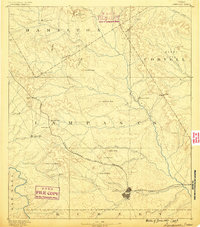 1887 Lampasas1887 Print · USGSThe Lampasas region in the late 1880s shows the arrival of the Gulf Colorado and Santa Fe Railroad alongside early frontier settlements. Local historians can trace old post offices and milling sites like Townsen Mills, Wayback, and Senterfitt among the numerous gaps and peaks of the Hill Country.
 - 1888 Map of Hamilton
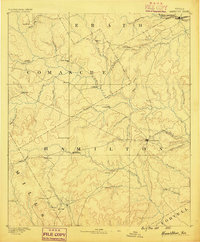 1888 Hamilton1888 Print · USGSCentral Texas during the 1880s is captured here at a moment of early frontier growth and agricultural settlement. Researchers can trace the original locations of rural centers like Gentry Mill, Pottsville, and the remote post office at Indian Gap.
 - 1888 Map of Meridian
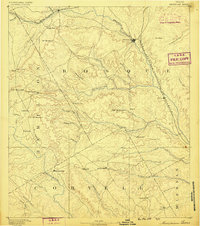 1888 Meridian1888 Print · USGSBosque and Coryell counties are shown here in the 1880s as the rail lines began to redefine the frontier landscape. Genealogists can locate early settlements like Turnersville, Cranfills Gap, and the rail junction at Meridian.
 - 1889 Map of Granbury
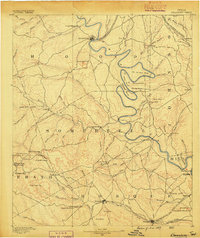 1889 Granbury1889 Print · USGSIn the late 1880s, the Brazos River dictated the life and travel of North Texas, carving deep bends through Hood and Somervell counties. Genealogists and historians can trace early settlements like Fort Spunky and Glenrose or the routes of the Texas Central Railroad.6 unique versions available
 - 1890 Map of Stephenville
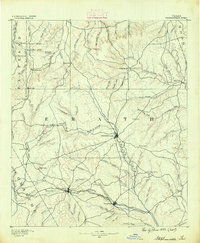 1890 Stephenville1890 Print · USGSErath County at the close of the frontier era centers on the rising trade hub of Stephenville and its surrounding hill country. Researchers can trace the original Texas Central Railroad corridor through Dublin and find vanished locales like Duffau Wells.5 unique versions available
 - 1894 Map of Hamilton
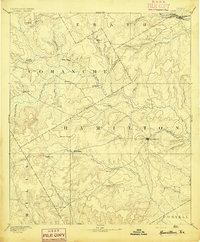 1894 Hamilton1894 Print · USGSCentral Texas ranching and farming communities are captured here in the 1890s, just after the initial frontier period. Genealogists can locate family-named landmarks and early settlements like Gentry Mill, Indian Gap, and Hazle Dell along the Leon River.5 unique versions available
 - 1894 Map of Meridian
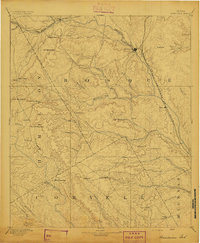 1894 Meridian1894 Print · USGSBosque and Coryell counties are shown in the late nineteenth century as the railroads began to reshape the cattle frontier. Genealogists and local historians can trace early settlements and community landmarks like Norse, Cranfills Gap, and Turnersville.3 unique versions available
 - 1894 Map of Lampasas
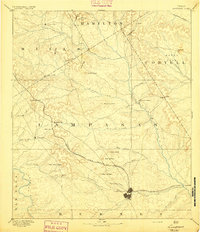 1894 Lampasas1894 Print · USGSLampasas and the surrounding hill country are shown in the years following the arrival of the rail. Genealogists can trace family-named landmarks like Kinchelo Peak and old post offices at Senterfitt, Nix, and Wayback.4 unique versions available
 - 1920 Map of Stephenville
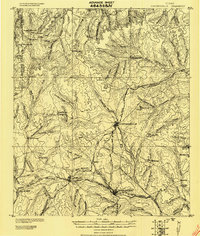 1920 Stephenville1920 Print · USGSErath County thrived at the intersection of three major railroads during the early twentieth century. Genealogists and historians can trace the foundations of Stephenville and Dublin, alongside rural landmarks like Morgan Mill and Tanner School.
 - 1954 Map of Brownwood, 1955 Print
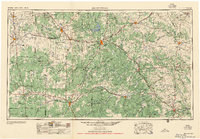 1954 Brownwood1955 Print · USGSCentral Texas in the early fifties shows a landscape of rail-linked cattle towns and winding river valleys before modern highway expansion. Genealogists and historians can trace family-named peaks and vanished rail stops like Trickham, Santa Anna, and the Brady Mountains.3 unique versions available
 - 1954 Map of Evant, 1956 Print
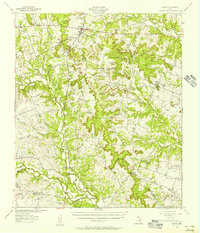 1954 Evant1956 Print · USGSMid-century Central Texas comes to life through the springs and creek beds of Coryell and Hamilton Counties. Family historians can trace rural roots through Townsen Cem, Hines Chapel, and the USAF Practice Bombing Target near Adamsville.
 - 1954 Map of Evant, 1957 Print
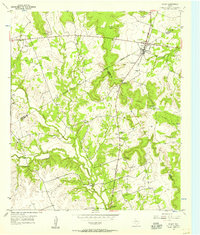 1954 Evant1957 Print · USGSEvant sits at the meeting point of three counties in the mid-1950s, serving as a crossroads for rural life and the regional cattle economy. Genealogists can trace family footprints through numerous small burial sites like Pilgrims Rest Cemetery or locate historical river landmarks such as Faubion Crossing.2 unique versions available
 - 1954 Map of Pearl, 1957 Print
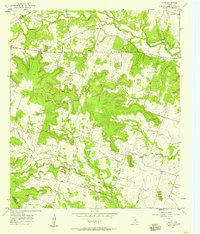 1954 Pearl1957 Print · USGSCentral Texas ranching country in the mid-1950s reveals a network of isolated settlements and vital water sources. Genealogists and historians can trace family-named landmarks like Wayback Mountain and Fletchers Point or locate the communities of Pearl and Bee House.
 - 1954 Map of Dallas, 1963 Print
 1954 Dallas1963 Print · USGSNorth Texas in the mid-fifties and early sixties reveals a landscape of rapid urban growth and water management. Genealogists and historians can trace the evolution of the metroplex through landmarks like Hensley Field, Boles Orphan Home, and the Texas & Pacific RR.4 unique versions available
 - 1954 Map of Waco, 1964 Print
 1954 Waco1964 Print · USGSCentral Texas during the mid-fifties shows a landscape defined by the expansion of Fort Hood Military Reservation and the Brazos river system. Trace the rail lines and early airfields like James Connally Air Force Base and settlements like Temple or McGregor.2 unique versions available
 - 1954 Map of Abilene, 1966 Print
 1954 Abilene1966 Print · USGSThe Texas Big Country comes into focus in the mid-1950s as petroleum and new water projects reshape the landscape. Local historians can trace the Butterfield Trail, find the Fort Phantom Hill Ruins, and locate numerous small communities along the Texas & Pacific line.2 unique versions available
 - 1955 Map of Waco
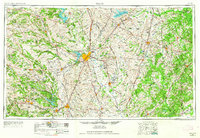 1955 Waco1955 Print · USGSCentral Texas at the peak of the Cold War reveals a landscape defined by military expansion and major water projects. Researchers can trace the footprints of Fort Hood, the waters of Lake Waco, and regional hubs like Temple or Mexia.
 - 1955 Map of Ater, 1956 Print
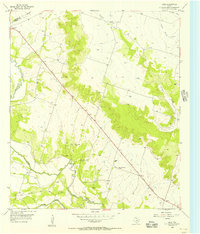 1955 Ater1956 Print · USGSCoryell County in the mid-1950s shows a rural landscape where the Leon River and 36th Division Memorial Highway meet. Researchers can trace family history at Weaver Chapel Cem or locate the Old Railroad Grade near Ater.2 unique versions available
 - 1956 Map of Gustine
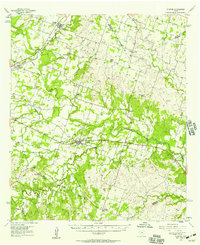 1956 Gustine1956 Print · USGSMid-century Comanche County is seen here just as the highway network was being formalized around the Leon River valley. Genealogists can trace family names through numerous rural sites like Graham Chapel Cem, Energy Sch, and the town of Gustine.
 - 1956 Map of Jonesboro
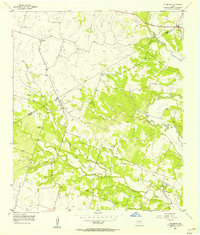 1956 Jonesboro1956 Print · USGSCoryell and Hamilton counties appear in the mid-1950s as a landscape of small farming hubs and disappearing rail lines. Researchers can trace family history at Willy Grubb Cemetery and follow the path of the Old Railroad Grade through Ireland.
 - 1956 Map of Cranfills Gap, 1957 Print
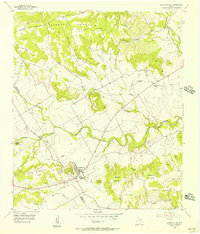 1956 Cranfills Gap1957 Print · USGSThe mid-century landscape around Cranfills Gap was a mosaic of family-named peaks and small rural cemeteries. Researchers can trace local heritage through landmarks like The Rock Ch, the Cox-Burton Graves, and the curiously named The Baptism Hole.3 unique versions available
 - 1956 Map of Gentrys Mill, 1957 Print
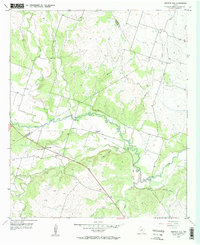 1956 Gentrys Mill1957 Print · USGSHamilton and Comanche counties appear in the mid-fifties as a landscape of established family farms and transitioning transit lines. Researchers can locate several remote burial sites like Toliver Cem and trace the path of the Old Railroad Grade past Springtown (Aband).2 unique versions available
 - 1956 Map of German Valley, 1957 Print
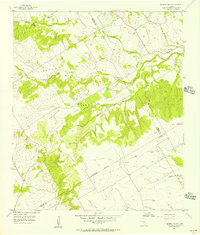 1956 German Valley1957 Print · USGSThe Texas Hill Country crossroads where Hamilton, Bosque, and Coryell Counties meet are shown here in the mid-1950s. Genealogists can trace family landmarks like German Valley Cem, Boggy Cem, and the Goar Valley Polling Booth.
 - 1956 Map of Pottsville, 1957 Print
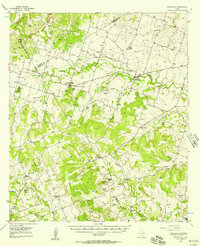 1956 Pottsville1957 Print · USGSHamilton County ranching and rural life are preserved here in the mid-1950s, showing the landscape before modern consolidation. Researchers can trace family sites like the Cottage Hill Cem, locate the Indian Cave, or find the now-abandoned McGirk Sch.
 - 1956 Map of Ohio, 1957 Print
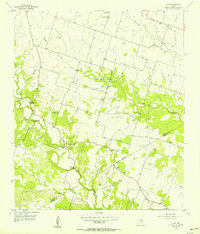 1956 Ohio1957 Print · USGSHamilton County ranchlands and rural settlements are caught mid-century, just as local schoolhouses and rail lines began to fade from the landscape. Genealogists and historians can trace the family-named Parsley Ford Crossing and Jeffries Bridge or locate the Live Oak Ch and Ohio settlement.2 unique versions available
Showing maps 1-25 of 179
Top cities of Hamilton County
Frequently asked questions
- What are the different types of historical maps available for Hamilton County?
- What is the oldest map of Hamilton County?
- Where can I purchase historical maps of Hamilton County for my home or office?
- Where can I download high-res historical maps of Hamilton County?
- Are there historical topographic maps available for Hamilton County?
- Is there historical aerial imagery available for Hamilton County?
- Where are historical maps of Hamilton County sourced from?