Old Maps of Jones County, Texas
Explore 156 old maps of Jones County, spanning from 1891 to today. These high-resolution historic maps reveal how streets, neighborhoods, landmarks, and natural features evolved over time — perfect for genealogy, metal detecting, research, and local history exploration.
What you can do with these maps:
- See how Jones County changed over time: Compare historical maps to modern-day views to trace roads, homesites, rail lines & more.
- View detailed metadata: Each map includes creators, publishers, year, scale, and archive source.
- Overlay maps with satellite & LiDAR: Visualize the past alongside modern tools to explore terrain & human change.
- Trusted historical sources: Maps sourced from the USGS, Library of Congress, and other archives.
- Access maps your way: View online, download high-res files, or order prints for personal or research use.
Start exploring old maps of Jones County to uncover forgotten places, hidden landmarks, and the deep history beneath your feet.
Jones County, TX maps
(156)- 1891 Map of Anson
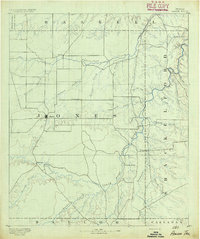 1891 Anson1891 Print · USGSJones County was still a frontier of small settlements and river crossings in the early 1890s. Genealogists and researchers can trace the early footprints of Anson alongside forgotten locales like Sandersville, Phantom Hill, and Rising Sun.
 - 1893 Map of Roby
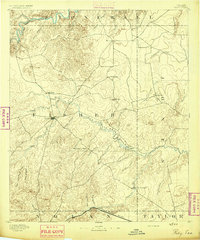 1893 Roby1893 Print · USGSFisher and Jones Counties come alive in the 1890s as early ranching settlements and rail sidings begin to dot the West Texas plains. Researchers can trace the early layout of Roby and locate lost community sites like Swedonia, Taopi, or the Winters Chapel congregation.4 unique versions available
 - 1893 Map of Anson
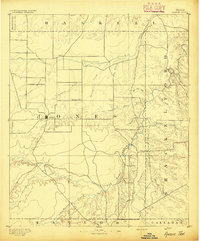 1893 Anson1893 Print · USGSCentral West Texas in the early 1890s shows a landscape of cattle ranches and early outposts. Genealogists can locate family-named settlements like Sandersville and Newsom or trace the early community at Phantom Hill.5 unique versions available
 - 1954 Map of Big Spring, 1965 Print
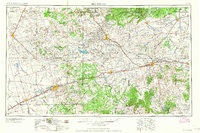 1954 Big Spring1965 Print · USGSWest Texas in the mid-1950s shows a landscape of growing oil towns and vital rail links along the Texas and Pacific RR. Researchers can trace the development of Big Spring, find smaller settlements like Knott and Lomax, or locate landmarks such as Boyds Chapel and Signal Mountain.4 unique versions available
 - 1954 Map of Abilene, 1966 Print
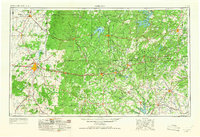 1954 Abilene1966 Print · USGSThe Texas Big Country comes into focus in the mid-1950s as petroleum and new water projects reshape the landscape. Local historians can trace the Butterfield Trail, find the Fort Phantom Hill Ruins, and locate numerous small communities along the Texas & Pacific line.2 unique versions available
 - 1957 Map of Hawley, 1958 Print
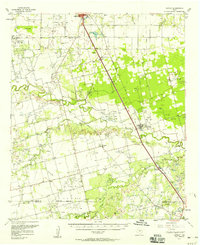 1957 Hawley1958 Print · USGSJones and Taylor Counties are captured in the late fifties during a period of significant petroleum expansion and rural settlement. Genealogists and historians can trace family roots at Hawley, Anson, and the Cosden Refinery, or locate old landmarks like the Hodges Sch.
 - 1957 Map of Nugent, 1958 Print
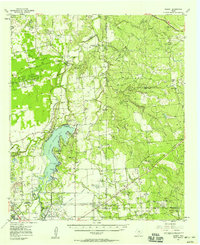 1957 Nugent1958 Print · USGSThe West Texas ranchlands and oil fields of Jones and Taylor counties are captured here in the late fifties. Genealogists and local historians can trace the foundations of Hamby, the Fort Phantom Hill ruins, and family landmarks like the Davis Ranch.
 - 1957 Map of Hawley, 1958 Print
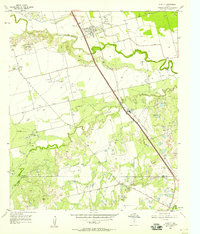 1957 Hawley1958 Print · USGSWest Texas ranching and petroleum interests converge in the late 1950s along the winding Clear Fork Brazos River. Researchers can trace the mid-century industrial footprint of the Cosden Refinery and the Hawley Oil Field alongside the Old Anson Road.4 unique versions available
 - 1957 Map of Noodle, 1958 Print
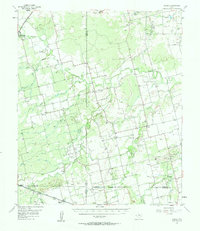 1957 Noodle1958 Print · USGSJones and Fisher Counties appear here during a mid-century period of active oil exploration and railroad transport. Researchers can trace the rural infrastructure of Noodle and Sylvester, alongside landmarks like Newman Ch and the Raven Oil Field.
 - 1957 Map of Hamby, 1958 Print
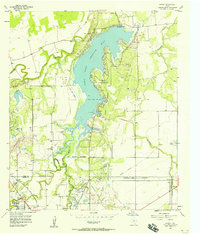 1957 Hamby1958 Print · USGSThe West Texas plains northeast of Abilene are captured here in the late fifties as water infrastructure transformed the landscape. Trace the shores of Lake Fort Phantom Hill and find local landmarks like the Drive-in Theater and the community of Hamby.4 unique versions available
 - 1958 Map of Big Spring
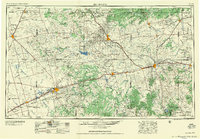 1958 Big Spring1958 Print · USGSThe West Texas oil boom was in full swing during the late fifties, transforming the landscape around Howard and Mitchell counties. Genealogists and historians can trace the growth of Big Spring and Snyder alongside industrial landmarks like the Kelly-Snyder Oil Field and the Santa Fe rail lines.
 - 1958 Map of Abilene
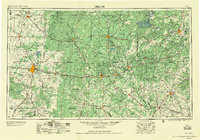 1958 Abilene1958 Print · USGSMid-century West Texas comes alive in this survey of the Abilene and Stephenville region during a period of steady oil expansion and military growth. Genealogists and local historians can trace the paths of the Texas & Pacific RR through historic towns, locate the Fort Griffin Ruins, and find smaller settlements like Desdemona and Lueders.
 - 1965 Map of Tuxedo, 1967 Print
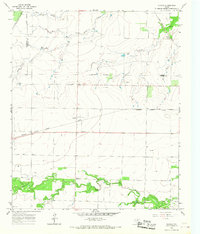 1965 Tuxedo1967 Print · USGSThe rural landscape of Jones and Haskell Counties is captured here in the mid-1960s, a time when rail lines and oil fields dominated the local economy. Genealogists and historians can trace family locations near Tuxedo, Capron Cem, and the Flat Top Ranch.2 unique versions available
 - 1965 Map of Lueders NW, 1967 Print
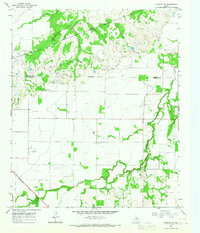 1965 Lueders NW1967 Print · USGSAgricultural and industrial life in the Texas Big Country comes into focus in the mid-sixties at the Jones and Haskell county line. Researchers can trace rural community landmarks like Bethel Cem, the local Cotton Gin, and the Missouri Kansas Texas rail line.
 - 1965 Map of Lueders NE, 1967 Print
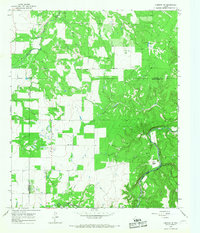 1965 Lueders NE1967 Print · USGSShackelford County was a blend of ranching tradition and oil production in the mid-1960s. Genealogists and local historians can locate the Rockdale Cem, Berryhill Sch, and the Hendrick Ranch along the Clear Fork Brazos River.
 - 1965 Map of Lueders West, 1967 Print
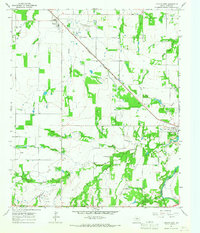 1965 Lueders West1967 Print · USGSJones County's limestone and oil industry are in full view during the mid-sixties, centered on the Lueders area. Researchers can trace the path of the Missouri - Kansas - Texas railroad and locate old family sites near Spring Creek Cem and Avoca.
 - 1965 Map of Lueders East, 1967 Print
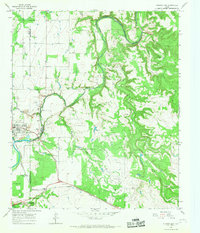 1965 Lueders East1967 Print · USGSThe Clear Fork of the Brazos River defined life along the Shackelford and Jones County line in the mid-1960s. Genealogists and historians can trace the tracks of the Missouri Kansas Texas railroad through Lueders, past the Lueders Cem and active Oil Field sites.2 unique versions available
 - 1965 Map of Funston, 1967 Print
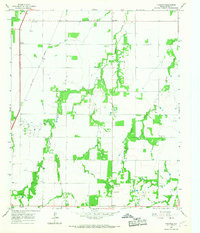 1965 Funston1967 Print · USGSJones County was a landscape of rail-connected settlements and oil activity during the mid-sixties. Genealogists and researchers can trace local family landmarks through sites like Mt Hope Cem, Swans Chapel, and the community at Corinth.
 - 1965 Map of Stamford, 1967 Print
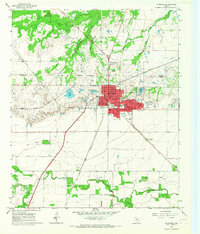 1965 Stamford1967 Print · USGSStamford in the mid-sixties served as a vital West Texas rail junction where the Fort Worth and Denver met the Missouri Kansas Texas line. Researchers can locate specific family sites near the Texas Cowboy Reunion Grounds, Stamford Cem, and local landmarks like Washington Sch.
 - 1965 Map of Hamlin NE, 1967 Print
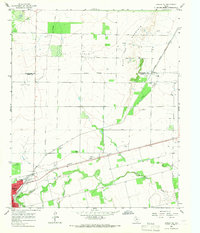 1965 Hamlin NE1967 Print · USGSThe West Texas ranching and oil country around Hamlin is captured here in the mid-sixties, showing a landscape defined by rail lines and resource extraction. Researchers can trace the legacy of the Atchison Topeka and Santa Fe, the East Cem, and the high ground of Flat Top Mountain.
 - 1965 Map of Neinda, 1967 Print
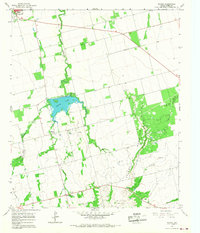 1965 Neinda1967 Print · USGSJones County's rural landscape is captured here in the mid-1960s, showing the intersection of ranching and oil production. Researchers can trace the layout of Neinda and Boyds Chapel, find the local Cem, and locate the old Drive-in Theater near Hamlin.
 - 1965 Map of Anson, 1967 Print
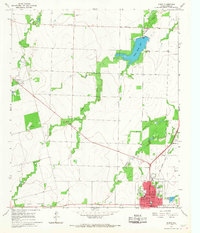 1965 Anson1967 Print · USGSJones County's plains are captured in the mid-sixties, centered on the growing town of Anson. Genealogists and historians can trace community landmarks like Anderson Chapel Cem, Hanna Ch, and the outlying settlement of Radium.
 - 1965 Map of Hamlin NW, 1967 Print
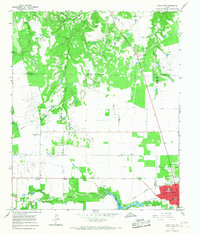 1965 Hamlin NW1967 Print · USGSFisher and Stonewall Counties in the mid-sixties reveal a landscape defined by petroleum production and rural community life. Researchers can trace family history at Afton Cem or locate vanished landmarks like Pardue Camp and Hitson.
 - 1965 Map of McCaulley, 1967 Print
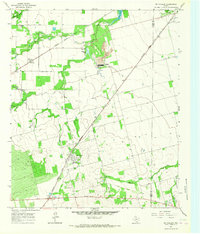 1965 McCaulley1967 Print · USGSFisher County and Jones County intersect in this mid-1960s survey of a rural Texas rail and mining corridor. Researchers can trace the industrial footprint of the Celotex plant and Strip Mine or locate family graves at the Swedonia Cem.2 unique versions available
 - 1984 Map of Noodle NE
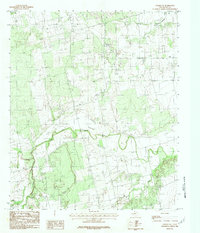 1984 Noodle NE1984 Print · USGSJones County's rural river valleys are captured here in the mid-1980s, documenting a landscape shaped by the Clear Fork Brazos River. Researchers can trace the winding paths of Noodle Creek and Sweetwater Creek to locate historical property boundaries.
Showing maps 1-25 of 156
Top cities of Jones County
Frequently asked questions
- What are the different types of historical maps available for Jones County?
- What is the oldest map of Jones County?
- Where can I purchase historical maps of Jones County for my home or office?
- Where can I download high-res historical maps of Jones County?
- Are there historical topographic maps available for Jones County?
- Is there historical aerial imagery available for Jones County?
- Where are historical maps of Jones County sourced from?