Old Maps of Llano County, Texas for Academic Research
Study the evolution of Llano County with 195 high-resolution historic maps. Whether you're teaching, researching, or modeling changes in land use, these maps provide essential visual documentation of urban, environmental, and geographic change.
- Analyze long-term change: Track patterns in development, transportation, and natural features.
- Ideal for environmental or urban studies: Support academic projects with primary historical map data.
- Use in the classroom or lab: Educators and researchers rely on these maps to bring historical context to life.
These maps are a powerful tool for teaching, research, and visualizing how Llano County has changed over the decades.
Llano County, TX maps
(195)- 1887 Map of Llano
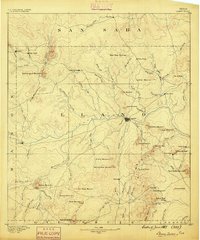 1887 Llano1887 Print · USGSThe Texas Hill Country emerges as a frontier of granite peaks and river valleys in the mid-1880s. Researchers can locate early settlements like Castell and Baby Head, or trace the rugged topography of Enchanted Rock and Pack Saddle Mountain.
 - 1887 Map of Blanco
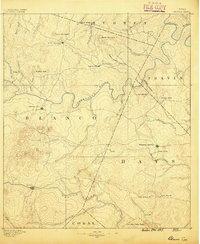 1887 Blanco1887 Print · USGSCentral Texas at the dawn of the Hill Country's development, when early ranching life centered on river fords and spring-fed creeks. Trace the paths between Johnson City, Blanco, and Dripping Springs, or locate landmarks like Jacob's Well and Dead Mans Hole.
 - 1887 Map of Burnet
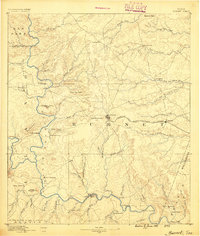 1887 Burnet1887 Print · USGSCentral Texas in the late nineteenth century is defined here by the arrival of the rail line and the wild course of the Colorado River. Genealogists and historians can trace early settlements and transit points like Tiger Mill, Bluffton, and Wolf Crossing.
 - 1893 Map of Burnet
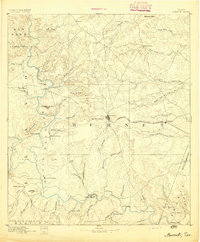 1893 Burnet1893 Print · USGSThe Texas Hill Country comes alive in this late nineteenth-century survey, showcasing a landscape of river crossings and early rail expansion. Researchers can locate vanished communities and rural landmarks like Tiger Mill, Wolf Crossing, and the old depot at Bertram.
 - 1894 Map of Fredericksburg
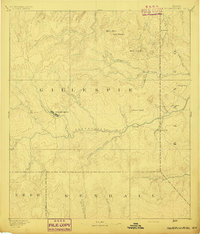 1894 Fredericksburg1894 Print · USGSTexas Hill Country life in the late 1800s is centered on Fredericksburg and the banks of the Pedernales River. Genealogists and historians can trace early settlements and post offices like Martinsburgh, Westbrook, and the curiously named Blowout.4 unique versions available
 - 1894 Map of Blanco
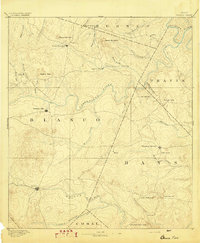 1894 Blanco1894 Print · USGSThe Texas Hill Country comes into focus during the late frontier era, centered on the newly established Johnson City and Blanco. Genealogists can trace early homesteads and communities near Jacobs Well, Dripping Springs, and the isolated Cypress Mill.5 unique versions available
 - 1894 Map of Llano
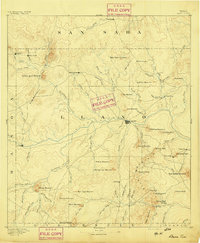 1894 Llano1894 Print · USGSThe Llano Uplift of Central Texas is captured here in the late nineteenth century as a landscape of remote ranching outposts and granite peaks. Genealogists and historians can trace the early layouts of Llano, Castell, and the community of Baby Head.
 - 1903 Map of Burnet
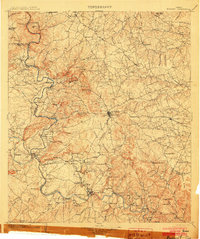 1903 Burnet1903 Print · USGSThe Texas Hill Country at the turn of the century shows a landscape of river-side industry and early rail expansion. Trace the historic Houston and Texas Central Railroad line through Burnet and Bertram or locate long-standing landmarks like Morman Mill and Tanyard Crossing.
 - 1904 Map of Llano
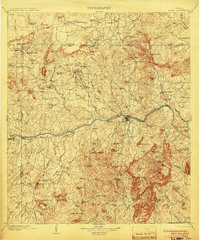 1904 Llano1904 Print · USGSThe Texas Hill Country around the turn of the century centered on the rail hub of Llano and the winding Llano River. Genealogists can trace early homesteads like Kuykendall's Ranch and locate remote landmarks such as Hesterville Church and the Iron Mine.
 - 1909 Map of Llano
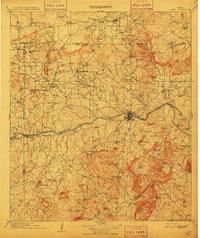 1909 Llano1909 Print · USGSCentral Texas at the first decade of the new century shows a landscape of cattle ranches and growing rail towns. Genealogists can locate family landmarks such as Atkinson's Ranch, Oxford, and rural social centers like Kennedy School or Wooten Church.3 unique versions available
 - 1909 Map of Burnet
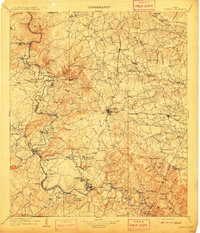 1909 Burnet1909 Print · USGSThe Texas Hill Country at the turn of the century shows a landscape of river crossings and rail towns before the creation of the Highland Lakes. Genealogists can locate family-named landmarks like Morman Mill, Tumlinson, and rural schoolhouses such as Berry School or Sunny Lane.3 unique versions available
 - 1918 Map of Llano
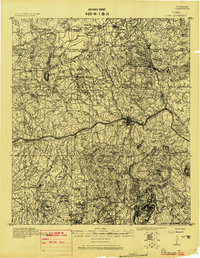 1918 Llano1918 Print · USGSThe Llano River country during the Great War era reveals a landscape of isolated cattle ranches and early mining efforts. Genealogists can trace family landmarks like Atkinson's Ranch and Taylorville or locate long-gone community centers like Kennedy School and Wooten Church.
 - 1925 Map of Burnet 3-b
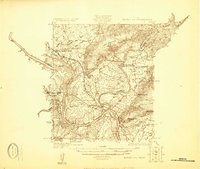 1925 Burnet 3-b1925 Print · USGSThe confluence of the Colorado and Llano Rivers defines this central Texas landscape in the mid-twenties. Genealogists can trace early rural life through family-named landmarks like Hoover Valley, the Pack Saddle School, and Mason Crossing.
 - 1925 Map of Burnet 2-c
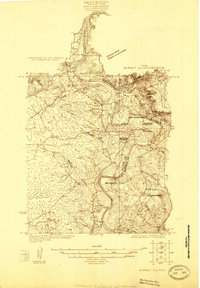 1925 Burnet 2-c1925 Print · USGSLlano and Burnet counties are defined by the winding course of the Colorado River in the mid-twenties. Genealogists and local historians can trace the foundations of riverside life at Bluffton, including Bluffton Cemetery and the old Saltworks Ford.
 - 1925 Map of Burnet 3-d
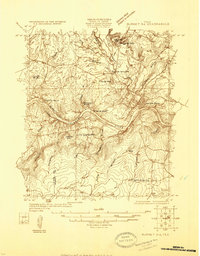 1925 Burnet 3-d1925 Print · USGSTexas hill country in the mid-twenties centers on the river-bend industry of the Colorado. Researchers can trace the early layout of Marble Falls and locate historical landmarks like Granite Mtn Sta, Rennison Knob, and Flatrock Spring.
 - 1929 Map of Marble Falls
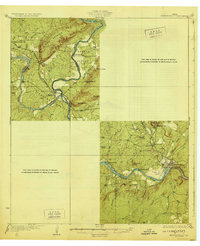 1929 Marble Falls1929 Print · USGSThe Texas Hill Country at the end of the 1920s shows the original river channels and granite industry before major reservoir construction. Trace early rail stops like Wood Spur and local landmarks such as Granite Mtn and Hoover Sch.
 - 1931 Map of Marble Falls
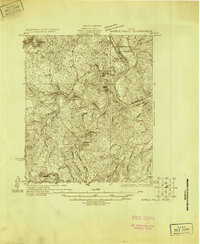 1931 Marble Falls1931 Print · USGSThe Texas Hill Country at the start of the 1930s is revealed here as a landscape of isolated peaks and winding river bends. Genealogists and local historians can trace family roots near Gaddy Crossing, the Upshaw settlement, or old schools like Sandy Mtn Sch.
 - 1932 Map of Tow
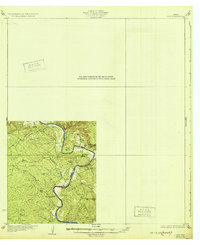 1932 Tow1932 Print · USGSThe Colorado River valley along the Llano and Burnet county line is captured here in the mid-1920s, before the landscape was altered by dams. Researchers can locate the settlement of Bluffton, the Bluffton Sch, and the river crossing at Saltworks Ford.2 unique versions available
 - 1932 Map of Marble Falls
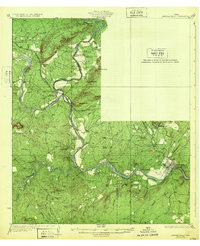 1932 Marble Falls1932 Print · USGSThe Colorado River valley at the LLano and Burnet County line is shown here in the early thirties, before the creation of the modern lakes. Researchers can trace the Southern Pacific rail line through Kingsland and locate rural schools like La Vista School and Hoover School.2 unique versions available
 - 1954 Map of Llano, 1964 Print
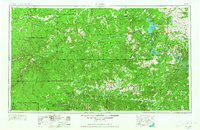 1954 Llano1964 Print · USGSThe Texas Hill Country and Highland Lakes appear in the mid-fifties, just as new reservoirs began reshaping the landscape. Trace ranching history and river routes from Mason to Llano, or follow the Gulf Colorado and Santa Fe RR past Buchanan Lake.2 unique versions available
 - 1955 Map of Llano
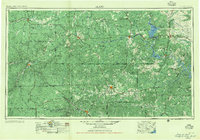 1955 Llano1955 Print · USGSCentral Texas and the Hill Country are seen here during the mid-1950s growth of the Highland Lakes. Trace old settlements and geologic landmarks from Enchanted Rock and Longhorn Cavern to the small community of Luckenbach.
 - 1955 Map of Magill Mountain, 1956 Print
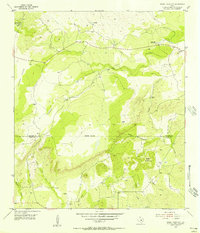 1955 Magill Mountain1956 Print · USGSThe Texas Hill Country at the San Saba and Llano county line is captured in the mid-fifties, showing a rugged ranching landscape. Genealogists and historians can trace family land via the Gray Cemetery and numerous windmills near Magill Mountain.3 unique versions available
 - 1955 Map of Valley Spring, 1956 Print
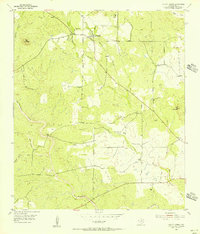 1955 Valley Spring1956 Print · USGSLlano County ranching country is captured here in the mid-fifties, showing the rural settlement patterns of the Texas Hill Country. Genealogists and historians can locate Valley Spring Cem, Shiloh Ch, and the cattle-country windmills dotting the banks of Sand Spring Creek.3 unique versions available
 - 1955 Map of Llano North, 1956 Print
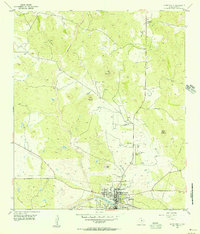 1955 Llano North1956 Print · USGSLlano was a thriving rail and river hub in the mid-1950s, serving as the gateway to the northern cattle and granite country. You can trace early family sites like Mayes Chapel Cem or locate vintage infrastructure like the Texas and New Orleans (SP) railroad and the County Airport.2 unique versions available
 - 1955 Map of Smoothingiron Mountain, 1956 Print
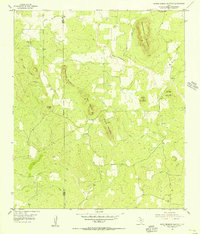 1955 Smoothingiron Mountain1956 Print · USGSThe Texas Hill Country at the mid-century reveals a landscape of isolated ranches and granite peaks along the Mason and Llano County line. Researchers can locate family burial sites like Newsom Cem and trace the drainage patterns of San Fernando Creek and North Willow Creek.2 unique versions available
Showing maps 1-25 of 195
Top cities of Llano County
- Horseshoe Bay historical maps
- Llano historical maps
- Sunrise Beach Village historical maps
- Baby Head historical maps
Frequently asked questions
- What are the different types of historical maps available for Llano County?
- What is the oldest map of Llano County?
- Where can I purchase historical maps of Llano County for my home or office?
- Where can I download high-res historical maps of Llano County?
- Are there historical topographic maps available for Llano County?
- Is there historical aerial imagery available for Llano County?
- Where are historical maps of Llano County sourced from?