Old Maps of Yellow Banks, Utah
Explore 11 old maps of Yellow Banks, spanning from 1885 to today. These high-resolution historic maps reveal how streets, neighborhoods, landmarks, and natural features evolved over time — perfect for genealogy, metal detecting, research, and local history exploration.
What you can do with these maps:
- See how Yellow Banks changed over time: Compare historical maps to modern-day views to trace roads, homesites, rail lines & more.
- View detailed metadata: Each map includes creators, publishers, year, scale, and archive source.
- Overlay maps with satellite & LiDAR: Visualize the past alongside modern tools to explore terrain & human change.
- Trusted historical sources: Maps sourced from the USGS, Library of Congress, and other archives.
- Access maps your way: View online, download high-res files, or order prints for personal or research use.
Start exploring old maps of Yellow Banks to uncover forgotten places, hidden landmarks, and the deep history beneath your feet.
Yellow Banks, UT maps
(11)- 1885 Map of Beaver
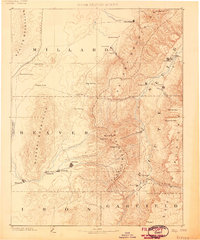 1885 Beaver1885 Print · USGSSouth-central Utah in the 1880s was a landscape of high plateaus and valley settlements tied to the lifelines of the Sevier River and Beaver Creek. Family researchers can trace early town layouts in Beaver and Fillmore or locate rural outposts like Minersville and Kanosh.5 unique versions available
 - 1953 Map of Richfield, 1963 Print
 1953 Richfield1963 Print · USGSCentral Utah in the early fifties reveals a complex geography of high plateaus and desert basins tied together by the Union Pacific rail lines. Genealogists and historians can trace family roots in Richfield or Kanosh and locate remote operations like the Blue Star Mine or Newhouse.3 unique versions available
 - 1958 Map of Richfield
 1958 Richfield1958 Print · USGSCentral Utah in the late fifties shows a landscape of mountain forests and desert basins connected by the Union Pacific Railroad. Genealogists and historians can trace rail stops at Nada Station, mines like the Blue Star Mine, and tribal lands of the Paiute Indian Reservation.2 unique versions available
 - 1958 Map of Adamsville, 1960 Print
 1958 Adamsville1960 Print · USGSNear the Beaver River in the late 1950s, this area supported both valley ranching and high-altitude mining. Researchers can trace historic claims like the Creole Mine and Honey Boy Mine or locate the old station at Murdock along the Union Pacific tracks.2 unique versions available
 - 1958 Map of Ranch Canyon, 1960 Print
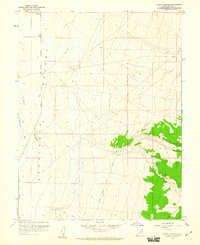 1958 Ranch Canyon1960 Print · USGSBeaver County at the end of the fifties reveals a landscape shaped by water engineering and desert transit. Genealogists and historians can trace the Pacific Union rail line and irrigation systems like The Low Line Canal near the settlement of Murdock.3 unique versions available
 - 1980 Map of Beaver, 1981 Print
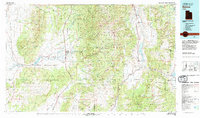 1980 Beaver1981 Print · USGSSouthern Utah at the start of the 1980s reveals a rugged landscape of high mountain plateaus and essential desert irrigation networks. Researchers can trace the path of the Denver and Rio Grande Western through Marysvale or locate local landmarks like the Deer Trail Mine and Puffer Lake.2 unique versions available
 - 2010 Map of Ranch Canyon, 2010 Print
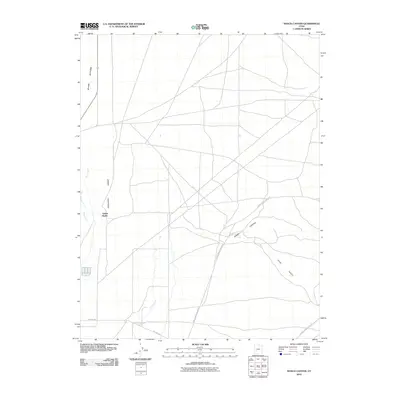 2010 Ranch Canyon2010 Print · USGSThe Escalante Desert landscape near Milford is captured here just after the turn of the millennium, showing a complex network of irrigation and desert transit. Trace the vital water routes of the High Line Canal or follow the remote paths through Ranch Canyon and Corral Canyon.
 - 2014 Map of Ranch Canyon, 2014 Print
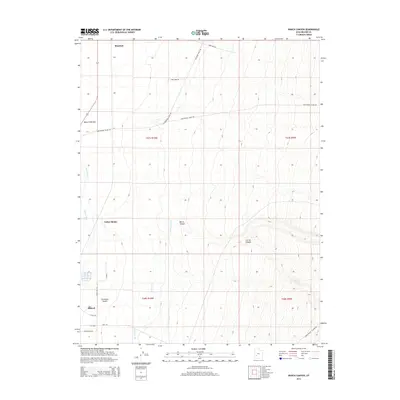 2014 Ranch Canyon2014 Print · USGSBeaver County energy and water infrastructure are documented in the early twenty-first century as wind and geothermal power expanded. Local historians can trace the irrigation network of the High Line Canal and Low Line Canal near Yellow Banks and Murdock.
 - 2017 Map of Ranch Canyon, 2017 Print
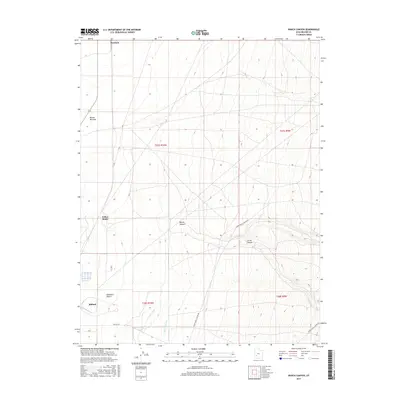 2017 Ranch Canyon2017 Print · USGSBeaver County’s desert basins and rugged canyon country are documented here in the late twenty-teens. Genealogists and researchers can trace water rights and land use through the Low Line Canal, the Beaver River, and the settlement of Milford.
 - 2020 Map of Ranch Canyon, 2020 Print
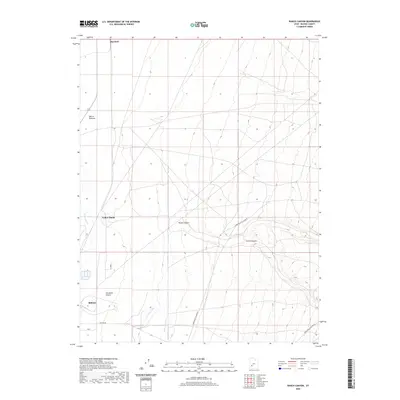 2020 Ranch Canyon2020 Print · USGSBeaver County at the edge of the desert and mountains shows a landscape defined by water management and transit. Trace the historical footprint of Milford and Murdock or follow the paths of the Low-Line Canal and the Beaver River through the valley.
 - 2023 Map of Ranch Canyon, 2023 Print
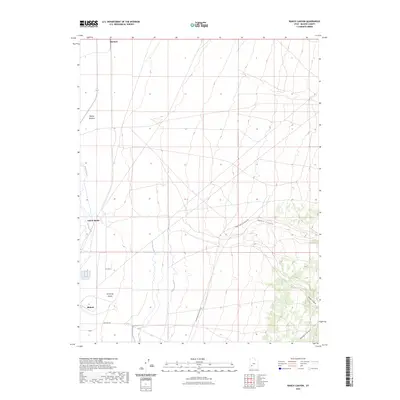 2023 Ranch Canyon2023 Print · USGSBeaver County at the edge of the Escalante Desert reveals a landscape of managed water and rugged canyons. Trace the path of the Beaver River and the critical irrigation network of the High Line Canal near the settlement of Murdock.
End of results
Showing maps 1-11 of 11
Top cities near Yellow Banks
Frequently asked questions
- What are the different types of historical maps available for Yellow Banks?
- What is the oldest map of Yellow Banks?
- Where can I purchase historical maps of Yellow Banks for my home or office?
- Where can I download high-res historical maps of Yellow Banks?
- Are there historical topographic maps available for Yellow Banks?
- Is there historical aerial imagery available for Yellow Banks?
- Where are historical maps of Yellow Banks sourced from?