Old Maps of Groton, Vermont for Academic Research
Study the evolution of Groton with 41 high-resolution historic maps. Whether you're teaching, researching, or modeling changes in land use, these maps provide essential visual documentation of urban, environmental, and geographic change.
- Analyze long-term change: Track patterns in development, transportation, and natural features.
- Ideal for environmental or urban studies: Support academic projects with primary historical map data.
- Use in the classroom or lab: Educators and researchers rely on these maps to bring historical context to life.
These maps are a powerful tool for teaching, research, and visualizing how Groton has changed over the decades.
Groton, VT maps
(41)- 1931 Map of Woodsville
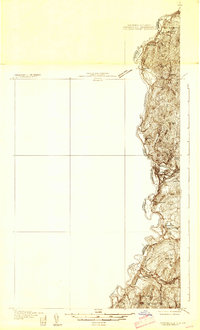 1931 Woodsville1931 Print · USGSThe Upper Connecticut River Valley in the early 1930s reveals a landscape of riverside rail towns and debated state boundaries. Genealogists and historians can trace the foundations of local life through labels like the North Monroe Ch, Blackmount Sta, and the County Poor Farm.
 - 1935 Map of Woodsville
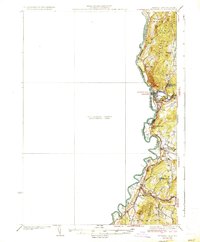 1935 Woodsville1935 Print · USGSThe Connecticut River valley in the mid-1930s is captured here in detail along the Vermont-New Hampshire border. Researchers can trace the legacy of local institutions and transport at the County Poor Farm, the Blackmount Sta rail stop, and The Oxbow.5 unique versions available
 - 1938 Map of St. Johnsbury
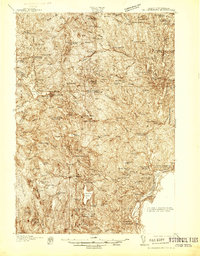 1938 St. Johnsbury1938 Print · USGSNorthern Vermont in the late thirties reveals a landscape of rail-connected valley towns and upland farming districts. Locate old schoolhouses like Stark Sch, trace the St Johnsbury and Lake Champlain RR, and find family landmarks near Harvey Lake.
 - 1939 Map of Plainfield
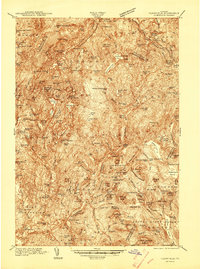 1939 Plainfield1939 Print · USGSVermont's granite-and-timber country is captured here on the eve of the 1940s, when remote rail lines still connected upland villages. Genealogists can trace family names at the Old West Ch, Hollister Hill Sch, and the isolated Lanesboro rail stop.
 - 1940 Map of Plainfield, 1953 Print
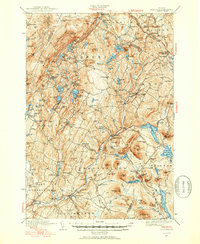 1940 Plainfield1953 Print · USGSVermont's hill country is captured here just before the war, showing a landscape defined by small farms and upland schools. Genealogists can locate family landmarks at Maple Cors Calais PO, Old West Ch, and the St Johnsbury and Lake Champlain RR.2 unique versions available
 - 1941 Map of Woodsville
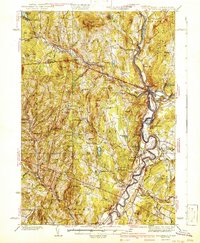 1941 Woodsville1941 Print · USGSThe Connecticut River valley was a bustling corridor of granite quarries and rail junctions just before the war. You can trace the legacy of local industry and education through landmarks like Gibson Quarry, the County Poor Farm, and Town Farm Sch.4 unique versions available
 - 1943 Map of Plainfield
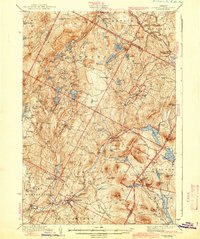 1943 Plainfield1943 Print · USGSVermont's highland farming and rail communities are captured here in the 1940s as the state's rural landscape remained densely settled. Genealogists can locate family-named landmarks like Hollister Hill Sch, trace the Montpelier and Wells River RR, or find the Old West Ch near Kent Cors.2 unique versions available
 - 1943 Map of St. Johnsbury
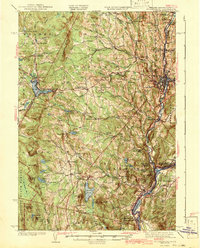 1943 St. Johnsbury1943 Print · USGSUpper Vermont and New Hampshire communities thrive along the Connecticut and Passumpsic rivers during the early war years. Genealogists can trace family names at Walden Four Corners, find rural schoolhouses like Stanton Sch, or locate the Goslants Mill site.3 unique versions available
 - 1947 Map of Corinth
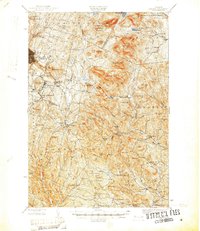 1947 Corinth1947 Print · USGSThe granite quarrying region of Vermont is captured here just after the war, showing the industrial density of the hills. Genealogists can trace family roots through numerous local landmarks like Wilson Cem, Miles Sch, and settlements such as Goose Green and Websterville.
 - 1948 Map of East Barre
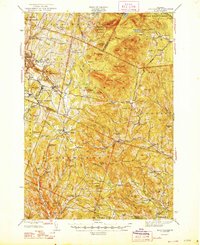 1948 East Barre1948 Print · USGSCentral Vermont's quarrying and timber lands are captured here just after the war, showing the industrial centers of the Knox Mountains area. Genealogists can trace family roots through numerous remote burial grounds like Hutchinson Cem and schoolhouses such as Quarry Sch.2 unique versions available
 - 1949 Map of St. Johnsbury, 1957 Print
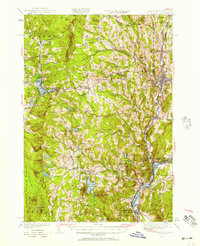 1949 St. Johnsbury1957 Print · USGSCaledonia County and the upper Connecticut River valley are captured here just after the war, showing a landscape defined by rail and river. Genealogists and local historians can locate early landmarks like Walden Four Corners, the Frank D Comerford Hydro-electric Plant, and the historic Hazen Road.3 unique versions available
 - 1950 Map of Lake Champlain
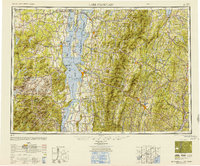 1950 Lake Champlain1950 Print · USGSThe Lake Champlain valley and its surrounding peaks are captured in detail during the late 1940s, showing the vital rail and road connections between New York and Vermont. Researchers can trace the routes of the Central Vermont Railway or locate old industrial centers like Mineville and Witherbee.2 unique versions available
 - 1953 Map of Plainfield, 1954 Print
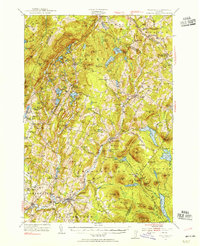 1953 Plainfield1954 Print · USGSThe hills of Washington and Caledonia counties are captured here in the early fifties, showing the region's transition from old upland farming to a wood-and-water economy. Researchers can locate vanished landmarks like Maple Cor Calais PO, the Dwinell Sch, and the St Johnsbury and Lake Champlain RR.4 unique versions available
 - 1957 Map of East Barre, 1959 Print
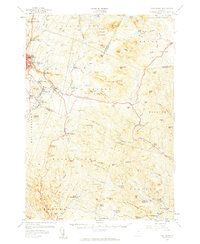 1957 East Barre1959 Print · USGSThe granite industry and deep woodland of central Vermont are on display in the mid-fifties. Genealogists can trace family lines through Wilson Cem or locate the Quarry Sch near Upper Graniteville.4 unique versions available
 - 1958 Map of Lake Champlain
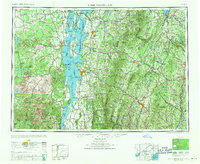 1958 Lake Champlain1958 Print · USGSThe Champlain Valley and surrounding high peaks are captured here in the late fifties, showcasing the cross-border region from the Adirondacks to the Green Mountains. Researchers can trace historic rail routes like the Rutland Railway or locate old valley settlements such as Keeseville and Vergennes.2 unique versions available
 - 1962 Map of Lake Champlain, 1975 Print
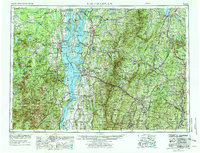 1962 Lake Champlain1975 Print · USGSLake Champlain and the high peaks of the Adirondacks and Green Mountains are captured here during the mid-twentieth century. Researchers can trace the industrial legacy of the Lyon Mountain Mine and the rail corridors of the Central Vermont RR and Delaware & Hudson RR.3 unique versions available
 - 1973 Map of Groton, 1975 Print
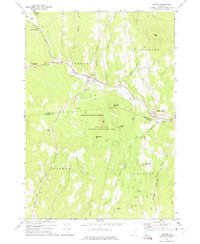 1973 Groton1975 Print · USGSThe Wells River valley in the early 1970s reveals a landscape of upland forests and small mountain settlements. Researchers can trace the Old Railroad Grade past Ricker Mills or locate local burials at Hillside Cem and Pinehurst Cem.
 - 1981 Map of Knox Mountain
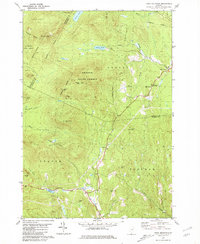 1981 Knox Mountain1981 Print · USGSThe Vermont highlands near Orange and Groton are captured in the early 1980s, showing a landscape shaped by state forests and mountain peaks. Genealogists and hikers can locate Westville Cem, the William Scott Mem Mon, and the Lookout Tower atop Spruce Mtn.2 unique versions available
 - 1983 Map of Barnet
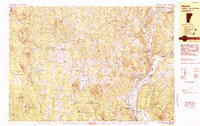 1983 Barnet1983 Print · USGSThe Vermont and New Hampshire borderlands come alive in the early eighties, centered on the river-and-rail corridor of the Connecticut River. Researchers can trace the Canadian Pacific tracks through Barnet and locate small hamlets like Ewells Mills and Mosquitoville.
 - 1986 Map of Marshfield, 1987 Print
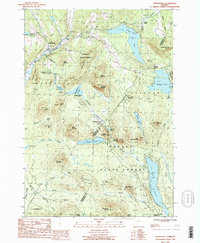 1986 Marshfield1987 Print · USGSThe Green Mountain foothills and the sprawling Groton State Forest are documented in the mid-eighties. Trace old settlements like Marshfield Station and Lanesboro alongside the shores of Lake Groton.
 - 1988 Map of Montpelier
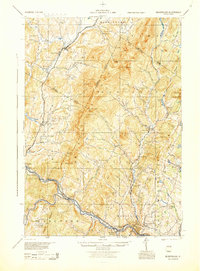 1988 Montpelier1988 Print · USGSThe area surrounding Vermont’s capital city appears here during the early 1940s, showing the vital rail-and-river network. Genealogists can trace family names across a dozen district schools and rural sites like Middlesex Center and the Talc Mine.2 unique versions available
 - 2012 Map of Peacham, 2012 Print
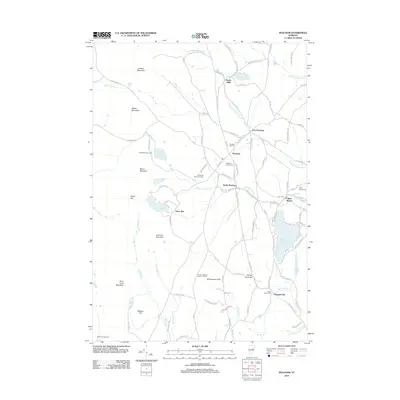 2012 Peacham2012 Print · USGSCaledonia County, Vermont, remains a landscape of upland peaks and valley villages in this early twenty-first-century record. Genealogists can locate family plots at Peacham Corner Cem and West Barnet Cem or trace the early path of the Bayley-Hazen Rd.
 - 2012 Map of Groton, 2012 Print
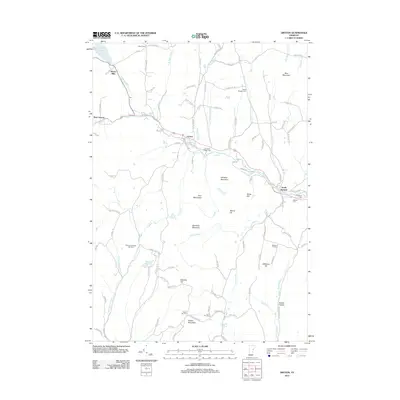 2012 Groton2012 Print · USGSUpper Connecticut River Valley life in the early twenty-first century is captured here through the network of mountain settlements and river valleys. Genealogists can trace family names and sites across locations like Ricker Mills, Scotch Hollow, and the remote Huckins-Caldwell Hill Cem.
 - 2012 Map of Knox Mountain, 2012 Print
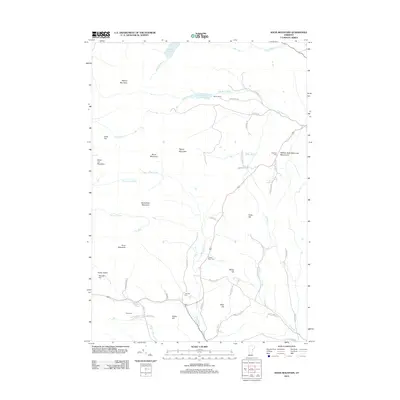 2012 Knox Mountain2012 Print · USGSThe Vermont highlands near Marshfield appear in detail during the early 2010s, showing a rugged landscape of high peaks and scattered family cemeteries. Researchers can locate the William Scott Memorial Monument or trace ancestral sites at Westville Cem and Groton Road Cem.
 - 2012 Map of Marshfield, 2012 Print
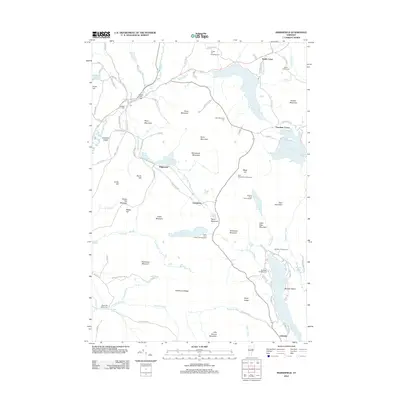 2012 Marshfield2012 Print · USGSVermont's high country and the headwaters of the Winooski River are captured here in the early twenty-first century. Genealogists and local historians can locate several historic burial sites like Hudson Cem and Wooster Cem or trace the old paths of the Railroad Bed W.
Showing maps 1-25 of 41
Top cities near Groton
- Barre historical maps
- Saint Johnsbury historical maps
- Haverhill historical maps
- Williamstown historical maps
- Hardwick historical maps
- East Montpelier historical maps
See more
Top neighborhoods of Groton
Frequently asked questions
- What are the different types of historical maps available for Groton?
- What is the oldest map of Groton?
- Where can I purchase historical maps of Groton for my home or office?
- Where can I download high-res historical maps of Groton?
- Are there historical topographic maps available for Groton?
- Is there historical aerial imagery available for Groton?
- Where are historical maps of Groton sourced from?