1900s (20th Century) Maps of Tazewell County, Virginia
Explore 69 historic maps of Tazewell County from the 1900s (20th Century). These maps offer a rare glimpse into what life looked like during the 1900s — showing old roads, neighborhoods, homes, and landmarks that have changed or disappeared over time.
Whether you're researching your family's past, planning a metal detecting trip, or studying how Tazewell County's landscape evolved across the 1900s, these high-resolution maps are a powerful tool for exploring the history of this region.
- Focus on a specific era: All maps on this page are from the 1900s, giving you a focused view of this time period.
- See what’s changed: Compare century-old streets, trails, and buildings to today's modern landscape using overlays and satellite layers.
- Research with precision: Use these maps for genealogy, historical research, land use analysis, or educational projects.
- View, download, or print: Maps are fully viewable online in high resolution, and can be downloaded or printed for your own records.
Start exploring Tazewell County's history through authentic maps from the 1900s. This is your window into the past.
Tazewell County, VA maps
(69)- 1909 Map of Pocahontas Special
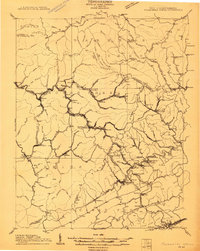 1909 Pocahontas Special1909 Print · USGSThe Pocahontas coalfields are at the peak of their industrial expansion in this early century survey. Genealogists and historians can trace rail-tied communities like Switchback P O, Bramwell, and the rural Bailey Chapel along the steep mountain ridges.
 - 1909 Map of Abingdon
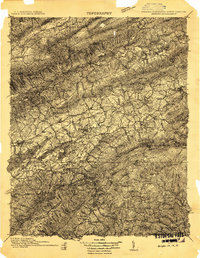 1909 Abingdon1909 Print · USGSSouthwest Virginia at the first decade's end shows a valley landscape defined by the iron rail and steep ridges. Genealogists and historians can trace the early layouts of Abingdon and Glade Spring, or locate landmarks like Dove Mills and the County Farm.2 unique versions available
 - 1911 Map of Abingdon
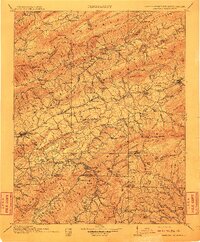 1911 Abingdon1911 Print · USGSSouthwest Virginia's rugged corridors are captured here during the height of the mountain rail era. Genealogists and historians can trace old homesteads and local landmarks such as Whites Mill, Valley Church, and the County Farm near Abingdon.5 unique versions available
 - 1911 Map of Pocahontas Special
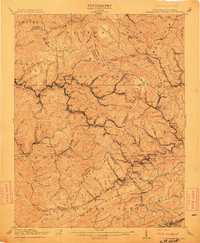 1911 Pocahontas Special1911 Print · USGSThe West Virginia coalfields are in full industrial bloom in this early century survey, showing the rail-dependent towns along the Norfolk & Western RR. Genealogists can trace family locations in mining hubs like Keystone, Goodwill, and Bearwallow Worth PO.
 - 1912 Map of Pounding Mill
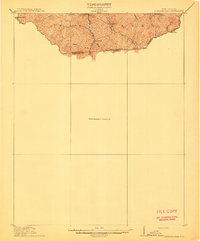 1912 Pounding Mill1912 Print · USGSThe McDowell and Tazewell borderlands appear here in the decade before the First World War, showing the early infrastructure of this mountainous region. Researchers can trace the path of Squire Jim Road and locate the settlement of Horsepen among the headwaters of Big Creek.
 - 1912 Map of Welch
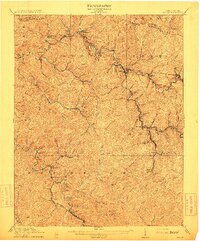 1912 Welch1912 Print · USGSMcDowell County's coal country comes alive in this pre-war survey, centered on the junction of the Norfolk and Western RR and the Tug Fork. Trace the early development of mining towns like Coalwood, Gary, and Kimball or locate vanished post offices such as Yukon PO.2 unique versions available
 - 1913 Map of Bluefield
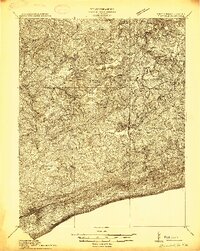 1913 Bluefield1913 Print · USGSMercer County and the Virginia borderlands are captured here just before the Great War, showing a landscape of mountain ridges and river valleys. Genealogists and historians can locate dozens of early rural schoolhouses like Sand Gap School and Grecian Bend School, alongside the developing streets of Princeton and South Bluefield.
 - 1915 Map of Richlands
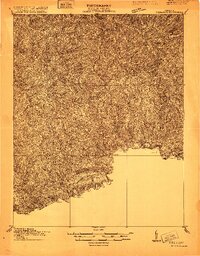 1915 Richlands1915 Print · USGSThe Clinch River valley in the years before the Great War is a network of coal-country settlements and mountain passes. Genealogists can locate family schoolhouses like Drill School or trace the early Norfolk and Western rail lines through Raven and Richlands.
 - 1916 Map of Bluefield
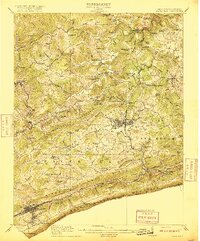 1916 Bluefield1916 Print · USGSMercer County and the Virginia border come alive in this survey of coal-country rail and mountain ridge communities. Genealogists can trace family roots through dozens of named schools like Sand Gap School and early post offices such as Hardy PO.
 - 1916 Map of Pounding Mill
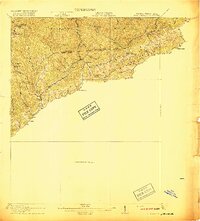 1916 Pounding Mill1916 Print · USGSThe Virginia and West Virginia state line was a rugged landscape of isolated mountain hollows and ridge-top knobs during the early twentieth century. Genealogists can trace family footprints near Greasy Creek School, the NORFOLK AND WESTERN RR, and the settlement of Sayersville.
 - 1916 Map of Richlands
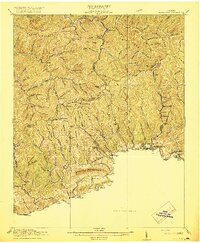 1916 Richlands1916 Print · USGSThe Clinch River valley was entering a period of industrial growth just before the First World War as rail lines followed the water. Genealogists can trace family roots through numerous mountain schools and hamlets like Antioch School, Red Ash, and Cedar Bluff.5 unique versions available
 - 1924 Map of Bramwell, 1956 Print
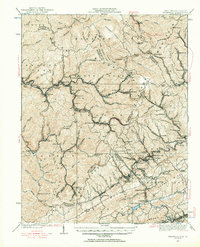 1924 Bramwell1956 Print · USGSCoalfield life thrives along the river-and-rail corridor in the early twentieth century. Researchers can trace family roots in industrial settlements like Jenkinjones and Northfork or locate landmarks such as Bailey Chapel and Little Creek School.
 - 1924 Map of Welch, 1957 Print
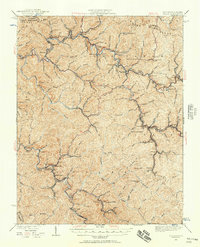 1924 Welch1957 Print · USGSSouthern West Virginia’s coal country is captured here during the 1920s, showing the height of the rail-and-mine economy. Researchers can trace the legacy of company towns and family homesteads near Welch, Coalwood, and the Warrior Mine.2 unique versions available
 - 1924 Map of Bluefield, 1966 Print
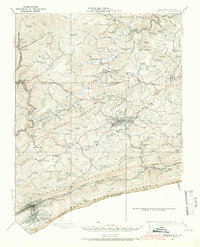 1924 Bluefield1966 Print · USGSThe West Virginia and Virginia borderlands show significant growth in the mid-1920s as rail lines and mountain settlements expand. Genealogists can trace family names through dozens of rural landmarks like Mercer Healing Springs, Wenonah, and the Barber School.
 - 1925 Map of Bramwell
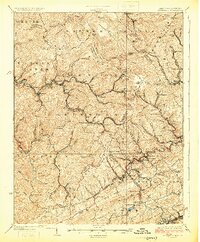 1925 Bramwell1925 Print · USGSThe West Virginia and Virginia borderlands hum with the energy of the coal industry in the mid-twenties. Genealogists and historians can trace the bustling rail corridors connecting Keystone, Maybeury, and Goodwill alongside Bailey Chapel.3 unique versions available
 - 1926 Map of Bluefield
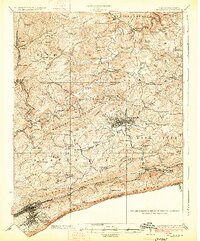 1926 Bluefield1926 Print · USGSWest Virginia's southern highlands come into focus in the mid-1920s as the rail networks of the Norfolk and Western and Virginian RR expand. Family historians can trace rural life through dozens of local landmarks like Mercer Healing Springs, Pisgah Church, and the Willis White School.3 unique versions available
 - 1926 Map of Welch
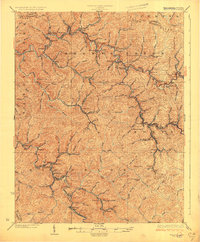 1926 Welch1926 Print · USGSMcDowell County's coal country comes alive in the mid-1920s, showing the height of the region's rail-and-river industrial development. Genealogists can pinpoint vanished post offices like Pando Juverna PO and old rural campuses such as Mill Creek School and Shannon Branch School.3 unique versions available
 - 1926 Map of Pounding Mill
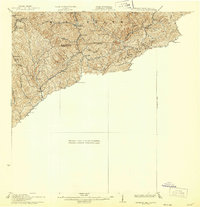 1926 Pounding Mill1926 Print · USGSAppalachian mountain life near the state line in the mid-twenties centers on remote hollows and high ridges. Researchers can trace the Norfolk and Western RR through Bandy or find family landmarks like the George Camp School and Sayersville.2 unique versions available
 - 1934 Map of Chatham Hill
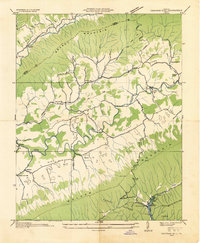 1934 Chatham Hill1934 Print · USGSSmyth County's river valleys and ridgelines are captured here in the mid-1930s during the early development of the regional park system. Researchers can locate vanished landmarks like New Cove Sch, the site of the Proposed Hungry Mother Lake, and the crossing at Ellendale Ford.
 - 1934 Map of Bandy
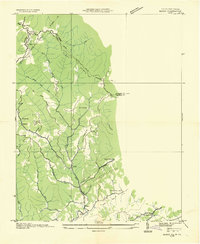 1934 Bandy1934 Print · USGSThe rugged borderlands of Tazewell County and West Virginia are captured here in the mid-1930s, showing a landscape of steep ridges and remote hollows. Researchers can trace family roots through numerous local schools like Indian Creek Sch and find old burial sites at Christian Cem.
 - 1934 Map of Liberty
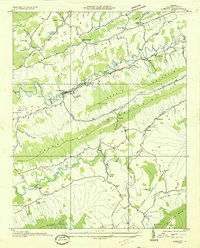 1934 Liberty1934 Print · USGSTazewell County's Appalachian ridges were well-established by the mid-1930s, defined by coal-hauling rail lines and a network of mountain gap communities. Genealogists can trace family landmarks like Phillips Cem, Bandys Chapel, and rural schools like Raven Nest Sch and Cove Sch.
 - 1934 Map of Tazewell
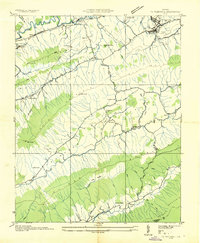 1934 Tazewell1934 Print · USGSThe Clinch River headwaters and Appalachian ridges of Tazewell County are captured here in the mid-1930s. Researchers can trace the Norfolk and Western railroad through Maxwell or locate country landmarks like Creagers Mill and the Tazewell County Fair Grounds.
 - 1935 Map of Nebo
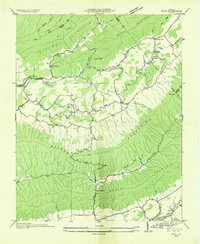 1935 Nebo1935 Print · USGSSmyth County mountain valleys and the Holston River are mapped here in the mid-1930s. Genealogists can locate family landmarks like Tilson Mill, Groseclose Store, and rural schoolhouses including Nebo Sch.
 - 1935 Map of Maccrady
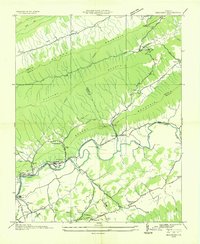 1935 Maccrady1935 Print · USGSSmyth and Tazewell Counties are shown here during the mid-1930s, as industrial activity along the river defined the local economy. Researchers can trace the path of the Mathieson Alkali Works R. R. and locate family landmarks like Carter Sch or Watsons Gap Sch.
 - 1935 Map of Jewell
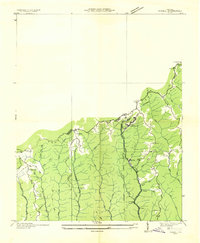 1935 Jewell1935 Print · USGSThe borderlands of Buchanan and Tazewell Counties are shown in the mid-1930s as industrial development followed the mountain hollows. Researchers can trace the rail-and-ridge economy through Jewell Ridge PO, the Norfolk and Western line, and rural schools like Smith Sch.
Showing maps 1-25 of 69
Top cities of Tazewell County
- Richlands historical maps
- Bluefield historical maps
- Tazewell historical maps
- Raven historical maps
- Claypool Hill historical maps
- Cedar Bluff historical maps
See more
Frequently asked questions
- What are the different types of historical maps available for Tazewell County?
- What is the oldest map of Tazewell County?
- Where can I purchase historical maps of Tazewell County for my home or office?
- Where can I download high-res historical maps of Tazewell County?
- Are there historical topographic maps available for Tazewell County?
- Is there historical aerial imagery available for Tazewell County?
- Where are historical maps of Tazewell County sourced from?