1970s Maps of Chippewa, Wisconsin
Explore 6 historic maps of Chippewa from the 1970s. These maps offer a rare glimpse into what life looked like during the 1970s — showing old roads, neighborhoods, homes, and landmarks that have changed or disappeared over time.
Whether you're researching your family's past, planning a metal detecting trip, or studying how Chippewa's landscape evolved across the 1970s, these high-resolution maps are a powerful tool for exploring the history of this region.
- Focus on a specific era: All maps on this page are from the 1970s, giving you a focused view of this time period.
- See what’s changed: Compare century-old streets, trails, and buildings to today's modern landscape using overlays and satellite layers.
- Research with precision: Use these maps for genealogy, historical research, land use analysis, or educational projects.
- View, download, or print: Maps are fully viewable online in high resolution, and can be downloaded or printed for your own records.
Start exploring Chippewa's history through authentic maps from the 1970s. This is your window into the past.
Chippewa, WI maps
(6)- 1970 Map of Butternut Lake, 1972 Print
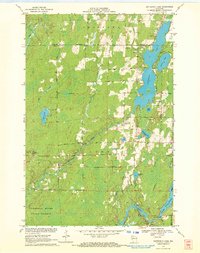 1970 Butternut Lake1972 Print · USGSThe Price County timberlands and lakefronts are frozen in time just as the seventies began. Researchers can trace the Chicago and North Western rail route or locate local landmarks like the Kennedy Lookout Tower and Pixley Dam.
 - 1970 Map of Kennedy, 1972 Print
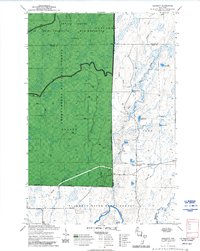 1970 Kennedy1972 Print · USGSSawyer and Ashland counties are shown in the early 1970s as centers of Wisconsin timber and recreation. Researchers can locate the settlement of Kennedy, follow the Tuscobia State Forest Trail, and trace the shoreline of Lake Alice.3 unique versions available
 - 1971 Map of Clam Lake SE, 1973 Print
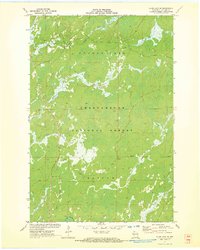 1971 Clam Lake SE1973 Print · USGSAshland County's northwoods were a dense wilderness of complex river systems in the early 1970s. Explorers and outdoorsmen can trace the marshy headwaters of the Moose River, Black Creek, and the isolated reaches of Hell Hole Creek through the forest.2 unique versions available
 - 1971 Map of Loretta, 1973 Print
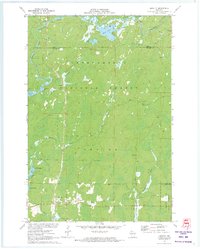 1971 Loretta1973 Print · USGSNorthern Sawyer County was a haven for timber and recreation in the early seventies, dominated by the sprawling Chequamegon National Forest. Researchers can locate historic structures in Loretta and Draper, or trace the winding course of the Brunet River and the Snowmobile Trail.2 unique versions available
 - 1971 Map of Clam Lake SW, 1973 Print
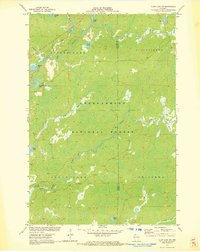 1971 Clam Lake SW1973 Print · USGSSawyer and Ashland Counties are shown in the early seventies, a period when the timberlands and waterways remained largely undeveloped. Genealogists and outdoorsmen can trace the drainage of the West Fork Chippewa River past Shanagolden and Kelly Lake.2 unique versions available
 - 1971 Map of Blaisdell Lake, 1973 Print
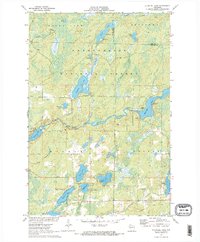 1971 Blaisdell Lake1973 Print · USGSSawyer County’s Northwoods were a secluded network of glacial lakes and river bends in the early seventies. Genealogists and local historians can trace legacy sites like the Wa-Ha-Kee Church Camp and Glenwood Camp or the path of the regional Snowmobile Trail.2 unique versions available
End of results
Showing maps 1-6 of 6
Top cities near Chippewa
- Fifield historical maps
- Morse historical maps
- Butternut historical maps
- Draper historical maps
- Shanagolden historical maps
Frequently asked questions
- What are the different types of historical maps available for Chippewa?
- What is the oldest map of Chippewa?
- Where can I purchase historical maps of Chippewa for my home or office?
- Where can I download high-res historical maps of Chippewa?
- Are there historical topographic maps available for Chippewa?
- Is there historical aerial imagery available for Chippewa?
- Where are historical maps of Chippewa sourced from?