1900s (20th Century) Maps of Lomira, Wisconsin
Explore 11 historic maps of Lomira from the 1900s (20th Century). These maps offer a rare glimpse into what life looked like during the 1900s — showing old roads, neighborhoods, homes, and landmarks that have changed or disappeared over time.
Whether you're researching your family's past, planning a metal detecting trip, or studying how Lomira's landscape evolved across the 1900s, these high-resolution maps are a powerful tool for exploring the history of this region.
- Focus on a specific era: All maps on this page are from the 1900s, giving you a focused view of this time period.
- See what’s changed: Compare century-old streets, trails, and buildings to today's modern landscape using overlays and satellite layers.
- Research with precision: Use these maps for genealogy, historical research, land use analysis, or educational projects.
- View, download, or print: Maps are fully viewable online in high resolution, and can be downloaded or printed for your own records.
Start exploring Lomira's history through authentic maps from the 1900s. This is your window into the past.
Lomira, WI maps
(11)- 1955 Map of Waupun, 1957 Print
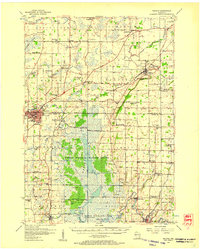 1955 Waupun1957 Print · USGSIn the mid-1950s, the Dodge and Fond du Lac county border was defined by the massive wetland expanse of the Horicon Marsh. Genealogists and local historians can trace rural school locations like Cattaraugus Sch and the institutional grounds of the State Prison in Waupun.2 unique versions available
 - 1955 Map of Campbellsport, 1957 Print
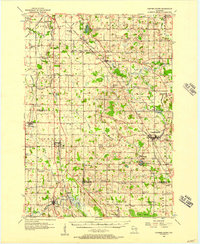 1955 Campbellsport1957 Print · USGSThe Fond du Lac countryside in the mid-fifties shows a landscape of limestone quarries and rail-fed village centers. Genealogists can locate family landmarks like Silver Leaf Sch, Marblehead Quarries, and the Empire Cem.2 unique versions available
 - 1957 Map of Madison, 1967 Print
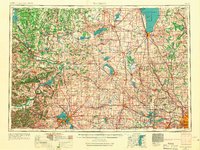 1957 Madison1967 Print · USGSSouth-central Wisconsin in the mid-fifties reveals a landscape of industrial hubs and glacial lakes linked by a dense rail and highway network. Genealogists and historians can trace the development of lakeside communities and find notable sites like Badger Ordnance Works and the Horicon National Wildlife Refuge.3 unique versions available
 - 1960 Map of Madison
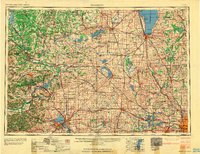 1960 Madison1960 Print · USGSCentral and Southern Wisconsin are captured in the late fifties, showing the region as its rail-and-river network matured. Trace the paths of the Soo Line RR or locate family roots near Lake Mendota and Horicon National Wildlife Refuge.2 unique versions available
 - 1974 Map of Byron, 1978 Print
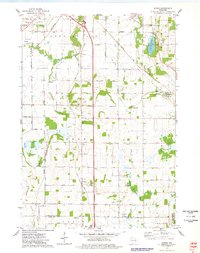 1974 Byron1978 Print · USGSThe limestone quarries and rail lines of the Wisconsin Escarpment are captured here in the 1970s. Local researchers can trace family roots in Hamilton and South Byron or locate old industrial sites like the Kilns in Marblehead.
 - 1974 Map of Lomira, 1978 Print
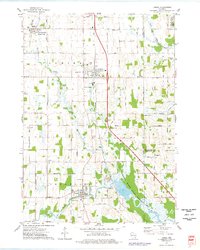 1974 Lomira1978 Print · USGSDodge County's glacial landscape and wetland conservation are captured here in the mid-seventies, featuring the expansive Theresa Marsh State Wildlife Area. Researchers can trace local heritage through numerous sites like Wayne Cem, St Pauls Sch, and the old rail stop at Theresa Station.
 - 1975 Map of Waupun NE, 1977 Print
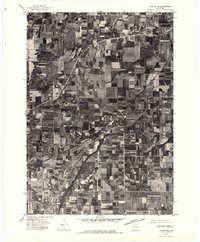 1975 Waupun NE1977 Print · USGSFond du Lac County agriculture and small-town life are preserved in this mid-seventies aerial survey. Researchers can trace the layout of Oakfield, Lamartine, and the northern reaches of the Horicon National Wildlife Refuge.
 - 1975 Map of Waupun SE, 1977 Print
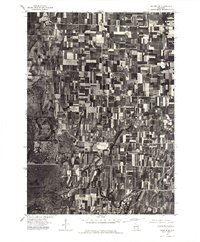 1975 Waupun SE1977 Print · USGSDodge County agricultural lands and the eastern edge of the marsh are captured here in the mid-seventies. Researchers can trace the layout of Mayville and rural hamlets like Leroy and Kekoskee against the Horicon Marsh.
 - 1980 Map of Fond Du Lac
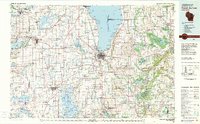 1980 Fond Du Lac1980 Print · USGSThe Fox River Valley and Horicon Marsh meet here during the late twentieth century, showing a transition from lakeside industry to glacial conservation. Genealogists can locate family sites at Estabrook Cem or trace the rail lines through Ripon and Waupun.
 - 1980 Map of Oakfield, 1981 Print
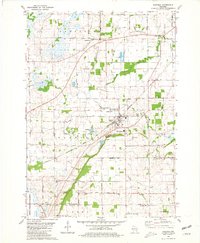 1980 Oakfield1981 Print · USGSCentral Fond du Lac County is shown in the late seventies as a busy rail and quarrying hub. Researchers can locate family sites near Oak Center, the Belle Reynolds Sch, and the Soo Line tracks.
 - 1981 Map of Mayville North
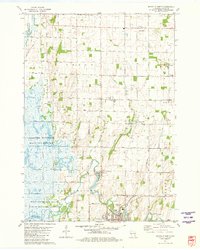 1981 Mayville North1981 Print · USGSDodge County in the early eighties shows a landscape shaped by the sprawling Horicon Marsh and the industry of its small towns. Genealogists can trace family roots at St Paul Cem or Tidyman Cem, while mapping the rail lines through Nasbro and Knowles.
End of results
Showing maps 1-11 of 11
Top cities near Lomira
- Fond du Lac historical maps
- West Bend historical maps
- Mayville historical maps
- Slinger historical maps
- North Fond du Lac historical maps
- Kewaskum historical maps
See more
Top neighborhoods of Lomira
Frequently asked questions
- What are the different types of historical maps available for Lomira?
- What is the oldest map of Lomira?
- Where can I purchase historical maps of Lomira for my home or office?
- Where can I download high-res historical maps of Lomira?
- Are there historical topographic maps available for Lomira?
- Is there historical aerial imagery available for Lomira?
- Where are historical maps of Lomira sourced from?