1900s (20th Century) Maps of New Lyme, Wisconsin
Explore 12 historic maps of New Lyme from the 1900s (20th Century). These maps offer a rare glimpse into what life looked like during the 1900s — showing old roads, neighborhoods, homes, and landmarks that have changed or disappeared over time.
Whether you're researching your family's past, planning a metal detecting trip, or studying how New Lyme's landscape evolved across the 1900s, these high-resolution maps are a powerful tool for exploring the history of this region.
- Focus on a specific era: All maps on this page are from the 1900s, giving you a focused view of this time period.
- See what’s changed: Compare century-old streets, trails, and buildings to today's modern landscape using overlays and satellite layers.
- Research with precision: Use these maps for genealogy, historical research, land use analysis, or educational projects.
- View, download, or print: Maps are fully viewable online in high resolution, and can be downloaded or printed for your own records.
Start exploring New Lyme's history through authentic maps from the 1900s. This is your window into the past.
New Lyme, WI maps
(12)- 1928 Map of Melrose
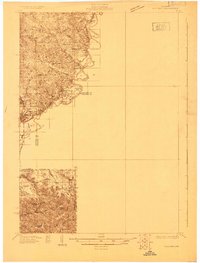 1928 Melrose1928 Print · USGSThe Black River valley in the late nineteen-twenties was a landscape of ridge-top farms and valley-floor schools. Genealogists can trace family footprints through numerous rural landmarks like Irving School No 6, Sand Creek Cem, and Wadels Hill.
 - 1947 Map of Millston, 1963 Print
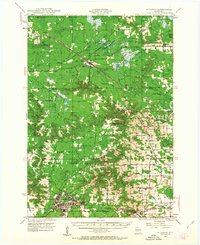 1947 Millston1963 Print · USGSMid-century Jackson and Monroe counties are captured here just after the war, showing the expansion of military and rail infrastructure. Genealogists can locate family sites near North Tomah or trace rural landmarks like Tarr Valley Sch and La Grange Cem.4 unique versions available
 - 1949 Map of Millston
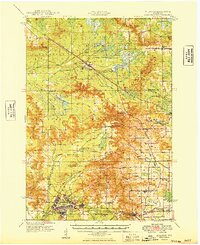 1949 Millston1949 Print · USGSWisconsin's central cranberry and timber country is captured here in the late 1940s as the regional rail network anchored rural life. Researchers can trace the layout of the Camp McCoy Military Reservation or locate family sites near Millston, Tunnel City, and several rural schoolhouses like White School.
 - 1949 Map of Melrose
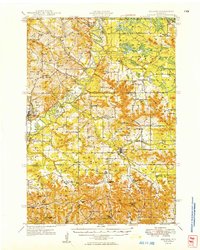 1949 Melrose1949 Print · USGSJackson and Monroe Counties appear here in the late 1940s as a thriving patchwork of valley farms and small rural hubs. Genealogists can locate dozens of family-named landmarks and institutions, from the Little Norway Ch and Irving Cem to the Jenkins Valley Sch.
 - 1953 Map of Eau Claire, 1965 Print
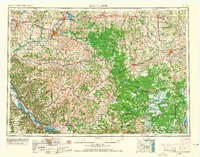 1953 Eau Claire1965 Print · USGSWest-central Wisconsin in the mid-fifties shows a landscape of river-valley industry and vast wildlife refuges during the transition from rails to modern highways. Genealogists and historians can trace the rail corridors of the Chicago and North Western or locate family-named landmarks like Decorah Mound and Chippewa Island.4 unique versions available
 - 1958 Map of Eau Claire
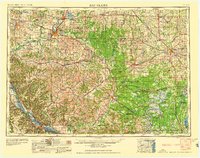 1958 Eau Claire1958 Print · USGSWestern Wisconsin in the late fifties shows a landscape of growing regional hubs and massive wildlife refuges. Trace the rail lines of the Chicago and North Western between Eau Claire and Marshfield, or explore the terrain around Iron Mound and Lake Wissota.
 - 1964 Map of Eau Claire
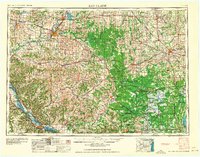 1964 Eau Claire1964 Print · USGSWest-central Wisconsin in the mid-1960s was a hub of river-driven industry and expanding rail networks. Researchers can trace historic homesteads near Menomonie, follow the Soo Line RR through Marshfield, or explore the grounds of the Camp McCoy Military Reservation.
 - 1983 Map of Cataract, 1984 Print
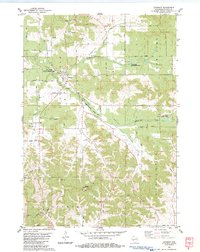 1983 Cataract1984 Print · USGSMonroe County in the early eighties reveals a landscape of deep valleys and vital fishery habitats. Local historians can trace family locations near Cataract, locate Oak Grove Cemetery, or find the Cataract Lookout Tower standing over the wooded ridges.
 - 1983 Map of Alderwood Lake, 1984 Print
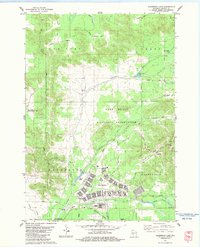 1983 Alderwood Lake1984 Print · USGSMonroe County was a blend of military training grounds and wetlands in the early eighties. You can trace the layout of Fort McCoy, locate the Lafayette Cem, or follow the C M St P & P rail line through Tarr Valley.
 - 1983 Map of Millston, 1984 Print
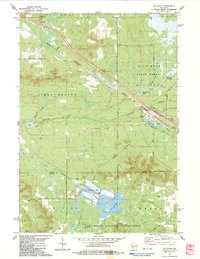 1983 Millston1984 Print · USGSMillston and the surrounding Jackson County wetlands are captured here in the early eighties, showing the town's alignment with the railroad. Researchers can locate Brookside Cem, the industrial Shale Pit, and the extensive Cranberry Bogs.2 unique versions available
 - 1983 Map of Shamrock, 1984 Print
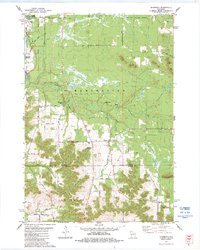 1983 Shamrock1984 Print · USGSJackson and Monroe County landscapes come together in the early 1980s, centered on the rural crossroads of Shamrock. Genealogists and local historians can trace family-named routes like Kelly Road to find St Calumkille, Gospel Hall, and the scenic Fall Hall Glen.
 - 1985 Map of Black River Falls
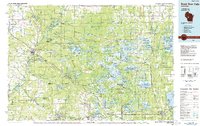 1985 Black River Falls1985 Print · USGSCentral Wisconsin in the mid-1980s is defined by its sprawling wildlife refuges and the winding Black River corridor. Genealogists and researchers can trace rural settlements like Millston and Warrens or locate historical sites such as the Iron Mine and the grounds of Fort McCoy.2 unique versions available
End of results
Showing maps 1-12 of 12
Top cities near New Lyme
- Sparta historical maps
- Sparta historical maps
- Tomah historical maps
- Black River Falls historical maps
- Brockway historical maps
- Angelo historical maps
See more
Frequently asked questions
- What are the different types of historical maps available for New Lyme?
- What is the oldest map of New Lyme?
- Where can I purchase historical maps of New Lyme for my home or office?
- Where can I download high-res historical maps of New Lyme?
- Are there historical topographic maps available for New Lyme?
- Is there historical aerial imagery available for New Lyme?
- Where are historical maps of New Lyme sourced from?