1900s (20th Century) Maps of Little Wolf, Wisconsin
Explore 12 historic maps of Little Wolf from the 1900s (20th Century). These maps offer a rare glimpse into what life looked like during the 1900s — showing old roads, neighborhoods, homes, and landmarks that have changed or disappeared over time.
Whether you're researching your family's past, planning a metal detecting trip, or studying how Little Wolf's landscape evolved across the 1900s, these high-resolution maps are a powerful tool for exploring the history of this region.
- Focus on a specific era: All maps on this page are from the 1900s, giving you a focused view of this time period.
- See what’s changed: Compare century-old streets, trails, and buildings to today's modern landscape using overlays and satellite layers.
- Research with precision: Use these maps for genealogy, historical research, land use analysis, or educational projects.
- View, download, or print: Maps are fully viewable online in high resolution, and can be downloaded or printed for your own records.
Start exploring Little Wolf's history through authentic maps from the 1900s. This is your window into the past.
Little Wolf, WI maps
(12)- 1955 Map of Clintonville, 1957 Print
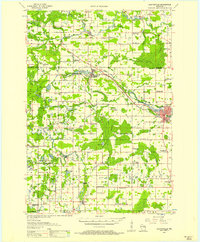 1955 Clintonville1957 Print · USGSClintonville and Marion are shown at a peak of rail-era development in the mid-1950s. Genealogists can trace family roots through numerous rural landmarks like Graceland Cem, the Danish Cem, and one-room schoolhouses such as Sunrise Sch.2 unique versions available
 - 1955 Map of Green Bay, 1968 Print
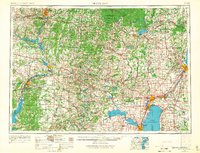 1955 Green Bay1968 Print · USGSCentral and Eastern Wisconsin are captured here in the mid-fifties, showing the industrial growth of the Fox Valley and Wisconsin River corridors. Genealogists and historians can trace rail lines like the Green Bay and Western through settlements like Weyauwega, Clintonville, and Pulaski.2 unique versions available
 - 1956 Map of Weyauwega, 1958 Print
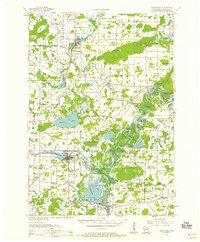 1956 Weyauwega1958 Print · USGSCentral Waupaca County is mapped here in the mid-fifties, showing a landscape defined by the winding Wolf River and a thriving network of rural townships. Genealogists can trace family roots at St Patricks Cem, Baldwins Mill Sch, and the State Sanatorium.
 - 1969 Map of Northport, 1971 Print
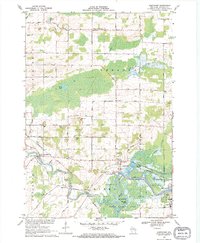 1969 Northport1971 Print · USGSWaupaca County's river valleys and rural townships are captured here in the late sixties as the river-and-rail economy persisted. Genealogists and local historians can trace family-named landmarks and essential community sites like Fitzgerald Corners, St Patrick Cem, and the Maple Hill Sch.
 - 1969 Map of Manawa, 1971 Print
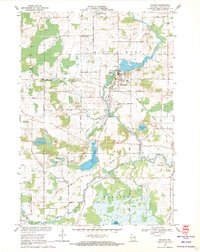 1969 Manawa1971 Print · USGSWaupaca County's rural heartland is captured here in the late sixties as the river-and-rail economy defined local life. Researchers can trace family-named roads and find quiet landmarks like St John Ch, Baldwins Mill Cem, and Green Valley Sch.2 unique versions available
 - 1970 Map of Symco, 1973 Print
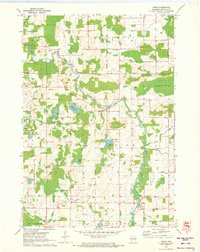 1970 Symco1973 Print · USGSWaupaca County's glacial landscape is meticulously documented here during the early 1970s, as the Little Wolf River carves through a region of scattered dairy farms and woodlots. Researchers can locate early family landmarks like St Pauls Ch and the Danish Cem or trace the drainage of Marble Swamp.
 - 1970 Map of Clintonville South, 1973 Print
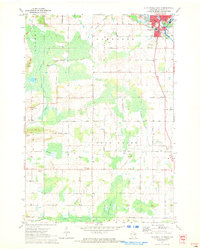 1970 Clintonville South1973 Print · USGSWaupaca County's rural townships and the southern edge of Clintonville are documented here in the early 1970s. Trace family land near Marble Cem, find local landmarks like St Martin Sch, and follow the old CHICAGO AND NORTH WESTERN rail line.
 - 1984 Map of Appleton, 1985 Print
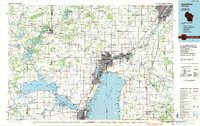 1984 Appleton1985 Print · USGSThe Fox River Valley in the mid-eighties shows a bustling corridor of industry and nature, from the shores of Lake Winnebago to the Oneida Indian Reservation. Trace local heritage through landmarks like Riverside Cem or explore the wetlands of Poygan Marsh State Wildlife Area.2 unique versions available
 - 1984 Map of Shawano, 1985 Print
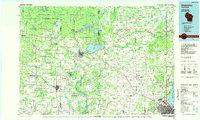 1984 Shawano1985 Print · USGSNortheast Wisconsin in the mid-1980s was a landscape defined by its indigenous heritage and the bustling trade centers of the Fox and Wolf River valleys. Genealogists and historians can trace rail corridors like the Chicago and North Western or locate family sites near Keshena, Cecil, and the Fort Howard Cem.2 unique versions available
 - 1993 Map of Northport, 1995 Print
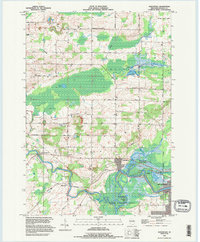 1993 Northport1995 Print · USGSWaupaca County's river valleys and wetlands are captured in the mid-1990s as the Wolf River winds through the countryside. Researchers can trace local lineage through sites like St Patrick Cem, the settlement at Fitzgerald Corners, and family land along Nicolai Road.
 - 1993 Map of Clintonville South, 1995 Print
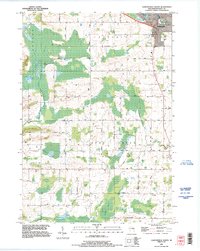 1993 Clintonville South1995 Print · USGSClintonville and its southern rural townships are captured in the early nineties, showing a landscape defined by traditional rail corridors and meandering river systems. Genealogists can locate family-named landmarks and several historic burial sites, including Graceland Cem and Townline Cem, while tracing the course of Bear Creek.
 - 1993 Map of Symco, 1996 Print
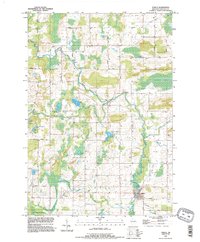 1993 Symco1996 Print · USGSWaupaca County's rural townships are detailed here in the 1990s as a landscape of interconnected kettle lakes and winding river valleys. Researchers can trace family-named roads and locate historical landmarks like the Danish Cem, Symco, and School Section Lake.
End of results
Showing maps 1-12 of 12
Top cities near Little Wolf
- New London historical maps
- Waupaca historical maps
- Clintonville historical maps
- Dale historical maps
- Belle Plaine historical maps
- Weyauwega historical maps
See more
Frequently asked questions
- What are the different types of historical maps available for Little Wolf?
- What is the oldest map of Little Wolf?
- Where can I purchase historical maps of Little Wolf for my home or office?
- Where can I download high-res historical maps of Little Wolf?
- Are there historical topographic maps available for Little Wolf?
- Is there historical aerial imagery available for Little Wolf?
- Where are historical maps of Little Wolf sourced from?