1900s (20th Century) Maps of Wapiti, Wyoming
Explore 7 historic maps of Wapiti from the 1900s (20th Century). These maps offer a rare glimpse into what life looked like during the 1900s — showing old roads, neighborhoods, homes, and landmarks that have changed or disappeared over time.
Whether you're researching your family's past, planning a metal detecting trip, or studying how Wapiti's landscape evolved across the 1900s, these high-resolution maps are a powerful tool for exploring the history of this region.
- Focus on a specific era: All maps on this page are from the 1900s, giving you a focused view of this time period.
- See what’s changed: Compare century-old streets, trails, and buildings to today's modern landscape using overlays and satellite layers.
- Research with precision: Use these maps for genealogy, historical research, land use analysis, or educational projects.
- View, download, or print: Maps are fully viewable online in high resolution, and can be downloaded or printed for your own records.
Start exploring Wapiti's history through authentic maps from the 1900s. This is your window into the past.
Wapiti, WY maps
(7)- 1955 Map of Cody, 1969 Print
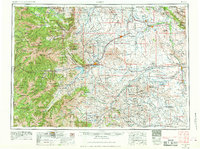 1955 Cody1969 Print · USGSThe Bighorn Basin and Absaroka Range meet in the mid-fifties, capturing a landscape defined by mountain wilderness and burgeoning oil fields. Trace family roots in Cody or Meeteetse, and locate industrial landmarks like the Elk Basin Oil and Gas Field and the Chicago Burlington and Quincy RR.2 unique versions available
 - 1957 Map of Wapiti, 1959 Print
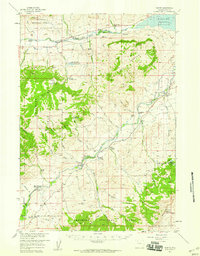 1957 Wapiti1959 Print · USGSThe Shoshone River valley comes alive in the late fifties, showcasing a network of working ranches and mountain lodges at the edge of the wilderness. Genealogists and historians can trace family-named sites like Siggins Brothers Ranch or locate the Hardpan Sch and Ishawooa Guard Sta.2 unique versions available
 - 1958 Map of Cody
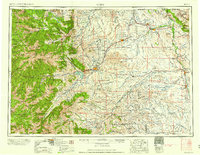 1958 Cody1958 Print · USGSNorthwestern Wyoming at the peak of the mid-century energy and ranching boom shows a land of high peaks and oil basins. Researchers can trace the Chicago Burlington and Quincy rail lines through Greybull or locate the sprawling Elk Basin Oil and Gas Field.
 - 1962 Map of Cody
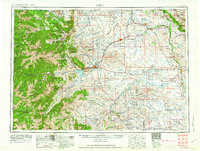 1962 Cody1962 Print · USGSBig Horn Basin energy and agriculture define this mid-century look at Wyoming’s northern frontier. Local historians can trace the irrigation and rail networks connecting Cody and Powell to major energy sites like the Oregon Basin Oil Field.
 - 1980 Map of Carter Mountain, 1982 Print
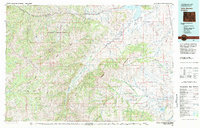 1980 Carter Mountain1982 Print · USGSPark County at the dawn of the 1980s reveals a high-country landscape where mountain wilderness meets energy extraction. Researchers can locate remote outposts like Irma, trace the Greybull River valley, and identify the footprint of the Pitchfork Oil Field or Sunshine Reservoir.3 unique versions available
 - 1988 Map of Wapiti
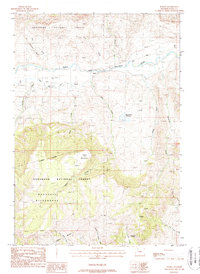 1988 Wapiti1988 Print · USGSThe North Fork Shoshone River valley in the late 1980s reveals a rugged mountain landscape shaped by ranching and wilderness. Researchers can trace land use from the Wapiti settlement to remote outposts like Diamond Bar Cow Camp and the Stonebridge Reservoir.
 - 1991 Map of Wapiti, 1996 Print
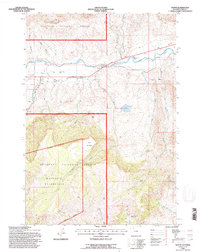 1991 Wapiti1996 Print · USGSThe North Fork Shoshone River valley in the early nineties remained a vital corridor for high-country ranching and recreation. Researchers can locate family-named landmarks like Bradford Ranch and Dahlman Ranch alongside the settlement of Wapiti.2 unique versions available
End of results
Showing maps 1-7 of 7
Frequently asked questions
- What are the different types of historical maps available for Wapiti?
- What is the oldest map of Wapiti?
- Where can I purchase historical maps of Wapiti for my home or office?
- Where can I download high-res historical maps of Wapiti?
- Are there historical topographic maps available for Wapiti?
- Is there historical aerial imagery available for Wapiti?
- Where are historical maps of Wapiti sourced from?