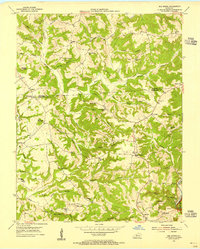
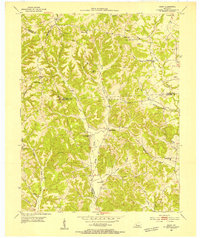
1953 Map of Bee Spring
USGS Topo · Published 1955About this map
The Nolin River carves the southeastern boundary of this mid-century survey, a region defined by the deep dissection of the plateau between Grayson Co and Edmonson Co. Rural life in the 1950s is centered around a network of one-room schools and community churches, including Bethel Sch, Vincent Sch, and New Harmony Ch. The settlement pattern follows the ridgelines above steep hollows like Bear Creek and Sunfish Creek, with clusters of activity at Bee Spring and the crossroads of Sweeden.
Find a feature on this map
53 named features on this map. Tap any name to fly to it.
Don’t see what you’re looking for? This feature index may not catch every label — zoom into the map to look around manually.
Map Details
Editions of this 1953 Bee Spring Map
This is the sole edition of this map. No revisions or reprints were ever made.
Other maps of this area
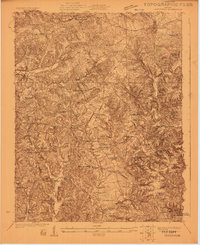
1922 · Leitchfield
USGS Topo · 1:48,000
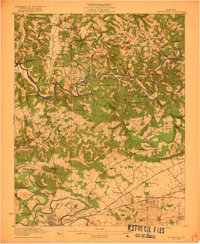
1922 · Brownsville
USGS Topo · 1:62,500
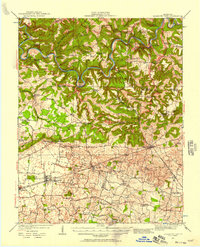
1922 · Mammoth Cave
USGS Topo · 1:62,500
1923 · Mammoth Cave
USGS Topo · 1:62,500
1923 · Brownsville
USGS Topo · 1:62,500
1925 · Cub Run
USGS Topo · 1:62,500
1925 · Leitchfield
USGS Topo · 1:62,500
1953 · Ready
USGS Topo · 1:24,000
1954 · Evansville
USGS Topo · 1:250,000
1954 · Dickeys Mills
USGS Topo · 1:24,000