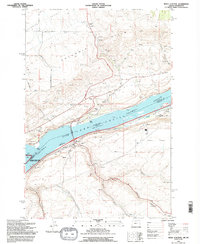
1994 Map of Biggs Junction
USGS Topo · Published 1995About this map
Lake Celilo and the Columbia River serve as the central axis of this mid-1990s survey, dividing the Columbia Hills of Washington from the canyon-laced plateau of Oregon. The region is defined by its strategic transit role, anchored by the Sam Hill Memorial Bridge connecting Maryhill to Biggs Junction. The map details the cultural landscape near the river, including the Maryhill Museum and the notable Stonehenge Memorial, a replica built by Sam Hill. To the south, the terrain becomes deeply dissected by drainage systems like Fulton Canyon, Frank Fulton Canyon, and Spanish Hollow, where the settlement of Thornberry is located. The presence of numerous springs, such as Henderson Spring, and man-made features like McCarty Pond indicate the critical importance of water management in this arid landscape, while the inclusion of the Columbia River Gorge National Scenic Area reflects the dual identity of the region as both a transportation corridor and a preserved natural resource.
Find a feature on this map
36 named features on this map. Tap any name to fly to it.
Don’t see what you’re looking for? This feature index may not catch every label — zoom into the map to look around manually.
Map Details
Editions of this 1994 Biggs Junction Map
This is the sole edition of this map. No revisions or reprints were ever made.
Other maps of this area
1953 · The Dalles
USGS Topo · 1:250,000
1956 · The Dalles
USGS Topo · 1:250,000
1957 · The Dalles
USGS Topo · 1:250,000
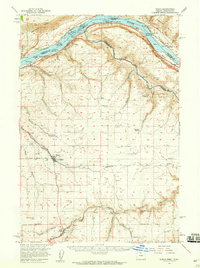
1957 · Wasco
USGS Topo · 1:62,500
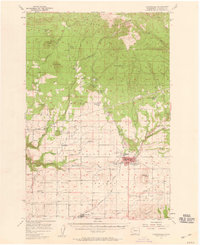
1957 · Goldendale
USGS Topo · 1:62,500
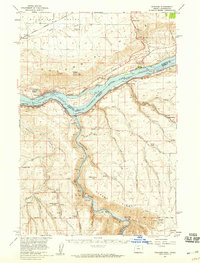
1957 · Wishram
USGS Topo · 1:62,500
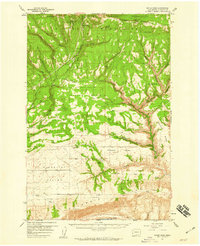
1957 · Satus Pass
USGS Topo · 1:62,500
1971 · Rufus
USGS Topo · 1:24,000
1971 · Wasco
USGS Topo · 1:24,000
1974 · Locust Grove
USGS Topo · 1:24,000