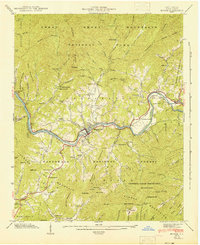
1941 Map of Bryson
USGS Topo · Published 1941About this map
Bryson City sits at the heart of this 1941 survey, positioned at the confluence where the Tuckasegee River meets the heavy timber and high ridges of the Great Smoky Mountains. The landscape is a complex patchwork of federal and tribal lands, including the Great Smoky Mountains National Park to the north and the Nantahala National Forest to the south. Significant sections of the Cherokee Indian Reservation Qualla Tract and the 3200 Acre Tract are clearly delineated, showing the human geography of the region during the early 1940s. The Southern Railway follows the river's path, connecting small communities like Ela and Governors Island. Numerous family-named landmarks and institutions, such as Spruce Grove Ch and the Watkins Cem, reveal a deeply rooted social structure. The map captures a moment when traditional mountain settlements were becoming increasingly bordered by protected national lands and modern infrastructure like the Gaging Station and Bryson City Reservoir.
Find a feature on this map
145 named features on this map. Tap any name to fly to it.
Don’t see what you’re looking for? This feature index may not catch every label — zoom into the map to look around manually.
Map Details
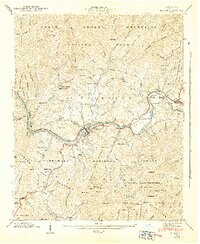
Editions of this 1941 Bryson Map
2 editions found
Other maps of this area
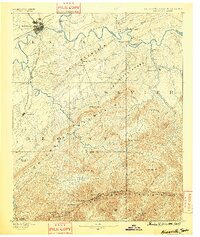
1886 · Knoxville
USGS Topo · 1:125,000
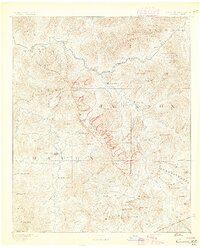
1891 · Cowee
USGS Topo · 1:125,000
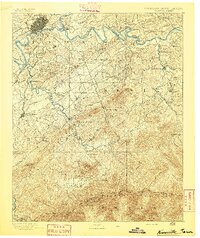
1892 · Knoxville
USGS Topo · 1:125,000
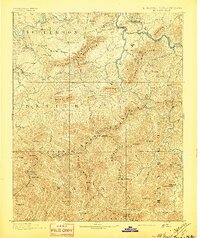
1893 · Mt Guyot
USGS Topo · 1:125,000
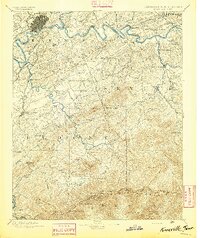
1894 · Knoxville
USGS Topo · 1:125,000
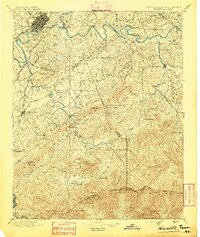
1895 · Knoxville
USGS Topo · 1:125,000
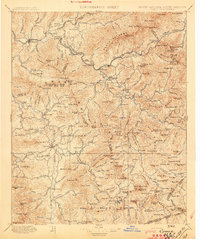
1897 · Cowee
USGS Topo · 1:125,000
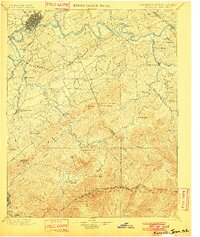
1901 · Knoxville
USGS Topo · 1:125,000
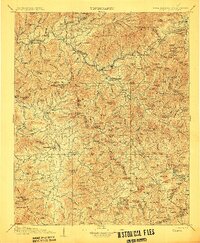
1907 · Cowee
USGS Topo · 1:125,000
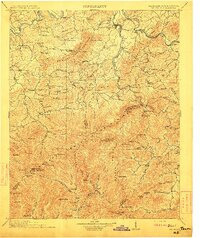
1912 · Mt Guyot
USGS Topo · 1:125,000