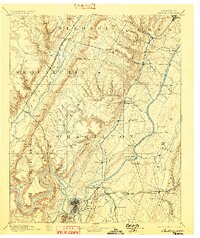
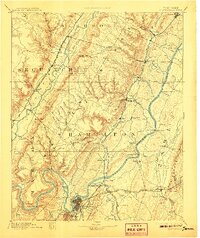
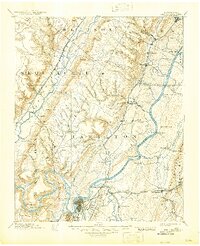
1893 Map of Chattanooga
USGS Topo · Published 1898About this map
The Tennessee River snakes through the heart of this landscape, its banks defined by a pre-dam network of water crossings like Blythe Ferry, Harrison Ferry, and Brown Ferry. In the final decades of the 19th century, Chattanooga appears as a burgeoning rail hub where the Western and Atlantic R. R. and Cincinnati Southern Railroad converge. This survey captures the industrial footprint of the era, from the McNabb Mines and Aetna Mines in the southwest to the prominence of Walden Ridge. The map documents the intricate settlement patterns of vanished or changed communities like Fair Mount, Norman Store, and the early layout of Dunlap along the Sequatchie River. The presence of numerous gaps through the ridges, such as Henson Gap and Anderson Gap, highlights the natural corridors that dictated early Tennessee transport and trade.
Find a feature on this map
109 named features on this map. Tap any name to fly to it.
Don’t see what you’re looking for? This feature index may not catch every label — zoom into the map to look around manually.
Map Details
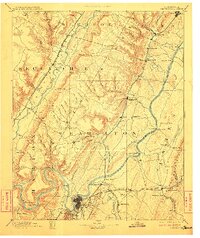
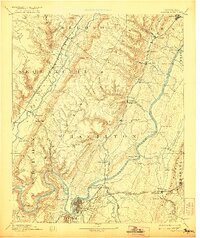
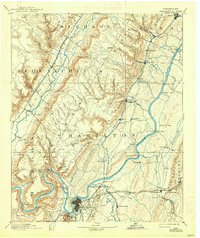
Editions of this 1893 Chattanooga Map
9 editions found
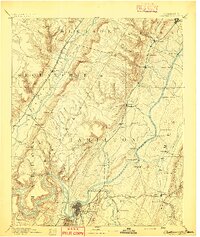
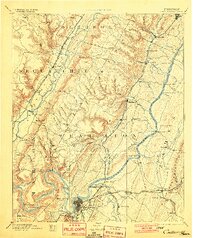
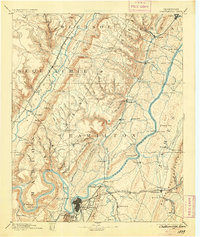
Other maps of this area
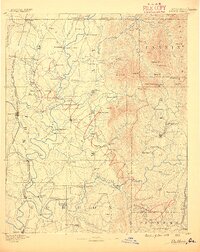
1886 · Dalton
USGS Topo · 1:125,000
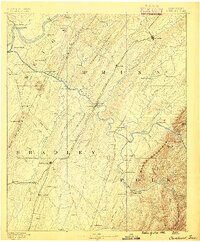
1886 · Cleveland
USGS Topo · 1:125,000
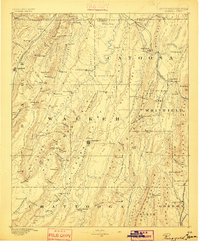
1886 · Ringgold
USGS Topo · 1:125,000
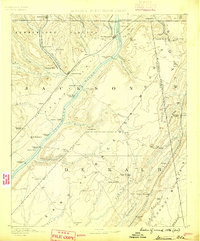
1886 · Stevenson
USGS Topo · 1:125,000
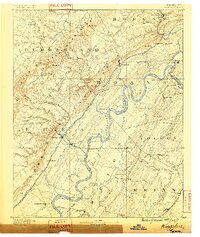
1887 · Kingston
USGS Topo · 1:125,000
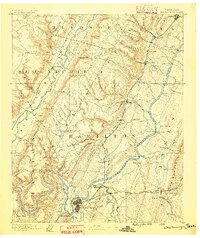
1888 · Chattanooga
USGS Topo · 1:125,000
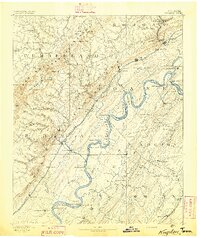
1891 · Kingston
USGS Topo · 1:125,000
1892 · Pikeville
USGS Topo · 1:125,000
1892 · Ringgold
USGS Topo · 1:125,000
1892 · Cleveland
USGS Topo · 1:125,000