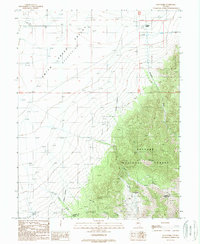
1988 Map of Gold Park
USGS Topo · Published 1988About this map
The Toiyabe National Forest dominates the eastern landscape of this Nevada quadrangle, where steep canyons and water sources defined the limits of high-desert activity. Resource management and historical land use are evident in the presence of an Aqueduct, a Ditch, and scattered Prospect markings indicating the search for mineral wealth. The flat expanse of the Smith Creek Depression Valley occupies the western portion of the map, providing a stark contrast to the timbered heights. Local history is anchored by Peterson Station and family-named water sources like Peterson Spring. The transition from the valley floor to the mountains is marked by the winding courses of Willow Creek and Gold Creek, with several 4wd tracks and trails navigating the rugged terrain between Dry Canyon and Eagle Canyon.
Find a feature on this map
17 named features on this map. Tap any name to fly to it.
Don’t see what you’re looking for? This feature index may not catch every label — zoom into the map to look around manually.
Map Details
Editions of this 1988 Gold Park Map
This is the sole edition of this map. No revisions or reprints were ever made.
Other maps of this area
1955 · Millett
USGS Topo · 1:250,000
1956 · South Shoshone Peak
USGS Topo · 1:62,500
1956 · North Shoshone Peak
USGS Topo · 1:62,500
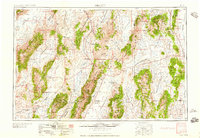
1959 · Millett
USGS Topo · 1:250,000
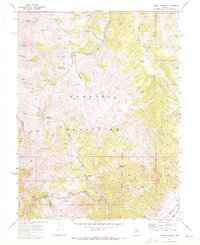
1969 · Carroll Summit
USGS Topo · 1:24,000
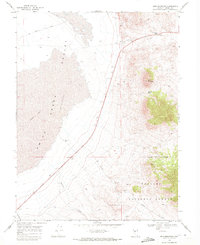
1969 · Iron Mountain
USGS Topo · 1:24,000
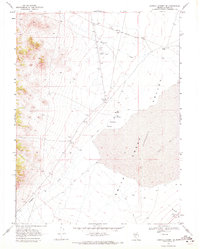
1969 · Carroll Summit SE
USGS Topo · 1:24,000
1985 · Smith Creek Valley
USGS Topo · 1:100,000
1988 · Midas Spring
USGS Topo · 1:24,000
1988 · Campbell Creek Ranch
USGS Topo · 1:24,000