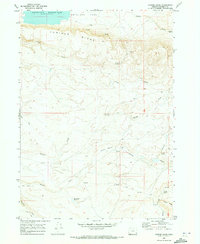
1969 Map of Juniper Ridge
USGS Topo · Published 1973About this map
Antelope Reservoir dominates the northern edge of this high-desert landscape in Malheur County, where the high-elevation water is held back by a spillway at 4318 feet. The terrain is defined by dramatic changes in relief, transitioning from the open expanse of Antelope Flat into the prominent spine of Juniper Ridge. This 1969 field-checked survey reveals a network of water sources vital for ranching and survival in the arid basin, including numerous named seeps like Twin Springs and Canyon Spring. Below the ridge, the land is carved by several drainages such as Jack Creek and Willow Creek, the latter of which passes by the interestingly named Frank Maher Flat. Human infrastructure is sparse, represented by a scattered Jeep Trail and isolated markers for a Water Tank and Well, illustrating the isolation of this corner of eastern Oregon during the late 1960s.
Find a feature on this map
25 named features on this map. Tap any name to fly to it.
Don’t see what you’re looking for? This feature index may not catch every label — zoom into the map to look around manually.
Map Details
Editions of this 1969 Juniper Ridge Map
This is the sole edition of this map. No revisions or reprints were ever made.
Other maps of this area
1955 · Jordan Valley
USGS Topo · 1:250,000
1957 · Jordan Valley
USGS Topo · 1:250,000
1958 · Jordan Valley
USGS Topo · 1:250,000
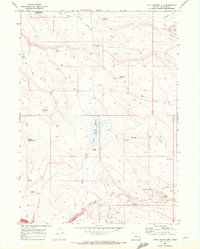
1969 · Little Grassy Mountain
USGS Topo · 1:24,000
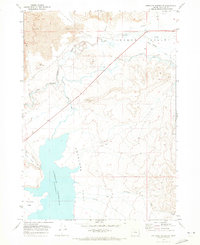
1969 · Antelope Reservoir
USGS Topo · 1:24,000
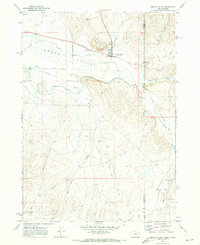
1969 · Jordan Valley
USGS Topo · 1:24,000
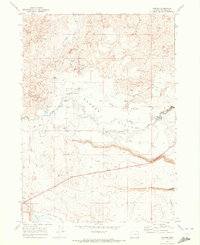
1969 · Danner
USGS Topo · 1:24,000
1980 · Skull Creek
USGS Topo · 1:24,000
1980 · Juniper Point
USGS Topo · 1:24,000
1980 · Whitehorse Butte
USGS Topo · 1:24,000