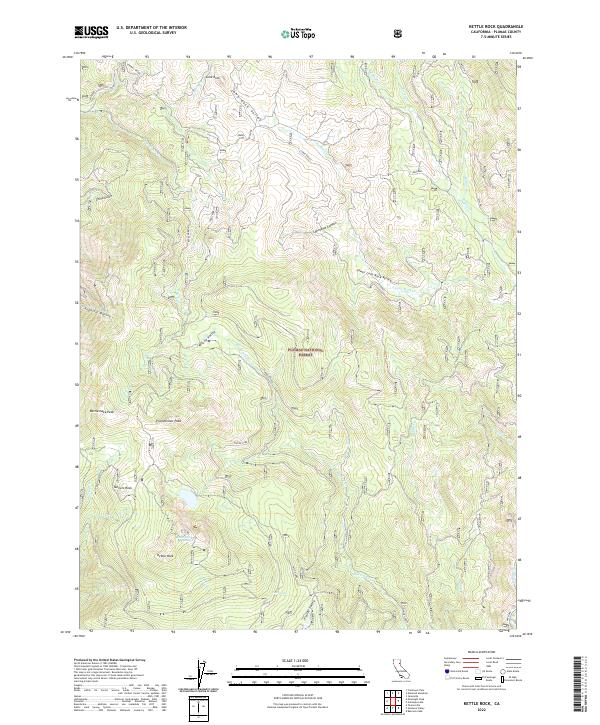
2022 Map of Kettle Rock
USGS Topo · Published 2022About this map
Plumas National Forest encompasses this high-elevation landscape, where sharp summits and deep drainages define the geography of the Sierra Nevada. The terrain is anchored by prominent landmarks such as Kettle Rock and Lone Rock, which watch over a complex network of canyons and gulches. The presence of Kettle Rock Spring and Cool Spring suggests the vital role of natural water sources in this dry mountain environment, while Taylor Lake provides a rare alpine basin amidst the ridges. To the north, Lone Rock Valley and Lower Lone Rock Valley illustrate the typical transition from high peaks to the relatively flatter valley floors. This area, marked by names like Eisenhower Peak and Rattlesnake Peak, remains an active landscape of forest management and backcountry navigation, crisscrossed by a network of forest roads and trails that follow historical drainage patterns like China Gulch and Franks Valley.
Find a feature on this map
37 named features on this map. Tap any name to fly to it.
Don’t see what you’re looking for? This feature index may not catch every label — zoom into the map to look around manually.
Map Details
Editions of this 2022 Kettle Rock Map
This is the sole edition of this map. No revisions or reprints were ever made.
Other maps of this area
1886 · Honey Lake
USGS Topo · 1:250,000
1891 · Honey Lake
USGS Topo · 1:250,000
1893 · Honey Lake
USGS Topo · 1:250,000
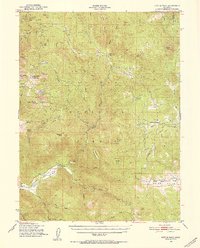
1950 · Kettle Rock
USGS Topo · 1:62,500
1950 · Greenville
USGS Topo · 1:62,500
1954 · Susanville
USGS Topo · 1:62,500
1955 · Westwood
USGS Topo · 1:62,500
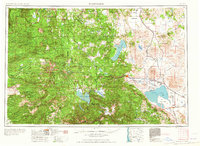
1955 · Westwood
USGS Topo · 1:250,000
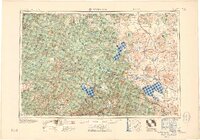
1958 · Westwood
USGS Topo · 1:250,000
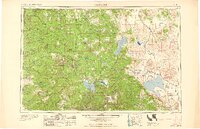
1959 · Westwood
USGS Topo · 1:250,000