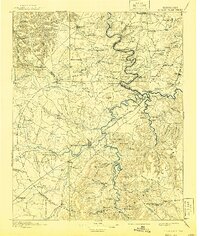
1895 Map of Mc Minnville
USGS Topo · Published 1941About this map
McMinnville and Smithville serve as the primary hubs in this late nineteenth-century survey of middle Tennessee, where a network of water-powered industry and river crossings defines the landscape. The Collins River and its many tributaries, including Barren Fork and Hickory Creek, supported numerous family-run operations such as Daly Mill, Wells Mill, and Lawson Mill. The terrain transitions from the elevations of Short Mtn. and the Cumberland plateau edge into valleys like the Valley of the Cane Killer, reflecting the area's complex topography before major twentieth-century infrastructure changes.
Find a feature on this map
155 named features on this map. Tap any name to fly to it.
Don’t see what you’re looking for? This feature index may not catch every label — zoom into the map to look around manually.
Map Details
Editions of this 1895 Mc Minnville Map
5 editions found
Other maps of this area
1888 · Chattanooga
USGS Topo · 1:125,000
1892 · Pikeville
USGS Topo · 1:125,000
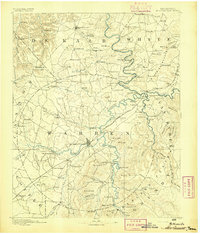
1893 · Mc Minnville
USGS Topo · 1:125,000
1893 · Chattanooga
USGS Topo · 1:125,000
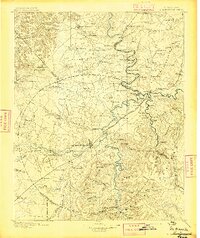
1895 · Mc Minnville
USGS Topo · 1:125,000
1895 · Sewanee
USGS Topo · 1:125,000
1895 · Pikeville
USGS Topo · 1:125,000
1897 · Standingstone
USGS Topo · 1:125,000
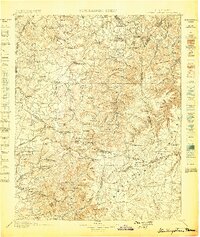
1898 · Standingstone
USGS Topo · 1:125,000
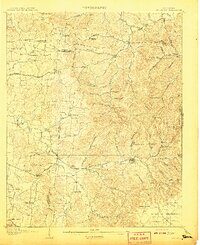
1908 · Woodbury
USGS Topo · 1:62,500