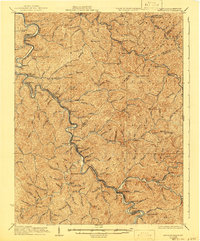
1928 Map of Naugatuck
USGS Topo · Published 1941About this map
Tug Fork serves as the winding spine of this 1920s topography, carving a deep boundary between West Virginia and Kentucky. Along its banks, the Norfolk and Western RR tracks follow the river's tight bends, connecting coal-country settlements like Kermit, Naugatuck, and Warfield. The map reveals a landscape defined by sharp ridges and a dense network of mountain hollows, where life centered around small creeks and isolated schoolhouses.
Find a feature on this map
114 named features on this map. Tap any name to fly to it.
Don’t see what you’re looking for? This feature index may not catch every label — zoom into the map to look around manually.
Map Details
Editions of this 1928 Naugatuck Map
2 editions found
Other maps of this area
1886 · Prestonsburg
USGS Topo · 1:125,000
1887 · Warfield
USGS Topo · 1:125,000
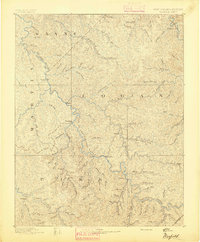
1891 · Warfield
USGS Topo · 1:125,000
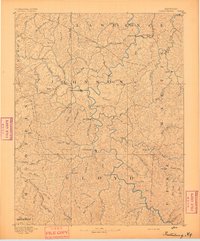
1892 · Prestonsburg
USGS Topo · 1:125,000
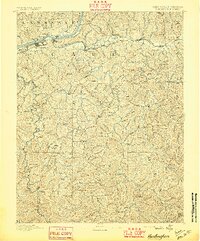
1892 · Huntington
USGS Topo · 1:125,000
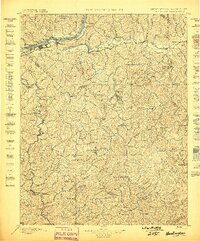
1898 · Huntington
USGS Topo · 1:125,000
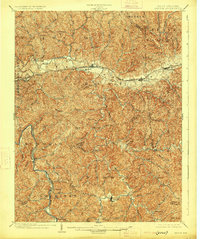
1902 · Midkiff
USGS Topo · 1:62,500
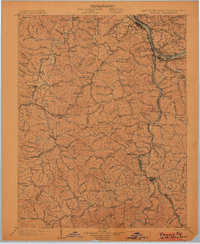
1903 · Kenova
USGS Topo · 1:125,000
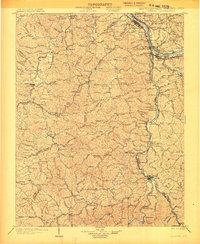
1904 · Kenova
USGS Topo · 1:125,000
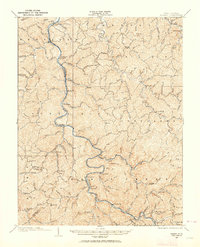
1907 · Midkiff
USGS Topo · 1:62,500