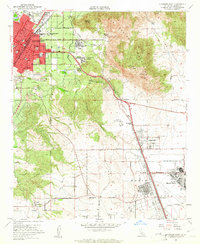
1953 Map of Riverside East
USGS Topo · Published 1962About this map
The sprawling campus of the University of California at Riverside and the strategic expanse of March Air Force Base define the Inland Empire landscape in the early 1950s. The city of Riverside exhibits a mix of dense residential blocks and emerging suburban developments such as Canyon Crest Heights and Belvedere Heights. The topographic contrast is sharp between the urban grid and the prominent peaks of the Box Springs Mountains, where Sugarloaf Mtn and Pigeon Pass dominate the eastern horizon. Military and civil aviation infrastructure are highly visible, including the March Field Radio Range Station and various radio towers. Rail history is preserved through the routes of the Pacific Electric, Southern Pacific, and the Atchison Topeka and Santa Fe, which navigate the rugged corridors of Box Springs Canyon Blvd and the southern Valley.
Find a feature on this map
46 named features on this map. Tap any name to fly to it.
Don’t see what you’re looking for? This feature index may not catch every label — zoom into the map to look around manually.
Map Details
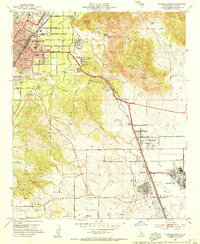
Editions of this 1953 Riverside East Map
2 editions found
Other maps of this area
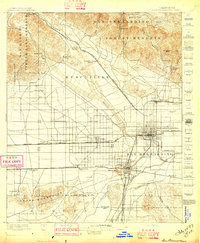
1896 · San Bernardino
USGS Topo · 1:62,500
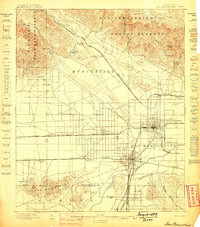
1898 · San Bernardino
USGS Topo · 1:62,500
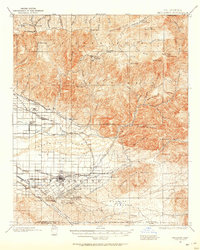
1899 · Redlands
USGS Topo · 1:62,500
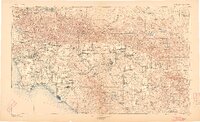
1901 · Southern California Sheet No. 1
USGS Topo · 1:250,000
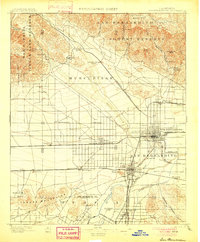
1901 · San Bernardino
USGS Topo · 1:62,500
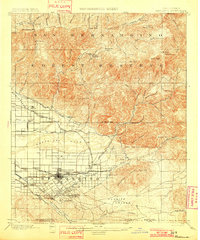
1901 · Redlands
USGS Topo · 1:62,500
1901 · Elsinore
USGS Topo · 1:125,000
1901 · Riverside
USGS Topo · 1:62,500
1904 · Southern California Sheet No. 1
USGS Topo · 1:250,000
1938 · Colton
USGS Topo · 1:31,680