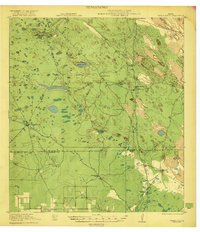
1921 Map of Tarida Ranch
USGS Topo · Published 1921About this map
Ranching outposts and isolated water sources define this landscape along the South Texas coastal plain during the early 1920s. The area is characterized by a high density of small lakes and seasonal basins, notably Rosita Lake and the nearby Tate Well, which were essential for sustaining livestock in this brush-heavy environment. The map details a network of family-held estates such as San Jose Ranch, San Luis Ranch, and Tecolote Ranch, illustrating the dispersed settlement pattern of the Rio Grande Valley hinterlands. Civil infrastructure is sparse, concentrated at the Santa Margarita School near the southern edge of the quadrangle. The map also records the jurisdictional transition between Willacy Co and Cameron Co, marking a significant internal boundary line through the heart of the grazing lands.
Find a feature on this map
17 named features on this map. Tap any name to fly to it.
Don’t see what you’re looking for? This feature index may not catch every label — zoom into the map to look around manually.
Map Details
Editions of this 1921 Tarida Ranch Map
2 editions found
Other maps of this area
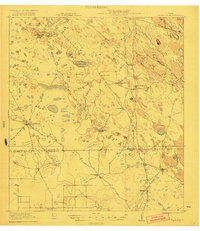
1921 · Tarida Ranch
USGS Topo · 1:62,500
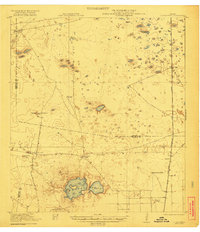
1922 · La Sal Vieja
USGS Topo · 1:62,500
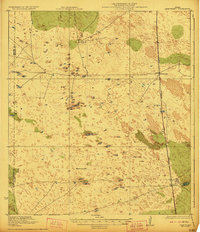
1923 · Armstrong
USGS Topo · 1:62,500
1923 · Lopena Island
USGS Topo · 1:62,500
1923 · Saltillo Ranch
USGS Topo · 1:62,500
1952 · South of Potrero Lopeno NW
USGS Topo · 1:24,000
1952 · Hawk Island
USGS Topo · 1:24,000
1952 · Port Mansfield
USGS Topo · 1:24,000
1952 · Potrero Lopeno SW
USGS Topo · 1:24,000
1952 · Potrero Lopeno
USGS Topo · 1:62,500