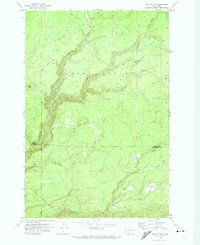
1968 Map of Twin Buttes
USGS Topo · Published 1981About this map
The Yakima and Klickitat county line divides this high-elevation landscape within the Yakima Indian Reservation as it was surveyed in the late 1960s. The topography is defined by significant landmarks like Twin Buttes and Klose Butte, which rise above the extensive Cedar Valley floor. A complex network of drainage feeds the region, including White Creek and Schafer Creek, while more isolated water sources like Hop Swamp and Coyote Springs dot the terrain. Human presence is largely represented by infrastructure for natural resource access, such as Cedar Valley Road and the Campbell Line, alongside specialized excavations like the Cinder Pit and multiple gravel pits. The map captures the transition from steep ridges like Peavine Ridge to the high passes at Featherbed Summit, documenting a working forest and tribal landscape.
Find a feature on this map
21 named features on this map. Tap any name to fly to it.
Don’t see what you’re looking for? This feature index may not catch every label — zoom into the map to look around manually.
Map Details
Editions of this 1968 Twin Buttes Map
This is the sole edition of this map. No revisions or reprints were ever made.
Other maps of this area
1904 · Mount Adams
USGS Topo · 1:125,000
1907 · Mount Adams
USGS Topo · 1:125,000
1934 · The Dalles
USGS Topo · 1:125,000
1937 · White Swan
USGS Topo · 1:125,000
1950 · Yakima
USGS Topo · 1:250,000
1953 · The Dalles
USGS Topo · 1:250,000
1956 · The Dalles
USGS Topo · 1:250,000
1957 · The Dalles
USGS Topo · 1:250,000
1957 · Klickitat
USGS Topo · 1:62,500
1957 · Goldendale
USGS Topo · 1:62,500