1900s (20th Century) Maps of Hayden, Alabama
Explore 17 historic maps of Hayden from the 1900s (20th Century). These maps offer a rare glimpse into what life looked like during the 1900s — showing old roads, neighborhoods, homes, and landmarks that have changed or disappeared over time.
Whether you're researching your family's past, planning a metal detecting trip, or studying how Hayden's landscape evolved across the 1900s, these high-resolution maps are a powerful tool for exploring the history of this region.
- Focus on a specific era: All maps on this page are from the 1900s, giving you a focused view of this time period.
- See what’s changed: Compare century-old streets, trails, and buildings to today's modern landscape using overlays and satellite layers.
- Research with precision: Use these maps for genealogy, historical research, land use analysis, or educational projects.
- View, download, or print: Maps are fully viewable online in high resolution, and can be downloaded or printed for your own records.
Start exploring Hayden's history through authentic maps from the 1900s. This is your window into the past.
Hayden, AL maps
(17)- 1907 Map of Birmingham
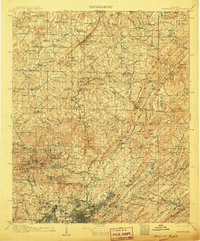 1907 Birmingham1907 Print · USGSJefferson and Blount counties are shown in the early twentieth century as the industrial heart of Alabama was taking shape. Genealogists can trace family roots through named landmarks like Box Schoolhouse, Watson PO, and the coal works at Watts Mines.5 unique versions available
 - 1951 Map of Arkadelphia, 1952 Print
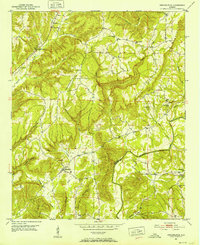 1951 Arkadelphia1952 Print · USGSCullman County in the early fifties shows a landscape of ridge-top settlements and winding river valleys. Genealogists can locate rural landmarks like The Colony, McDonald Cem, and the Colony School nestled between Arkadelphia Mountain and the Mulberry Fork.5 unique versions available
 - 1951 Map of Warrior, 1952 Print
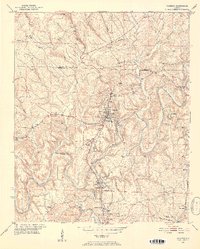 1951 Warrior1952 Print · USGSNorthern Jefferson County's mining and river corridor is captured here in the early fifties, centered on the Warrior and Kimberly communities. Genealogists and historians can locate family landmarks like the Mortimer Jordan Sch, Watts Union Ch, and the Louisville and Nashville rail line.8 unique versions available
 - 1951 Map of Creel, 1952 Print
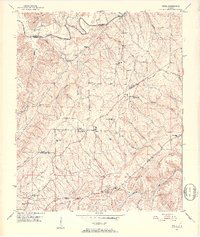 1951 Creel1952 Print · USGSNorth-Central Alabama in the early fifties was a region of high ridges and winding river forks where rural life centered on small crossroads. Genealogists can locate family landmarks at Partridge Crossroads, Red Hill Sch, and the New Zion Hill Ch community.5 unique versions available
 - 1951 Map of Blount Springs, 1952 Print
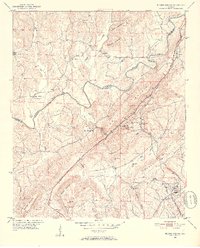 1951 Blount Springs1952 Print · USGSThe Mulberry Fork and the Louisville and Nashville railroad defined life in these northern Alabama hills during the early fifties. Local historians can trace family locations near Blount Springs, Bangor, and Providence Ch, or locate the Blount Tunnel and Hayden High Sch.5 unique versions available
 - 1953 Map of Birmingham, 1964 Print
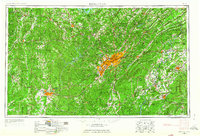 1953 Birmingham1964 Print · USGSCentral Alabama at mid-century shows a landscape defined by industrial expansion and the iron-rich ridges surrounding Birmingham. Researchers can trace the extensive rail networks of the L & N RR or locate historic federal sites like the Anniston Ordnance Depot.4 unique versions available
 - 1956 Map of Birmingham
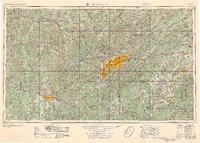 1956 Birmingham1956 Print · USGSCentral Alabama in the mid-fifties exhibits a landscape of growing cities and deep-rooted industrial corridors. Genealogists and historians can trace the development of suburban Mountain Brook or locate regional hubs like Sylacauga and Jasper.
 - 1957 Map of Birmingham
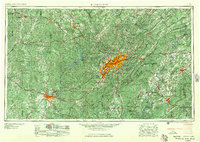 1957 Birmingham1957 Print · USGSNorth-Central Alabama in the mid-fifties is an industrial powerhouse centered on the steel valleys and sprawling iron ridges. Genealogists and historians can trace the rail-linked growth of Birmingham and Tuscaloosa, or locate rural landmarks like Talladega College and the Anniston Ordnance Depot.
 - 1961 Map of Nectar, 1963 Print
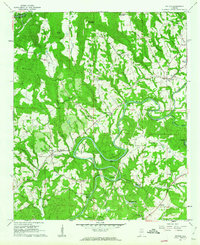 1961 Nectar1963 Print · USGSBlount County communities thrived along the winding Locust Fork in the early sixties. Genealogists and historians can trace family-named sites like McAnally Cove, the Covered Bridge, and rural landmarks from Wallstown to Nectar.3 unique versions available
 - 1961 Map of Trafford, 1963 Print
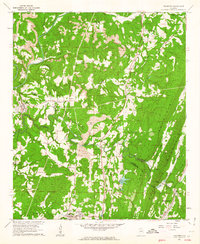 1961 Trafford1963 Print · USGSThe rural coal and rail corridors north of Birmingham are frozen in time during the early sixties. Genealogists and local historians can trace family locations through numerous sites like Bradford (Dixiana PO), Sterling Sch, and the Masseyline Cem.5 unique versions available
 - 1975 Map of Creel, 1977 Print
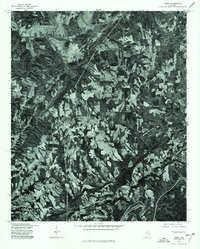 1975 Creel1977 Print · USGSJefferson County's rural river valleys are captured from above in the mid-seventies, showing the landscape just before modern suburban expansion. Researchers can trace the winding paths of the Mulberry Fork and Locust Fork through undisturbed timber and farmland.
 - 1975 Map of Nectar, 1977 Print
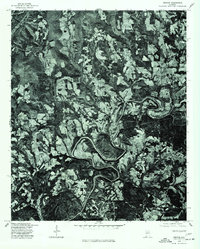 1975 Nectar1977 Print · USGSBlount County land use and river geography are captured in detail during the mid-seventies. Researchers can trace the sharp meanders of the Locust Fork and locate rural homesteads around Nectar, Locust, and Ville.
 - 1975 Map of Trafford, 1977 Print
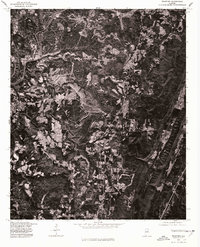 1975 Trafford1977 Print · USGSNorth-central Alabama comes into clear focus in the mid-seventies through this detailed orthophotograph. Genealogists and land researchers can trace the settlement of Trafford and the winding path of the Locus watercourse.
 - 1975 Map of Warrior, 1977 Print
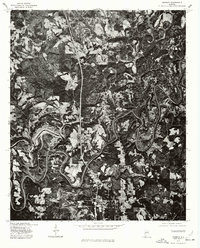 1975 Warrior1977 Print · USGSJefferson County in the mid-seventies is seen here through high-resolution aerial imagery, revealing the literal landscape of the Alabama coal belt. Local historians can trace the exact 1975 footprints of Warrior and Kimberly alongside the winding Fork.
 - 1975 Map of Blount Springs, 1977 Print
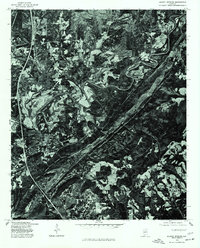 1975 Blount Springs1977 Print · USGSBlount County land use and river geography are captured in detail during the mid-seventies. Researchers can trace the windings of the Mulberry Fork and locate building footprints in the vicinity of Blount Springs and Hayden.
 - 1975 Map of Arkadelphia, 1977 Print
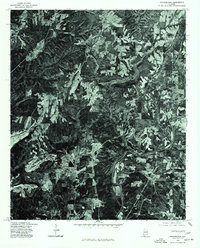 1975 Arkadelphia1977 Print · USGSSouthern Cullman County is captured in photographic detail during the mid-seventies, showing the rural landscape just before modern expansion. Genealogists and land researchers can trace property lines and forest clearings around Arkadelphia, Bremen, and the winding Mulberry Fork.
 - 1984 Map of Birmingham North, 1985 Print
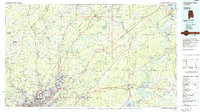 1984 Birmingham North1985 Print · USGSNorth Alabama in the mid-eighties shows the bustling intersection of the Appalachian foothills and the Deep South's industrial heart. Genealogists and historians can trace the paths of the Southern Railway and Seaboard System Railroad through towns like Oneonta, Leeds, and Springville.2 unique versions available
End of results
Showing maps 1-17 of 17
Top cities near Hayden
- Trussville historical maps
- Cullman historical maps
- Gardendale historical maps
- Clay historical maps
- Pinson historical maps
- Oneonta historical maps
See more
Frequently asked questions
- What are the different types of historical maps available for Hayden?
- What is the oldest map of Hayden?
- Where can I purchase historical maps of Hayden for my home or office?
- Where can I download high-res historical maps of Hayden?
- Are there historical topographic maps available for Hayden?
- Is there historical aerial imagery available for Hayden?
- Where are historical maps of Hayden sourced from?