1940s Maps of Madison County, Alabama
Explore 17 historic maps of Madison County from the 1940s. These maps offer a rare glimpse into what life looked like during the 1940s — showing old roads, neighborhoods, homes, and landmarks that have changed or disappeared over time.
Whether you're researching your family's past, planning a metal detecting trip, or studying how Madison County's landscape evolved across the 1940s, these high-resolution maps are a powerful tool for exploring the history of this region.
- Focus on a specific era: All maps on this page are from the 1940s, giving you a focused view of this time period.
- See what’s changed: Compare century-old streets, trails, and buildings to today's modern landscape using overlays and satellite layers.
- Research with precision: Use these maps for genealogy, historical research, land use analysis, or educational projects.
- View, download, or print: Maps are fully viewable online in high resolution, and can be downloaded or printed for your own records.
Start exploring Madison County's history through authentic maps from the 1940s. This is your window into the past.
Madison County, AL maps
(17)- 1947 Map of Farley, 1956 Print
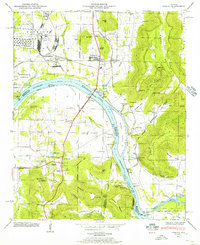 1947 Farley1956 Print · USGSThe Tennessee River valley north of Laceys Spring is captured here just after the war, showing the expansion of federal reservations. Trace family roots at Laceys Spring Cem or locate old community hubs like St Lukes Church and the Cherokee School.
 - 1947 Map of New Hope, 1964 Print
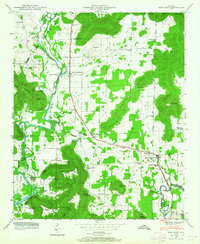 1947 New Hope1964 Print · USGSMadison County at the end of the 1940s reveals a rural landscape defined by the Tennessee River's backwaters and the foothills of the Appalachians. Researchers can trace family history through dozens of named sites like Owens Cross Roads, Cherokee School, and New Hope Cem.3 unique versions available
 - 1947 Map of Newsome Sinks, 1967 Print
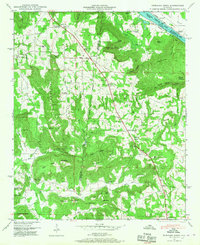 1947 Newsome Sinks1967 Print · USGSIn the mid-1940s, this area of Marshall County was a landscape of high ridges and deep coves where the Huntsville Meridian defines the local grid. Researchers can trace rural life through landmarks like Clarksville Landing, Pleasant Valley Church, and the New Horton School.3 unique versions available
 - 1947 Map of Grant, 1970 Print
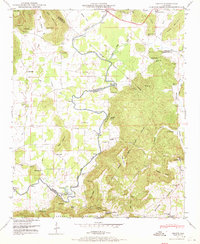 1947 Grant1970 Print · USGSNortheastern Alabama’s river valleys and mountain ridges are captured here just after the war, showing the rural landscape where three counties meet. Genealogists can trace family landmarks like Keel Cem, Butler Mill, and the many river crossings including Hellum Ford.4 unique versions available
 - 1948 Map of Moontown, 1952 Print
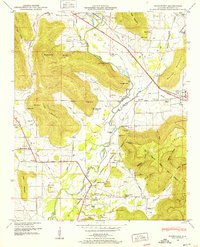 1948 Moontown1952 Print · USGSMadison County's valley floor and mountain ridges appear here in the late 1940s, showing a landscape defined by the FLINT RIVER and small agricultural settlements. Researchers can locate vanished landmarks like Sublett Mill, the Big Cove School, and numerous family cemeteries including Lawler Cem and Stanford Cem.5 unique versions available
 - 1948 Map of Huntsville, 1956 Print
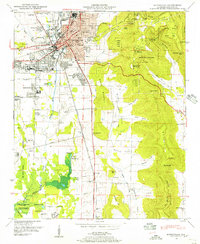 1948 Huntsville1956 Print · USGSHuntsville at the start of its postwar boom reveals a landscape of industrial mill villages and quiet mountain coves. Researchers can trace the original Redstone Arsenal boundary or locate family sites at Maple Hill Cem and Mt Lebanon Ch.
 - 1948 Map of Madison, 1960 Print
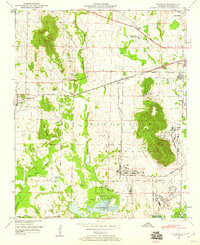 1948 Madison1960 Print · USGSPost-war Madison County shows a landscape transitioning from rural rail towns to a major federal military hub. Trace family history and land changes through the Royal Cem, the Huntsville Arsenal Airfield, and the Southern Railway corridor.2 unique versions available
 - 1948 Map of Triana, 1963 Print
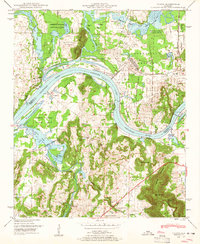 1948 Triana1963 Print · USGSThe Tennessee River valley in the late 1940s reveals the massive military footprint of Huntsville Arsenal alongside traditional river life. Researchers can trace historic family burial sites like Draper Cem and Grantland Cem or locate the rural crossroads at Talucah and Winton.
 - 1948 Map of Maysville, 1964 Print
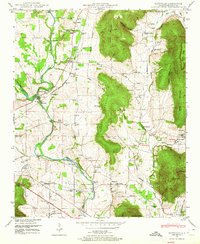 1948 Maysville1964 Print · USGSMadison County at the end of the 1940s reveals a rural landscape defined by the Flint River and early industrial sites. Genealogists and historians can locate the Old Cherokee Boundary, trace family names at Jordan Cem, or study the Bell Factory and McCaleb Mill.5 unique versions available
 - 1948 Map of Hollytree, 1964 Print
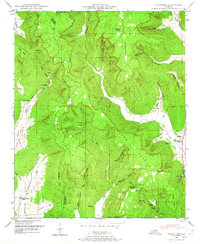 1948 Hollytree1964 Print · USGSJackson County is shown at a mid-century turning point when mountain coves still held isolated family homesteads and local landmarks. Genealogists can trace rural family sites through Maples Cem, Hollytree, and several backcountry churches like Mt Nebo Church.4 unique versions available
 - 1948 Map of Meridianville, 1964 Print
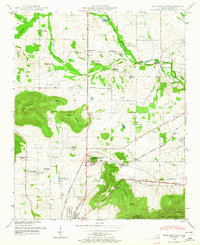 1948 Meridianville1964 Print · USGSMadison County's agricultural heartland is documented here just after the war, centered on the growing campus at Normal. Genealogists can locate family names across numerous cemeteries like Strong Cem and Tiller Cem, or trace rural landmarks including Moores Mill and Lewis Chapel.
 - 1948 Map of Paint Rock, 1966 Print
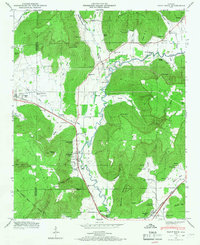 1948 Paint Rock1966 Print · USGSThe Paint Rock River valley in the late 1940s reveals a network of small Jackson County communities and riverside crossings. Genealogists and historians can locate numerous family burial sites like Latham Cem and trace the historic Southern RR past the Conyers-Rosenwald School.5 unique versions available
 - 1948 Map of King Cove, 1967 Print
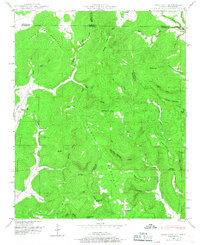 1948 King Cove1967 Print · USGSThe Alabama-Tennessee borderlands appear here in the late 1940s, showing a landscape of isolated coves and mountain ridges. Researchers can locate remote family sites like Hayes Cem and Francisco, or trace the complex karst drainage near Hambrick Sinks.3 unique versions available
 - 1948 Map of Fisk, 1971 Print
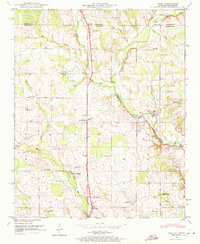 1948 Fisk1971 Print · USGSMadison County, Alabama, and Lincoln County, Tennessee, meet at this mid-century rural crossroads where the Flint River valley supported a landscape of mills and country churches. Researchers can trace family sites like Stegers Store, Farmers Capitol School, and Townsend Cem along the old short route.2 unique versions available
 - 1948 Map of Guntersville Dam, 1972 Print
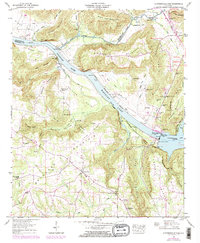 1948 Guntersville Dam1972 Print · USGSThe Tennessee River valley in the late 1940s centers on the massive Guntersville Dam and its surrounding mountain reservations. Genealogists can trace family landmarks like Neighbors Mill, Patterson Cem, and the remote Mobb School.2 unique versions available
 - 1949 Map of Mason Ridge, 1964 Print
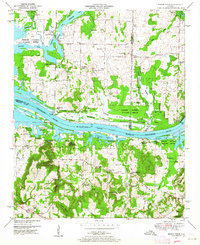 1949 Mason Ridge1964 Print · USGSNorthern Alabama’s river bottomlands are captured here in the mid-century, where the Tennessee River valley transitions into rural farmsteads. Trace family history through Swancott, Brooksville, and numerous burial sites like Kolb Cem and Thatch Cem.4 unique versions available
 - 1949 Map of New Market, 1976 Print
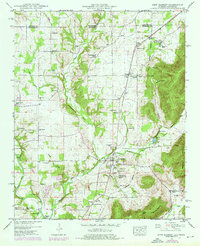 1949 New Market1976 Print · USGSMadison County and the Tennessee state line are captured in the mid-century as rural communities like New Market and Plevna thrived along the rail lines. Genealogists can trace family landmarks and historic property lines along the Old Cherokee Boundary and near Bloucher Ford.
End of results
Showing maps 1-17 of 17
Top cities of Madison County
- Huntsville historical maps
- Meridianville historical maps
- Moores Mill historical maps
- Harvest historical maps
- Hazel Green historical maps
- Triana historical maps
See more
Frequently asked questions
- What are the different types of historical maps available for Madison County?
- What is the oldest map of Madison County?
- Where can I purchase historical maps of Madison County for my home or office?
- Where can I download high-res historical maps of Madison County?
- Are there historical topographic maps available for Madison County?
- Is there historical aerial imagery available for Madison County?
- Where are historical maps of Madison County sourced from?