1900s (20th Century) Maps of Walker County, Alabama
Explore 55 historic maps of Walker County from the 1900s (20th Century). These maps offer a rare glimpse into what life looked like during the 1900s — showing old roads, neighborhoods, homes, and landmarks that have changed or disappeared over time.
Whether you're researching your family's past, planning a metal detecting trip, or studying how Walker County's landscape evolved across the 1900s, these high-resolution maps are a powerful tool for exploring the history of this region.
- Focus on a specific era: All maps on this page are from the 1900s, giving you a focused view of this time period.
- See what’s changed: Compare century-old streets, trails, and buildings to today's modern landscape using overlays and satellite layers.
- Research with precision: Use these maps for genealogy, historical research, land use analysis, or educational projects.
- View, download, or print: Maps are fully viewable online in high resolution, and can be downloaded or printed for your own records.
Start exploring Walker County's history through authentic maps from the 1900s. This is your window into the past.
Walker County, AL maps
(55)- 1907 Map of Birmingham
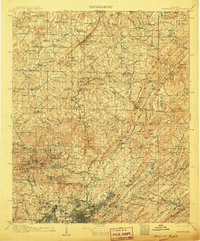 1907 Birmingham1907 Print · USGSJefferson and Blount counties are shown in the early twentieth century as the industrial heart of Alabama was taking shape. Genealogists can trace family roots through named landmarks like Box Schoolhouse, Watson PO, and the coal works at Watts Mines.5 unique versions available
 - 1935 Map of Port Birmingham
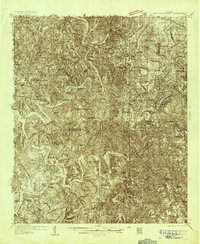 1935 Port Birmingham1935 Print · USGSThe coal and power corridor of the Black Warrior River is captured here in the mid-1930s, showing a landscape defined by mines and industrial camps. Genealogists can locate family sites at Pennsylvania Camp, Satterfield Cem, or the Barney Mine community.
 - 1938 Map of Port Birmingham
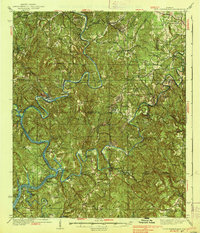 1938 Port Birmingham1938 Print · USGSThe river-and-rail industry of the Black Warrior coalfields is captured here in the late 1930s. Genealogists and historians can trace the foundations of local commerce at Port Birmingham and locate vanished river crossings like Underwood Ferry or the Atwood Ferry.4 unique versions available
 - 1949 Map of Cordova, 1967 Print
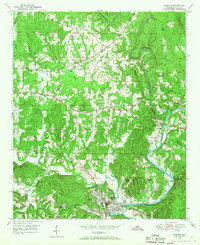 1949 Cordova1967 Print · USGSWalker County during the late 1940s shows a complex network of river bends and rail lines centered on Cordova. Researchers can trace old family settlements and rural landmarks like Gardiners Gin, Wesley Ch, and the crossing at Benoit.4 unique versions available
 - 1949 Map of Parrish, 1967 Print
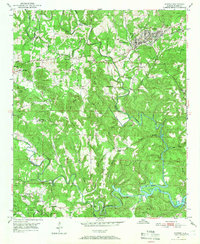 1949 Parrish1967 Print · USGSWalker County during the late 1940s reveals a landscape shaped by coal and rail around the junctions of Parrish and Oakman. Researchers can trace the development of small mining hamlets like Standard or locate rural landmarks like Old Liberty Hill Church and the Pleasant Field School.2 unique versions available
 - 1949 Map of Sipsey, 1969 Print
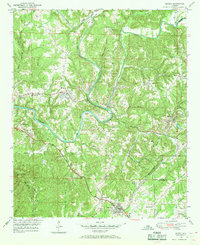 1949 Sipsey1969 Print · USGSWalker County at the close of the 1940s reveals a landscape shaped by the winding Mulberry Fork and the arrival of industrial mining. Genealogists and historians can trace old schools and churches like Wheeler Sch and New Canaan Ch or locate family sites at Drummond Cem.5 unique versions available
 - 1949 Map of Cold Springs, 1969 Print
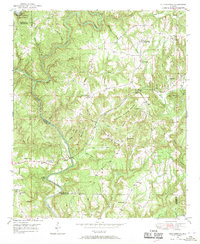 1949 Cold Springs1969 Print · USGSCullman County life in the late 1940s centers on the ridge-top settlements and creek valleys near the Sipsey Fork. Researchers can trace rural lineages through numerous country landmarks like Cold Springs, Drummond Sch, and the Banking Grounds.5 unique versions available
 - 1949 Map of Townley, 1969 Print
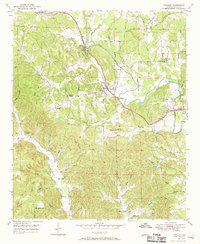 1949 Townley1969 Print · USGSWalker County during the late 1940s is defined by the intersections of the Bankhead Highway and coal-country rail lines. Genealogists and local historians can trace rural family life through landmarks like Union Hill Church, Palmer Sch, and Manasco Cem.3 unique versions available
 - 1949 Map of Jasper, 1969 Print
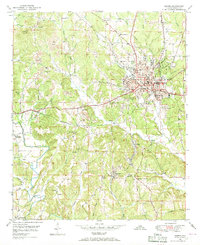 1949 Jasper1969 Print · USGSWalker County during the mid-century industrial peak reveals a landscape defined by coal and the convergence of major rail lines. Researchers can trace family roots at Oak Hill Cem, locate the old Frisco Quarters, or find the historic Walker County Airport.2 unique versions available
 - 1949 Map of Oakman, 1972 Print
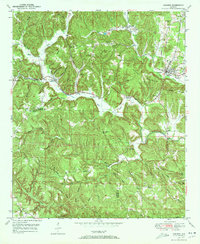 1949 Oakman1972 Print · USGSThe Walker County coal and rail landscape comes alive in this post-war survey of the Oakman area. Researchers can trace the SOUTHERN railroad through the hills to locate Coal Valley, the Patton Hill Fire Tower, and local landmarks like Infant Hill Cemetery.2 unique versions available
 - 1949 Map of Manchester, 1972 Print
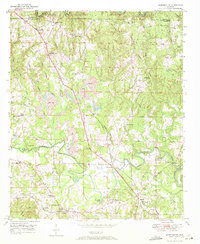 1949 Manchester1972 Print · USGSWalker County during the late 1940s shows a landscape of small mining and farming settlements connected by the Alabama Central Railroad. Genealogists can locate family landmarks like Old Bennett Cem, Macedonia Sch, and the rural community at Five Points.2 unique versions available
 - 1949 Map of Nauvoo, 1973 Print
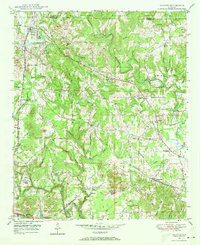 1949 Nauvoo1973 Print · USGSPost-war Walker County comes to life in this detailed survey of the plateau country. Researchers can trace family roots through numerous local landmarks like Keeton Cem, Old Zion Ch, and the rural Nix Sch.2 unique versions available
 - 1949 Map of Sunlight, 1973 Print
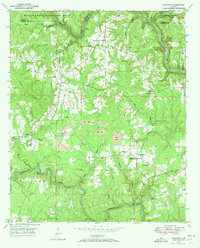 1949 Sunlight1973 Print · USGSWalker County at the end of the 1940s reveals a landscape of winding creek valleys and emerging coal extraction. Researchers can trace family history at sites like Blooming Grove Cem, the settlement of Sunlight, and Philadelphia Ch.3 unique versions available
 - 1949 Map of Tutwiler School, 1973 Print
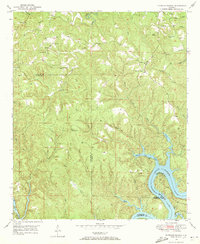 1949 Tutwiler School1973 Print · USGSThe hill country of Walker and Tuscaloosa Counties is captured here in the late 1940s as the river economy transitions. Researchers can trace rural lineages through sites like Tutwiler School, Cedar Creek Ch, and old settlements such as Browntown and Three Forks.3 unique versions available
 - 1949 Map of Wiley, 1973 Print
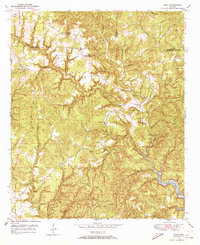 1949 Wiley1973 Print · USGSThe rural borderlands of Fayette, Walker, and Tuscaloosa Counties are captured here in the late 1940s just as the regional landscape was maturing. Genealogists can trace family roots through landmarks like Brandon Sch, Flatwoods Cem, and Rock Springs Ch.3 unique versions available
 - 1950 Map of Nauvoo
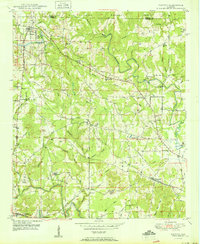 1950 Nauvoo1950 Print · USGSThe northern forest lands and rural settlements of Walker and Winston counties are detailed in this mid-century survey. Genealogists and local historians can trace the early layout of Nauvoo and its connection to the expansive William B Bankhead National Forest.2 unique versions available
 - 1950 Map of Manchester
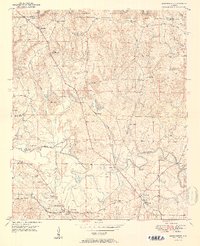 1950 Manchester1950 Print · USGSWalker County during the mid-century period shows a landscape of rural schoolhouses and forest management just north of Jasper. Researchers can trace the Alabama Central RR (Abandoned) and locate vanished local landmarks like Hudson Settlement and the Bankhead Farmstead Sch.2 unique versions available
 - 1951 Map of Jasper
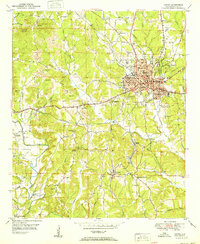 1951 Jasper1951 Print · USGSJasper and its surrounding coal-country communities are captured in the early 1950s as industry and aviation began to reshape the Walker County landscape. Genealogists and local historians can trace family roots at Oak Hill Cem, visit Snoddy Chapel, or locate schools like Scottsville Sch.2 unique versions available
 - 1951 Map of Cold Springs
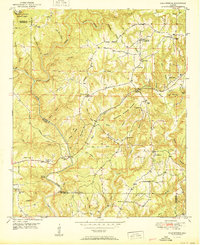 1951 Cold Springs1951 Print · USGSCullman and Walker Counties are shown here just after mid-century as a landscape of rural ridge-top churches and river-bottom crossings. Genealogists can locate family landmarks like Addington Chapel, McKinley Chapel, and the community of Cold Springs.2 unique versions available
 - 1951 Map of Parrish
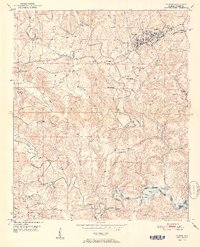 1951 Parrish1951 Print · USGSWalker County in the early fifties shows a landscape of coal mining and rural settlements shaped by the Southern railroad. Researchers can trace family history at Old Liberty Hill Church, Ernest Chapel, and the community of Parrish.2 unique versions available
 - 1951 Map of Tutwiler School
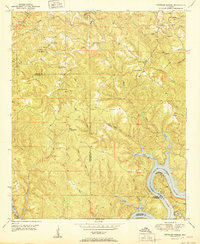 1951 Tutwiler School1951 Print · USGSThe borderlands of Walker and Tuscaloosa counties are documented here in the early fifties, showcasing a rural landscape shaped by the Black Warrior River. Genealogists can locate family landmarks like Tutwiler School, Browntown, and Reynolds Sch.2 unique versions available
 - 1951 Map of Oakman
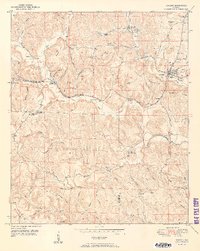 1951 Oakman1951 Print · USGSWalker and Fayette counties come into focus in the early fifties, showing the rail-dependent settlements of the coal region. Researchers can trace family history through several rural landmarks, including Mt Zion Ch, Infant Hill Cemetery, and the depot at Corona.2 unique versions available
 - 1951 Map of Sipsey
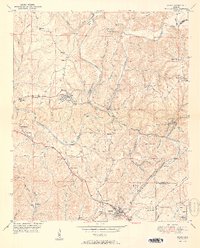 1951 Sipsey1951 Print · USGSMid-century Walker County is shown here as a landscape of coal mining and river meanders just as the local industry peaked. Genealogists can trace family names at Rices Chapel, Maudlin Cem, and the rail junction at Sipsey.2 unique versions available
 - 1951 Map of Wiley
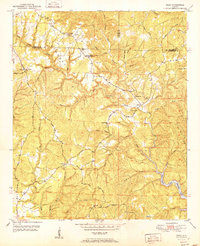 1951 Wiley1951 Print · USGSTuscaloosa County is shown at mid-century as a land of rural homesteads and winding creek branches. Genealogists can trace family connections through landmarks like Brandon Sch, Rock Springs Ch, and the high ridges of Upton Hill.
 - 1951 Map of Townley
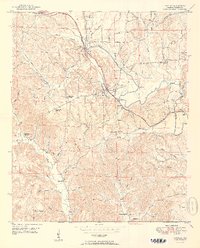 1951 Townley1951 Print · USGSWalker County during the early postwar years reveals a landscape shaped by coal mining and close-knit rural communities. Genealogists and historians can trace family roots through sites like Palmer Sch, Kings Chapel, and the Manasco Cem near Townley.2 unique versions available
Showing maps 1-25 of 55
Top cities of Walker County
- Jasper historical maps
- Sumiton historical maps
- Dora historical maps
- Carbon Hill historical maps
- Cordova historical maps
- Parrish historical maps
See more
Frequently asked questions
- What are the different types of historical maps available for Walker County?
- What is the oldest map of Walker County?
- Where can I purchase historical maps of Walker County for my home or office?
- Where can I download high-res historical maps of Walker County?
- Are there historical topographic maps available for Walker County?
- Is there historical aerial imagery available for Walker County?
- Where are historical maps of Walker County sourced from?