1950s Maps of Tucson, Arizona
Explore 16 historic maps of Tucson from the 1950s. These maps offer a rare glimpse into what life looked like during the 1950s — showing old roads, neighborhoods, homes, and landmarks that have changed or disappeared over time.
Whether you're researching your family's past, planning a metal detecting trip, or studying how Tucson's landscape evolved across the 1950s, these high-resolution maps are a powerful tool for exploring the history of this region.
- Focus on a specific era: All maps on this page are from the 1950s, giving you a focused view of this time period.
- See what’s changed: Compare century-old streets, trails, and buildings to today's modern landscape using overlays and satellite layers.
- Research with precision: Use these maps for genealogy, historical research, land use analysis, or educational projects.
- View, download, or print: Maps are fully viewable online in high resolution, and can be downloaded or printed for your own records.
Start exploring Tucson's history through authentic maps from the 1950s. This is your window into the past.
Tucson, AZ maps
(16)- 1956 Map of Nogales, 1963 Print
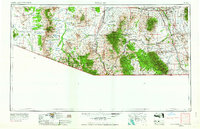 1956 Nogales1963 Print · USGSSouthern Arizona in the mid-fifties is captured here from the Papago tribal lands to the San Pedro valley. Genealogists and historians can trace border settlements like Sasabe, the legacy of Tombstone, and old mining sites including the Mary G Mine.4 unique versions available
 - 1956 Map of Tucson, 1967 Print
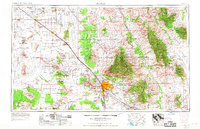 1956 Tucson1967 Print · USGSPost-war Southern Arizona comes into focus as the copper and aviation industries expand around Tucson. Trace family roots in South Tucson or locate early mining sites like the San Manuel Mine and Silver Bell Mine near the Santa Cruz River.3 unique versions available
 - 1957 Map of Tucson East, 1958 Print
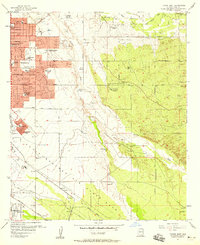 1957 Tucson East1958 Print · USGSThe eastern fringes of Tucson were rapidly expanding in the late fifties as residential neighborhoods pushed toward the desert washes. Genealogists and historians can locate numerous early schools like Treehaven Sch and the expansive Davis-Monthan Air Force Base.4 unique versions available
 - 1957 Map of San Xavier Mission, 1958 Print
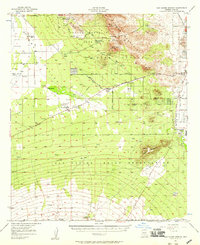 1957 San Xavier Mission1958 Print · USGSThe desert landscape south of Tucson comes alive in the late fifties, dominated by the Tucson Mountains and the Santa Cruz River valley. Genealogists and historians can trace the foundations of the San Xavier del Bac Mission, the Arizona-Sonora Desert Museum, and early regional airstrips like Ryan Field.2 unique versions available
 - 1957 Map of Tucson, 1958 Print
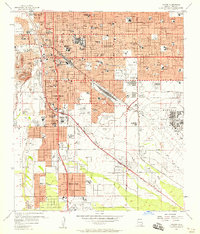 1957 Tucson1958 Print · USGSMid-century Tucson is seen here during a decade of massive growth, from the university campus to the airfield. Genealogists and historians can trace neighborhood development near Pascua Yaqui Indian Village, Emery Park, and the Davis Monthan Air Force Base.3 unique versions available
 - 1957 Map of Tucson, 1958 Print
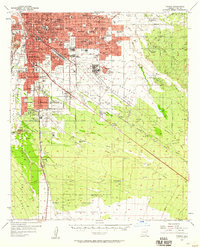 1957 Tucson1958 Print · USGSMid-century Tucson is shown during a period of rapid desert expansion and military growth. Genealogists and historians can trace family-named sites like Franco Ranch, local landmarks such as Sentinel Peak, and the development of Vandenberg Village.2 unique versions available
 - 1957 Map of Rincon Valley, 1958 Print
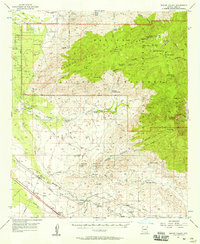 1957 Rincon Valley1958 Print · USGSThe Rincon Valley and its surrounding peaks are captured in the mid-1950s before the rapid expansion of modern Tucson. Researchers can trace the original Southern Pacific rail line and locate early local landmarks like Colossal Cave, Vail, and the Loma Verde Mine.4 unique versions available
 - 1957 Map of Sabino Canyon, 1958 Print
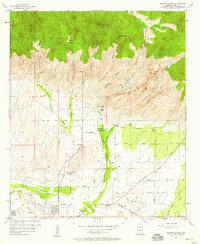 1957 Sabino Canyon1958 Print · USGSThe Santa Catalina foothills east of Tucson are shown here in the late fifties as residential growth began meeting the desert edge. Researchers can locate the Southern Arizona School For Boys, the Immaculate Heart Novitiate, and the original grounds of Ft Lowell Park.5 unique versions available
 - 1957 Map of Cortaro, 1959 Print
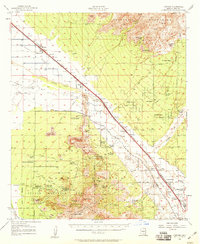 1957 Cortaro1959 Print · USGSThe Santa Cruz Valley in the late fifties shows a landscape of developing irrigation and cattle ranching between mountain ranges. Genealogists and historians can trace family-named properties like T-Bench-Bar Ranch, local mining at Gila Monster Mine, and early school sites such as Laguna School.2 unique versions available
 - 1957 Map of Tucson North, 1959 Print
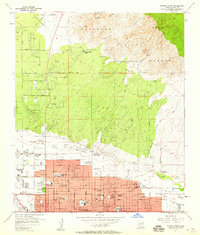 1957 Tucson North1959 Print · USGSTucson is seen during its post-war suburban surge into the desert foothills before the reach of the modern metropolis. Genealogists and historians can trace the footprint of early schools like Prince Sch, the Rilvito Park and Race Track, and the Pontatoc Mine.4 unique versions available
 - 1957 Map of Mount Lemmon, 1959 Print
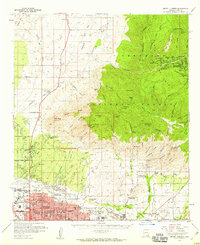 1957 Mount Lemmon1959 Print · USGSGreater Tucson and the high Santa Catalina peaks are captured in the late fifties as the city’s northern suburbs began to meet the desert foothills. Researchers can trace the mid-century footprint of the University of Arizona Farm, the historic Steam Pump Ranch, and mountain retreats like Summerhaven.3 unique versions available
 - 1958 Map of Nogales
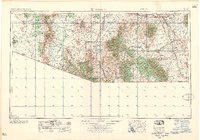 1958 Nogales1958 Print · USGSSouthern Arizona in the late fifties was a landscape of international borders and high-desert outposts, dominated by the Huachuca Mountains and the Papago Indian Reservation. Local historians can trace old mining camps like Ruby and Greaterville or locate historic military grounds at the Fort Huachuca Military Reservation.
 - 1958 Map of Tucson
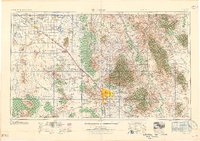 1958 Tucson1958 Print · USGSSouthern Arizona in the late fifties reveals a landscape of desert agriculture and rising military aviation. Trace the rail lines of the Southern Pacific or locate the historic San Xavier Del Bac Mission and the Casa Grande Natl Mon.
 - 1958 Map of Sahuarita, 1959 Print
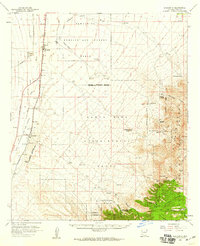 1958 Sahuarita1959 Print · USGSThe Pima County desert and mountain foothills come into focus in the late fifties, showing the expanding reach of federal land use. Researchers can locate family ranches like Johnson Ranch and historic mining sites near Helvetia or the settlement of Greaterville.3 unique versions available
 - 1959 Map of Tucson
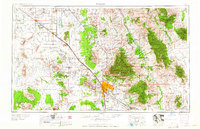 1959 Tucson1959 Print · USGSSouthern Arizona in the late fifties shows a landscape of military growth and desert industry. Genealogists and historians can trace the footprint of Davis-Monthan Air Force Base and old mining sites like the San Manuel Mine near Mammoth.2 unique versions available
 - 1959 Map of Nogales
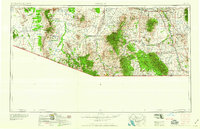 1959 Nogales1959 Print · USGSThe Southern Arizona borderlands appear in the late fifties as a complex landscape of military ranges, tribal lands, and high-desert mining towns. Local historians can trace the Southern Pacific rail lines connecting Tombstone and Benson or locate family ranches such as Canoa Ranch.
End of results
Showing maps 1-16 of 16
Top cities near Tucson
- Marana historical maps
- Oro Valley historical maps
- Sahuarita historical maps
- Vail historical maps
- Corona de Tucson historical maps
- South Tucson historical maps
Top neighborhoods of Tucson
- Palo Verde Park historical maps
- Stockham historical maps
- Emery Park historical maps
- Blenman-Elm historical maps
- Jefferson Park historical maps
- Silvercroft historical maps
See more
Frequently asked questions
- What are the different types of historical maps available for Tucson?
- What is the oldest map of Tucson?
- Where can I purchase historical maps of Tucson for my home or office?
- Where can I download high-res historical maps of Tucson?
- Are there historical topographic maps available for Tucson?
- Is there historical aerial imagery available for Tucson?
- Where are historical maps of Tucson sourced from?