1990s Maps of Tucson, Arizona
Explore 23 historic maps of Tucson from the 1990s. These maps offer a rare glimpse into what life looked like during the 1990s — showing old roads, neighborhoods, homes, and landmarks that have changed or disappeared over time.
Whether you're researching your family's past, planning a metal detecting trip, or studying how Tucson's landscape evolved across the 1990s, these high-resolution maps are a powerful tool for exploring the history of this region.
- Focus on a specific era: All maps on this page are from the 1990s, giving you a focused view of this time period.
- See what’s changed: Compare century-old streets, trails, and buildings to today's modern landscape using overlays and satellite layers.
- Research with precision: Use these maps for genealogy, historical research, land use analysis, or educational projects.
- View, download, or print: Maps are fully viewable online in high resolution, and can be downloaded or printed for your own records.
Start exploring Tucson's history through authentic maps from the 1990s. This is your window into the past.
Tucson, AZ maps
(23)- 1992 Map of San Xavier Mission, 1995 Print
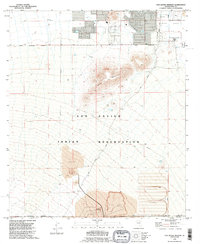 1992 San Xavier Mission1995 Print · USGSThe Santa Cruz Valley in the early 1990s reveals a unique intersection of sacred history and industrial scale. Researchers can trace the grounds of the San Xavier del Bac Mission and the sprawling Mine Dump or Quarry operations near Twin Buttes.
 - 1992 Map of Jaynes, 1995 Print
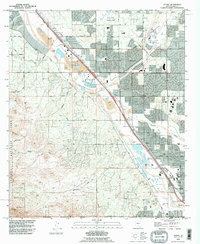 1992 Jaynes1995 Print · USGSNorthwest Tucson in the early nineties shows a desert landscape transitioning into a suburban hub along the Santa Cruz River. Trace the old Southern Pacific rail line past the Gila Monster Mine and the historic Cortaro Farms.
 - 1992 Map of Tucson East, 1995 Print
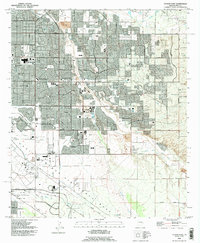 1992 Tucson East1995 Print · USGSEastern Tucson in the early nineties shows a city balancing its suburban growth with its heavy military and aviation heritage. Trace the boundaries of Davis-Monthan Air Force Base, old routes like Old Spanish Trail, and the development of Littletown.
 - 1992 Map of Tucson, 1995 Print
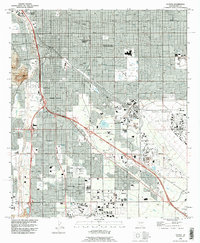 1992 Tucson1995 Print · USGSTucson at the start of the nineties reveals a landscape of rapid expansion balanced between its university roots and military aviation presence. Researchers can trace the development of South Tucson or locate landmarks like the Old Pascua Yaqui Indian Village and El Con Mall.
 - 1992 Map of Tucson SW, 1995 Print
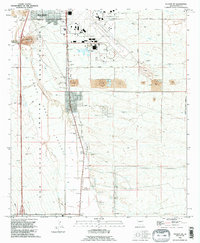 1992 Tucson SW1995 Print · USGSSouthern Arizona in the early 1990s reveals a unique intersection of tribal lands, aviation infrastructure, and industrial growth. Researchers can trace the development of the San Xavier Indian Reservation alongside landmarks like Martinez Hill and the Tucson International Airport.
 - 1992 Map of Tucson North, 1995 Print
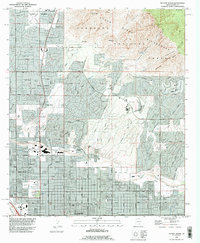 1992 Tucson North1995 Print · USGSTucson and its northern suburbs are captured in the early nineties as development presses against the Santa Catalina foothills. Researchers can trace the layout of Casas Adobes, find Evergreen Cemetery, and locate landmarks like Rillito Downs Racetrack.
 - 1992 Map of Sabino Canyon, 1995 Print
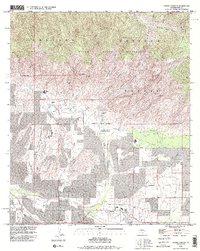 1992 Sabino Canyon1995 Print · USGSPima County's northern foothills meet the Santa Catalina front in the early nineties, showing where urban Tucson began to push against the wilderness. Genealogists and historians can trace the footprint of the Southern Arizona School For Boys, the Stone House, and the legacy of the Tanque Verde Canal.2 unique versions available
 - 1992 Map of Tucson SE, 1995 Print
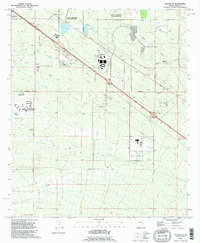 1992 Tucson SE1995 Print · USGSSoutheast of Tucson in the early nineties, this desert landscape shows a period of rapid institutional and civic growth. Researchers can trace the boundaries of Littletown, the County Fairgrounds, and the massive Arizona State Prison Complex.
 - 1992 Map of Cat Mountain, 1995 Print
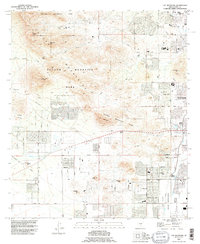 1992 Cat Mountain1995 Print · USGSThe western edges of Tucson in the early nineties show a landscape defined by the Tucson Mountains and expanding infrastructure. Genealogists and historians can trace residential growth near Tumamoc Hill and locate landmarks like Pima Community College or the San Joaquin Aqueduct.
 - 1994 Map of Fort Huachuca
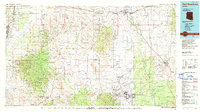 1994 Fort Huachuca1994 Print · USGSSouthern Arizona in the mid-nineties shows a landscape of expansive military reservations, historic land grants, and storied mining districts. Researchers can trace the S P RR through the San Pedro River valley or locate dozens of remote mountain workings like the Montezuma Mine and Eureka Mine.3 unique versions available
 - 1994 Map of Tucson
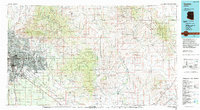 1994 Tucson1994 Print · USGSTucson and the Santa Cruz Valley appear here in the mid-1990s, caught between rapid urban growth and protected wilderness. Researchers can trace the development of Casas Adobes, the operations at Davis Monthan Air Force Base, and the rail lines of the Southern Pacific RR.2 unique versions available
 - 1994 Map of Silver Bell Mountains
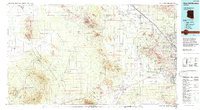 1994 Silver Bell Mountains1994 Print · USGSSouthern Arizona in the mid-nineties shows a land of transition between desert wilderness, tribal lands, and the growing Tucson suburbs. Genealogists and historians can trace settlements like San Luis and Ko Vaya, or follow the industrial legacy of the Silver Bell Mine.2 unique versions available
 - 1996 Map of Tucson East, 2002 Print
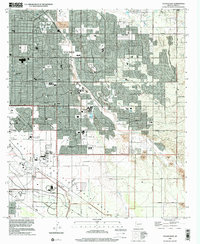 1996 Tucson East2002 Print · USGSSoutheastern Tucson enters a period of significant suburban and military expansion during the late nineties. Researchers can trace the layout of Davis-Monthan Air Force Base, find the Pima Air & Space Museum, and locate residential clusters like Littleton and Vandenberg Village.
 - 1996 Map of Tucson North, 2002 Print
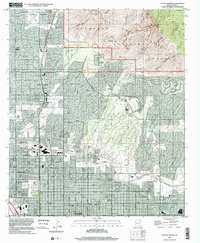 1996 Tucson North2002 Print · USGSNorthern Tucson and Casas Adobes meet the steep desert ridges in the mid-nineties. Researchers can locate community anchors like Evergreen Cemetery, the Rillito Downs Racetrack, and high peaks in the Pusch Ridge Wilderness.
 - 1996 Map of Corona De Tucson, 2002 Print
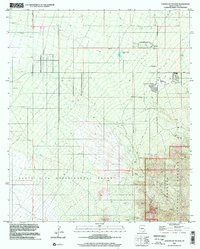 1996 Corona De Tucson2002 Print · USGSCorona de Tucson and the surrounding Pima County desert are captured in the mid-nineties as suburban growth reaches the edge of public lands. Genealogists and researchers can locate the Mt Fagan Ranch, trace the Bluestar Mine, and see the extent of the Santa Rita Experimental Range.
 - 1996 Map of Tucson, 2002 Print
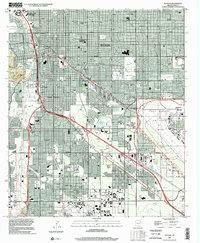 1996 Tucson2002 Print · USGSTucson and its surrounding desert communities are captured in the late nineties, showcasing a period of significant urban and military infrastructure development. Researchers can trace the boundaries of the Old Pascua-Yaqui Indian Village, the Davis-Monthan Air Force Base, and the local history of Emery Park.
 - 1996 Map of Cat Mountain, 2002 Print
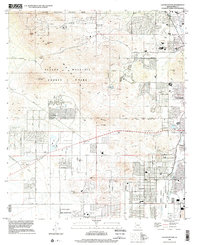 1996 Cat Mountain2002 Print · USGSThe western desert fringes of Tucson and the rugged peaks of the Tucson Mountains are detailed here in the late twentieth century. Researchers can trace tribal lands of the Pascua Yaqui Indian Reservation and historic sites like the Amphitheater Quarries.
 - 1996 Map of Tucson SW, 2002 Print
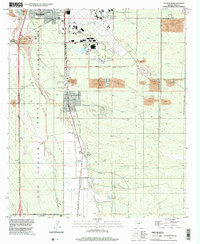 1996 Tucson SW2002 Print · USGSTucson's southern reaches in the mid-nineties reveal a landscape where industrial hubs meet the traditional lands of the San Xavier Indian Reservation. Genealogists and local historians can trace the foundations of the modern city through landmarks like Rancho De Martinez, Martinez Hill, and the early infrastructure of the Tucson International Airport.
 - 1996 Map of Tanque Verde Peak, 2002 Print
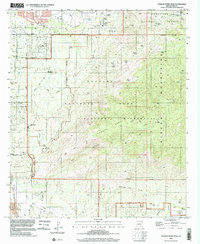 1996 Tanque Verde Peak2002 Print · USGSThe desert outskirts of Tucson meet the Rincon Mountains in the late nineties as the suburbs push toward protected wilderness. Local historians can trace old homestead sites and ranching infrastructure at Tanque Verde Ranch, Hope Camp, and Aguila Corral.
 - 1996 Map of Sabino Canyon, 2002 Print
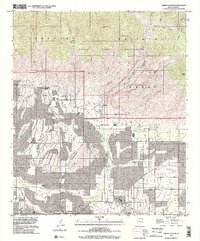 1996 Sabino Canyon2002 Print · USGSThe foothills of northern Tucson are captured here in the mid-nineties as suburban development reached the edge of the wilderness. Researchers can trace the legacy of the Southern Arizona School For Boys and the early layout of Fort Lowell Park.
 - 1996 Map of Jaynes, 2002 Print
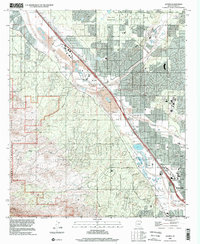 1996 Jaynes2002 Print · USGSThe Santa Cruz River valley northwest of Tucson shows a rapidly developing desert landscape in the late nineties. Genealogists and local historians can trace the rail-side settlements of Cortaro and Jaynes or locate the historic Gila Monster Mine in the foothills.
 - 1996 Map of Vail, 2002 Print
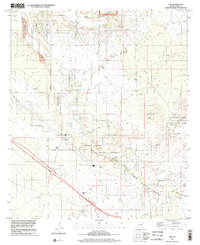 1996 Vail2002 Print · USGSVail and the Rincon Valley are captured in the mid-nineties as the desert outskirts began to transform from ranch land to protected preserve. Researchers can trace the legacy of the high desert at La Posta Quemada Ranch, the local Cem, and along the historic Old Spanish Trail.
 - 1996 Map of Tucson SE, 2002 Print
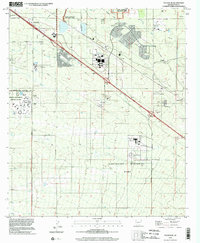 1996 Tucson SE2002 Print · USGSThe Tucson outskirts in the mid-nineties reveal a landscape shifting from open desert to a major institutional hub. Researchers can trace the development of the County Fairgrounds, the Littletown settlement, and the Old Railroad Grade.
End of results
Showing maps 1-23 of 23
Top cities near Tucson
- Marana historical maps
- Oro Valley historical maps
- Sahuarita historical maps
- Vail historical maps
- Corona de Tucson historical maps
- South Tucson historical maps
Top neighborhoods of Tucson
- Palo Verde Park historical maps
- Stockham historical maps
- Emery Park historical maps
- Blenman-Elm historical maps
- Jefferson Park historical maps
- Silvercroft historical maps
See more
Frequently asked questions
- What are the different types of historical maps available for Tucson?
- What is the oldest map of Tucson?
- Where can I purchase historical maps of Tucson for my home or office?
- Where can I download high-res historical maps of Tucson?
- Are there historical topographic maps available for Tucson?
- Is there historical aerial imagery available for Tucson?
- Where are historical maps of Tucson sourced from?