Old Maps of Seligman, Arizona for Academic Research
Study the evolution of Seligman with 18 high-resolution historic maps. Whether you're teaching, researching, or modeling changes in land use, these maps provide essential visual documentation of urban, environmental, and geographic change.
- Analyze long-term change: Track patterns in development, transportation, and natural features.
- Ideal for environmental or urban studies: Support academic projects with primary historical map data.
- Use in the classroom or lab: Educators and researchers rely on these maps to bring historical context to life.
These maps are a powerful tool for teaching, research, and visualizing how Seligman has changed over the decades.
Seligman, AZ maps
(18)- 1886 Map of Chino
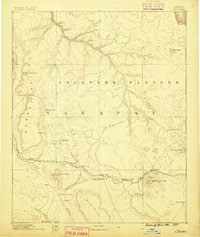 1886 Chino1886 Print · USGSThe northern Arizona frontier comes to life in the 1880s as the rail line pushes across the high desert and mountain plateaus. Researchers can trace early water sources and settlements like Garland Ranch, Kerlin Well, and the historic Beale Wagon road.2 unique versions available
 - 1891 Map of Chino
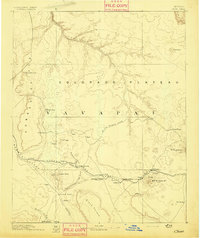 1891 Chino1891 Print · USGSIn the high country of northern Arizona during the late nineteenth century, the arrival of the railroad began to reshape the old frontier. Trace the route of the historic Beale Wagon road and find early mountain settlements and rail stops like Ash Fork, Williams, and Garland Ranch.4 unique versions available
 - 1948 Map of Williams
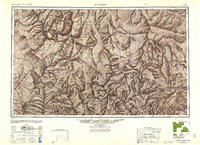 1948 Williams1948 Print · USGSNorthern Arizona is captured here during the post-war era of roadside travel and heavy rail transport along the Santa Fe line. Researchers can trace the path of Route 66 through settlements like Seligman, Valentine, and Hackberry while exploring the vast terrain of the Hualpai Indian Reservation.2 unique versions available
 - 1954 Map of Williams, 1972 Print
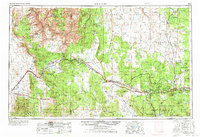 1954 Williams1972 Print · USGSThe high plateau of Northern Arizona is captured here during the mid-fifties, showing the rail-and-road corridor before the interstate era. You can trace family roots through remote railroad stops like Audley and Pica or locate early landmarks such as Grand Canyon Caverns and Frazier Wells.
 - 1956 Map of Williams, 1963 Print
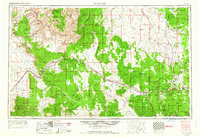 1956 Williams1963 Print · USGSNorthern Arizona in the mid-fifties reveals a landscape shaped by the Atchison Topeka and Santa Fe railroad and the iconic Highway 66. Trace the route of early travelers through Peach Springs, Seligman, and Ash Fork, or find remote sites like the Music Mountain Mine (Gold).3 unique versions available
 - 1960 Map of Williams
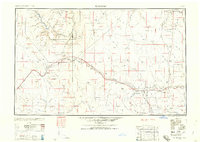 1960 Williams1960 Print · USGSNorthern Arizona in the mid-twentieth century was defined by its massive canyons and the vital rail line connecting its remote ranches. Genealogists and historians can trace the development of Peach Springs, the high-altitude Bill Williams Mountain, and isolated outposts like Diamond Bar Ranch.
 - 1961 Map of Williams
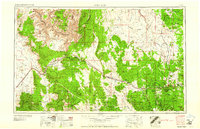 1961 Williams1961 Print · USGSNorthern Arizona in the mid-fifties reveals a high-desert landscape of rail towns and deep canyons along the Atchison Topeka and Santa Fe. Researchers can trace old Route 66 through Peach Springs, Seligman, and Ash Fork, or find remote sites like Music Mountain Mine.
 - 1981 Map of Seligman East
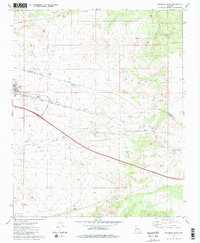 1981 Seligman East1981 Print · USGSSeligman sits at a historic crossroads in the early 1980s, where the high-desert rail economy met the interstate era. Genealogists and historians can trace the town layout near the Atchison Topeka and Santa Fe Railroad or locate local landmarks like Padre Reservoir and High Sch.2 unique versions available
 - 1981 Map of Seligman West
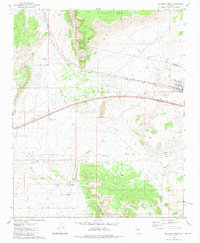 1981 Seligman West1981 Print · USGSThe high-desert crossroads at Seligman in the early 1980s reveals a landscape defined by the railroad and water management. Trace family-named landmarks like Buck Rogers Well and remote outposts such as Shorty Tank Corral along the Atchison Topeka and Santa Fe line.3 unique versions available
 - 1983 Map of Williams, 1984 Print
 1983 Williams1984 Print · USGSThe high plateaus and ranching country of northern Arizona are captured here in the early eighties as the modern interstate era matured. Researchers can trace the rail corridor of the Atchison Topeka and Santa Fe through Ash Fork, Seligman, and the slopes of Bill Williams Mountain.3 unique versions available
 - 2011 Map of Seligman West, 2011 Print
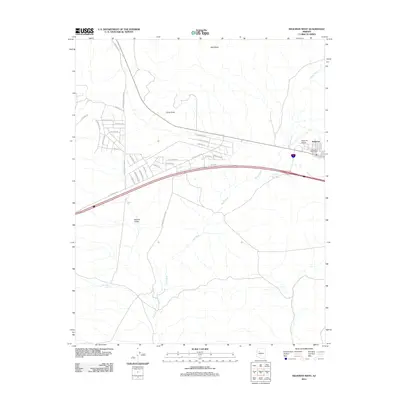 2011 Seligman West2011 Print · USGSSeligman stands at the edge of the Aubrey Valley in the early twenty-first century, showing the town's modern residential grid and transportation hubs. Researchers can trace local infrastructure through the Seligman Post Office, Seligman Airport, and the Railroad Embankment Reservoir.
 - 2011 Map of Seligman East, 2011 Print
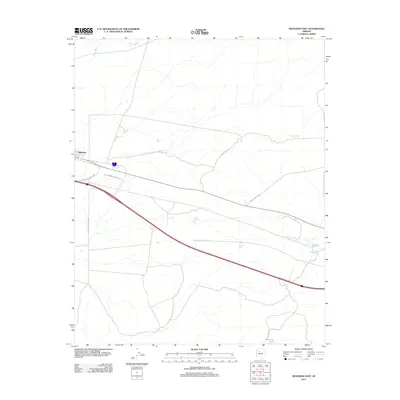 2011 Seligman East2011 Print · USGSSeligman and the surrounding high desert ranchlands are captured here in the early twenty-first century. Researchers can trace the layout of Seligman alongside critical water infrastructure like Padre Reservoir and local routes such as Seligman Cemetery Rd.
 - 2014 Map of Seligman East, 2014 Print
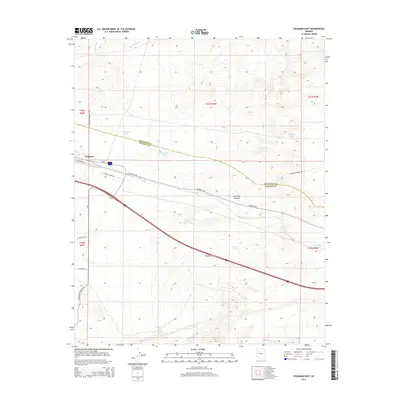 2014 Seligman East2014 Print · USGSThe high desert landscape near the Coconino and Yavapai county line comes alive in this survey of the Seligman area. Trace the legacy of the Mother Road along Historic US-66 and locate rural landmarks like Padre Reservoir and Railroad Canyon.
 - 2014 Map of Seligman West, 2014 Print
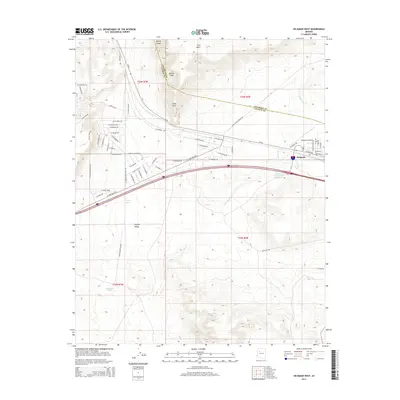 2014 Seligman West2014 Print · USGSSeligman sits at a geographic crossroads in western Arizona during the early twenty-first century. Genealogists and historians can trace the town's layout near the Seligman Airport and explore the surrounding terrain of the Aubrey Cliffs and Chino Wash.
 - 2018 Map of Seligman East, 2018 Print
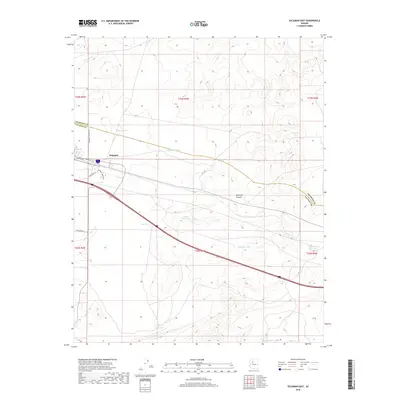 2018 Seligman East2018 Print · USGSThe high-desert settlement of Seligman and the winding course of Railroad Canyon define this modern survey of northern Arizona. Genealogists and historians can trace the local water network and rural infrastructure through named sites like Padre Reservoir and Wagner Tank.
 - 2018 Map of Seligman West, 2018 Print
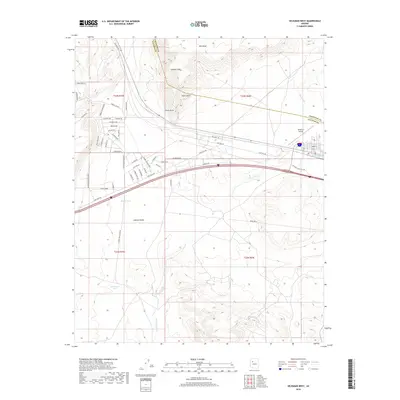 2018 Seligman West2018 Print · USGSThe high desert west of Seligman comes into focus during this period of rural development and land subdivision. Modern researchers can trace the growth of local infrastructure through the Seligman Airport, the residential grid along Bridge Canyon Pkwy, and landmarks like Chino Point.
 - 2021 Map of Seligman West, 2021 Print
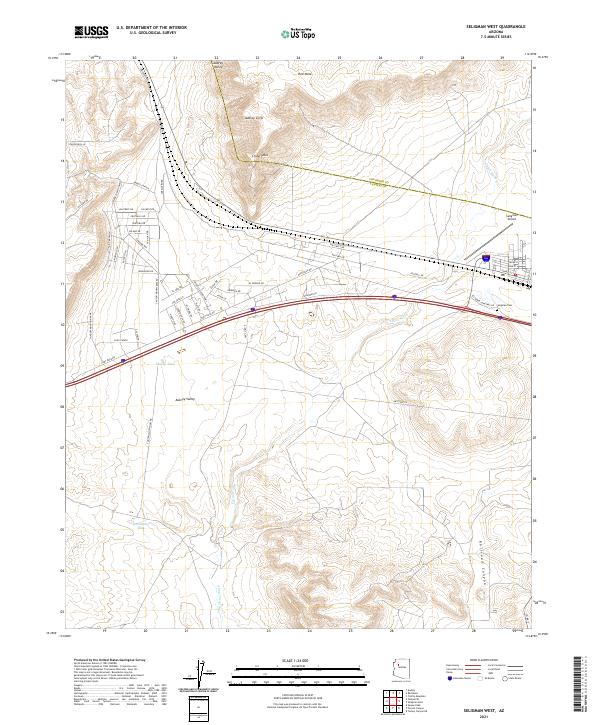 2021 Seligman West2021 Print · USGSThe western outskirts of Seligman, Arizona, are seen here as the high desert landscape meets modern infrastructure in the early 2020s. Researchers can trace local development along Bridge Canyon and locate landmarks like the Seligman Cem and Seligman Airport.
 - 2021 Map of Seligman East, 2021 Print
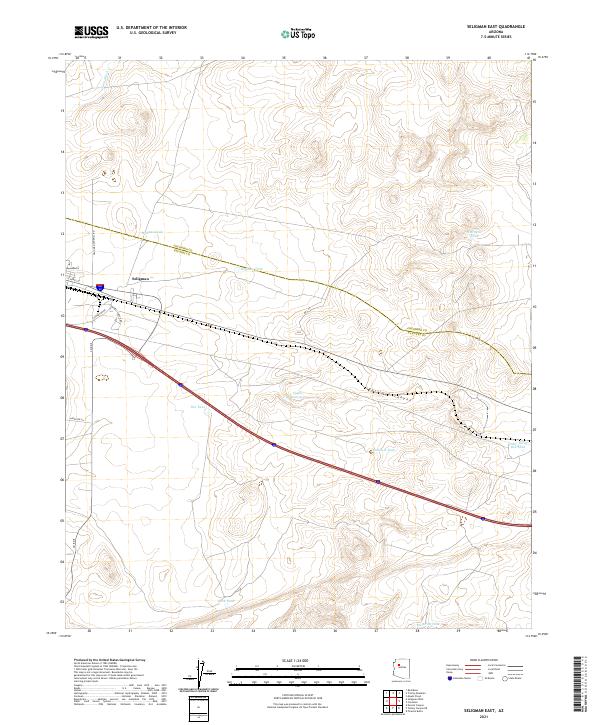 2021 Seligman East2021 Print · USGSThe high plateau of Yavapai County comes into focus in this recent survey, centered on the transit crossroads at Seligman. Researchers can trace the essential water-management network of the region through family-named landmarks like Wagner Tank and Cedar Berry Bob Tank.
End of results
Showing maps 1-18 of 18
Frequently asked questions
- What are the different types of historical maps available for Seligman?
- What is the oldest map of Seligman?
- Where can I purchase historical maps of Seligman for my home or office?
- Where can I download high-res historical maps of Seligman?
- Are there historical topographic maps available for Seligman?
- Is there historical aerial imagery available for Seligman?
- Where are historical maps of Seligman sourced from?