1970s Maps of Mississippi County, Arkansas
Explore 20 historic maps of Mississippi County from the 1970s. These maps offer a rare glimpse into what life looked like during the 1970s — showing old roads, neighborhoods, homes, and landmarks that have changed or disappeared over time.
Whether you're researching your family's past, planning a metal detecting trip, or studying how Mississippi County's landscape evolved across the 1970s, these high-resolution maps are a powerful tool for exploring the history of this region.
- Focus on a specific era: All maps on this page are from the 1970s, giving you a focused view of this time period.
- See what’s changed: Compare century-old streets, trails, and buildings to today's modern landscape using overlays and satellite layers.
- Research with precision: Use these maps for genealogy, historical research, land use analysis, or educational projects.
- View, download, or print: Maps are fully viewable online in high resolution, and can be downloaded or printed for your own records.
Start exploring Mississippi County's history through authentic maps from the 1970s. This is your window into the past.
Mississippi County, AR maps
(20)- 1970 Map of Frenchmans Bayou, 1974 Print
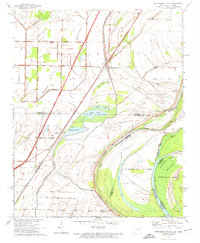 1970 Frenchmans Bayou1974 Print · USGSThe Arkansas-Tennessee borderlands appear here in the early 1970s, defined by the river’s winding chutes and protected agricultural bottoms. Researchers can locate vanished rural landmarks like St Pauls Ch, Shawnee Sch, and the riverside community of Lambethville.2 unique versions available
 - 1970 Map of Pecan Point, 1974 Print
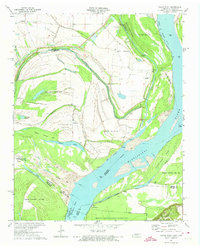 1970 Pecan Point1974 Print · USGSThe Tennessee-Arkansas borderlands along the Mississippi River are captured here just as modern flood control was maturing. Genealogists and river historians can locate vanished river landings and remote burial sites like Black Cat Landing, Corona, and Jacob Cem.2 unique versions available
 - 1971 Map of Cottonwood Point, 1973 Print
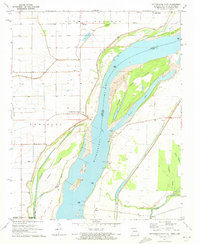 1971 Cottonwood Point1973 Print · USGSThe Missouri Bootheel and western Tennessee meet along the shifting banks of the Mississippi River in the early 1970s. Researchers can locate small communities like Cottonwood Point and Heloise, alongside family landmarks such as Taylor Cem and Riverside Ch.2 unique versions available
 - 1972 Map of Armorel, 1974 Print
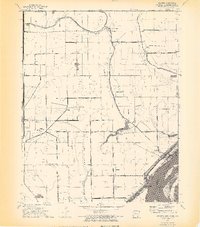 1972 Armorel1974 Print · USGSThe tri-state border region of Arkansas, Missouri, and Tennessee comes alive in this survey of the riverlands and drainage districts. Genealogists and local historians can trace family roots through rural landmarks like Number Nine, Promised Land, and New Mt Nebo Ch.4 unique versions available
 - 1972 Map of Blytheville, 1974 Print
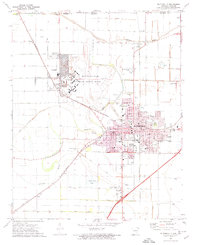 1972 Blytheville1974 Print · USGSBlytheville and the surrounding Delta farm country are captured here in the early seventies during the height of the Cold War. Genealogists and local historians can trace family locations near Mt Zion Cem, the massive Blytheville Air Force Base, and rural schools like Fairview Sch.2 unique versions available
 - 1972 Map of Luxora, 1975 Print
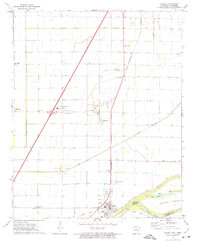 1972 Luxora1975 Print · USGSMississippi River bottomlands in the early seventies reveal a landscape of disciplined drainage and rail-side settlements. Genealogists and researchers can locate landmarks like Sandy Ridge Cem, Burdette, and the Cotton Belt Vocational Tech Sch.
 - 1972 Map of Golddust, 1975 Print
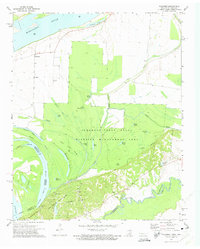 1972 Golddust1975 Print · USGSThe riverine border between Tennessee and Arkansas is captured here in the early 1970s, documenting a landscape shaped by shifting waters and military history. Genealogists and historians can trace local landmarks like Bethlehem Ch, the Samuels Cem, and the historic breastworks at Fort Pillow.3 unique versions available
 - 1972 Map of Nodena, 1975 Print
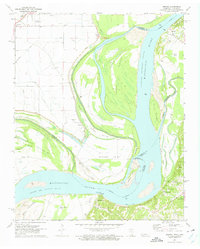 1972 Nodena1975 Print · USGSThe Mississippi River's shifting path in the 1970s defines this borderland between Tennessee and Arkansas. Trace family roots and vanished landmarks through Old Randolph Cem, the riverside settlement of Nodena, and the strategic Chickasaw Bluff No 1.2 unique versions available
 - 1972 Map of Osceola, 1975 Print
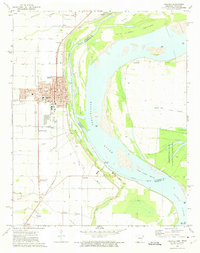 1972 Osceola1975 Print · USGSOsceola sits on the edge of the Mississippi River in the early 1970s, a landscape shaped by both the river and the St. Louis - San Francisco railway. Genealogists and local historians can trace family roots through several landmarks like Violet Cem, Ermen Lane Washington Cem, and the settlement of Grider.2 unique versions available
 - 1972 Map of Chic, 1975 Print
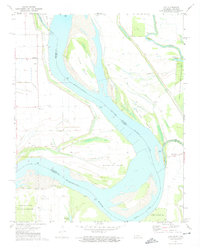 1972 Chic1975 Print · USGSThe Mississippi River meanders through the Tennessee and Arkansas borderlands in the early seventies, a landscape shaped by river engineering and rural life. Researchers can trace family history at Marys Chapel or locate old river access points like Hickman Landing and Hales Point.2 unique versions available
 - 1972 Map of Rosa, 1975 Print
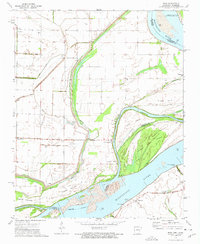 1972 Rosa1975 Print · USGSAlong the Mississippi River in the early seventies, the border between Arkansas and Tennessee was a land of intricate bayous and river landings. Genealogists and local historians can trace family burial sites like Rosa Cem or locate old river access points at Ashport Landing and Daniels Point Landing.2 unique versions available
 - 1972 Map of Open Lake, 1975 Print
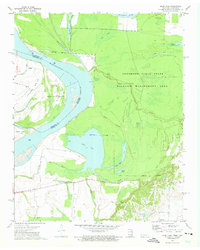 1972 Open Lake1975 Print · USGSThe Mississippi River bottoms along the Tennessee-Arkansas border are captured here in the early 1970s, showing a landscape defined by seasonal flooding and shifting channels. Researchers can trace local landmarks like Ashport Cem and Cane Ridge Ch, or explore the vast wetlands of Open Lake.3 unique versions available
 - 1973 Map of Caruthersville
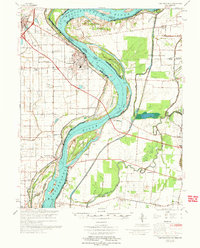 1973 Caruthersville1973 Print · USGSThe Missouri Bootheel meets the Tennessee state line in the early 1970s, where the Mississippi River winds past Caruthersville. Local historians can trace family roots through numerous sites like Little Prairie Cem, Marvin Chapel, and the community at Hayti.
 - 1974 Map of Tyronza, 1976 Print
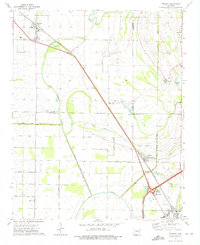 1974 Tyronza1976 Print · USGSThe Arkansas delta comes into focus during the mid-1970s, showing a landscape of precise drainage ditches and rail-side towns. Genealogists can trace family roots through numerous rural landmarks like Milam Chapel, Pilgrims Rest Ch, and the communities of Deckerville and Birdsong.
 - 1975 Map of Jericho
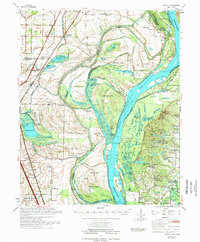 1975 Jericho1975 Print · USGSThe Mississippi River meanders through the Arkansas and Tennessee borderlands in the mid-seventies, documenting a landscape shaped by massive river bars and drainage ditches. Trace family sites at Jericho, Frenchmans Bayou, and small country landmarks like St Paul Cem or Paradise Ch.
 - 1976 Map of Blytheville
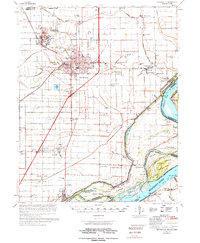 1976 Blytheville1976 Print · USGSBlytheville and the Mississippi River Delta are captured here in the mid-seventies, showing a landscape defined by military aviation and river commerce. Genealogists and researchers can locate family sites at Memorial Park Cem, trace the vanished streets of Yarbro, or explore the extensive Blytheville Air Force Base.
 - 1977 Map of Deckerville
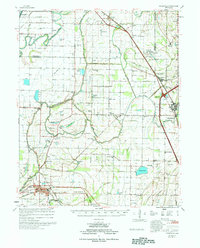 1977 Deckerville1977 Print · USGSCrittenden and Poinsett counties are shown in the mid-seventies, an era when extensive drainage ditch networks supported a thriving agricultural delta. Genealogists can trace family names through sites like New Bethlehem Cem, Philadelphia Ch, and the settlement at Shannonville.
 - 1977 Map of Hales Point
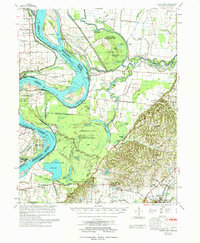 1977 Hales Point1977 Print · USGSLauderdale County, Tennessee, is mapped here in the mid-seventies, showing a landscape shaped by the Mississippi River and its historic shifts. Researchers can trace the heritage of local communities like Hales Point, locate family plots at Buckner Cem, and find old rural landmarks including Arp Sch and Marys Chapel.
 - 1977 Map of Osceola
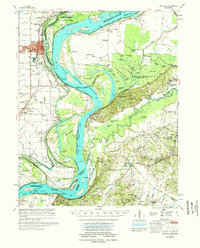 1977 Osceola1977 Print · USGSThe Mississippi Delta's winding riverborder comes alive in the 1970s, showing the complex interaction of the Mississippi River and the riverfront communities. Genealogists and local historians can locate many rural landmarks, from Nodena Cem and Mississippi County Memorial Gardens to the river-bluff heights of Fort Pillow State Park.
 - 1978 Map of Steele, 1979 Print
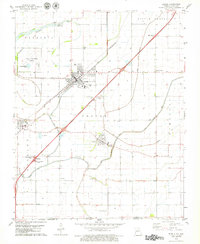 1978 Steele1979 Print · USGSThe Missouri Bootheel thrives as a rail and highway crossroads in the late seventies, showing the agricultural heart of Pemiscot County. Researchers can trace rural lineages through sites like Frakes Cem, Kings Chapel, and the township of Holland.
End of results
Showing maps 1-20 of 20
Top cities of Mississippi County
- Blytheville historical maps
- Osceola historical maps
- Gosnell historical maps
- Manila historical maps
- Leachville historical maps
- Luxora historical maps
See more
Frequently asked questions
- What are the different types of historical maps available for Mississippi County?
- What is the oldest map of Mississippi County?
- Where can I purchase historical maps of Mississippi County for my home or office?
- Where can I download high-res historical maps of Mississippi County?
- Are there historical topographic maps available for Mississippi County?
- Is there historical aerial imagery available for Mississippi County?
- Where are historical maps of Mississippi County sourced from?