1900s (20th Century) Maps of Stone County, Arkansas
Explore 45 historic maps of Stone County from the 1900s (20th Century). These maps offer a rare glimpse into what life looked like during the 1900s — showing old roads, neighborhoods, homes, and landmarks that have changed or disappeared over time.
Whether you're researching your family's past, planning a metal detecting trip, or studying how Stone County's landscape evolved across the 1900s, these high-resolution maps are a powerful tool for exploring the history of this region.
- Focus on a specific era: All maps on this page are from the 1900s, giving you a focused view of this time period.
- See what’s changed: Compare century-old streets, trails, and buildings to today's modern landscape using overlays and satellite layers.
- Research with precision: Use these maps for genealogy, historical research, land use analysis, or educational projects.
- View, download, or print: Maps are fully viewable online in high resolution, and can be downloaded or printed for your own records.
Start exploring Stone County's history through authentic maps from the 1900s. This is your window into the past.
Stone County, AR maps
(45)- 1942 Map of Bethesda
 1942 Bethesda1942 Print · USGSIndependence County during the early 1940s reveals a landscape of ridge-top farms and river-bottom commerce. Genealogists can trace family roots through local landmarks like Gill Cem, O'Neal Sch, and the riverside crossing at Walls Ferry.4 unique versions available
 - 1942 Map of Almond, 1945 Print
 1942 Almond1945 Print · USGSThe river-and-rail corridor along the White River defines this 1940s landscape where Independence and Cleburne Counties meet. Genealogists and historians can trace old transit points like Earnhearts Ferry and the Old Cherokee Line boundary.3 unique versions available
 - 1942 Map of Mt Pleasant, 1945 Print
 1942 Mt Pleasant1945 Print · USGSIzard County in the 1940s was a landscape of deep hollows and active mining operations near the Independence County line. Genealogists and historians can trace rural family legacies through local landmarks like Gid Sch, Mt Lebanon Ch, and the Barren Fork Cem.5 unique versions available
 - 1945 Map of Harrison
 1945 Harrison1945 Print · USGSThe Ozark and Boston Mountains straddle the Missouri-Arkansas border during the mid-forties, showing a landscape of forest ridges and river valleys. Genealogists and historians can trace rail-connected towns like Monett and West Plains or early lake developments at Bull Shoals Res and Norfork Lake.
 - 1949 Map of Harrison
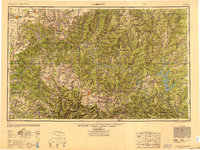 1949 Harrison1949 Print · USGSThe Ozark highlands of northern Arkansas and southern Missouri are shown just after the war, when the White River still followed its original course. Genealogists and historians can trace rail lines like the Missouri & Arkansas RR and locate rural hubs like Harrison, Eureka Springs, and Mountain Home.
 - 1953 Map of Memphis, 1966 Print
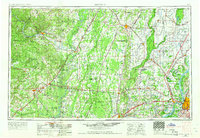 1953 Memphis1966 Print · USGSEastern Arkansas and the Memphis riverfront are shown here during the mid-century period of regional growth and river management. Local historians can trace the paths of the Chicago Rock Island & Pacific RR through Forrest City or locate river landmarks like President's Island.3 unique versions available
 - 1954 Map of Harrison
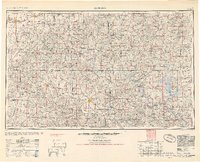 1954 Harrison1954 Print · USGSThe Ozarks and Boston Mountains meet during a period of massive river engineering in the mid-fifties. Researchers can trace the early shorelines of Bull Shoals Lake and Table Rock Reservoir or locate inland towns like Berryville and Harrison.
 - 1956 Map of Memphis
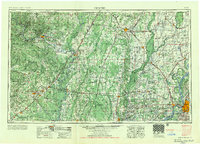 1956 Memphis1956 Print · USGSThe Mississippi Delta and the bluffs of West Tennessee meet in the mid-fifties, showing a landscape defined by massive river systems and rail hubs. Researchers can trace the path of Crowleys Ridge or locate vanished river landings near Centennial Island and Island No 35.
 - 1956 Map of Russellville
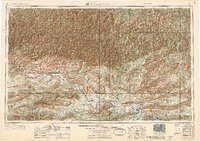 1956 Russellville1956 Print · USGSThe Arkansas River valley and the surrounding Boston Mountains are captured here in the mid-fifties, showing a landscape of small timber towns and new reservoirs. Genealogists can trace family roots through upland settlements like Pelsor and Witts Springs or locate the campus of Arkansas Polytechnic College.2 unique versions available
 - 1958 Map of Harrison, 1973 Print
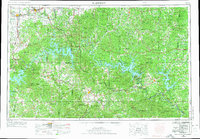 1958 Harrison1973 Print · USGSThe Ozark and Boston Mountains appear in this mid-century survey as the great White River impoundments were reshaping the region. Researchers can trace the rail lines of the St Louis-San Francisco Ry and locate early settlements like Berryville and Gainesville.
 - 1964 Map of Russellville
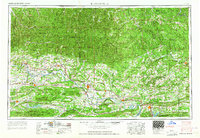 1964 Russellville1964 Print · USGSMid-century Central Arkansas is defined here by the river-valley towns and the surrounding mountain ranges before the full expansion of the interstate system. Genealogists and historians can trace rail-town development along the Missouri Pacific Railroad and locate landmarks like Arkansas Polytechnic College or Petit Jean State Park.
 - 1964 Map of Harrison
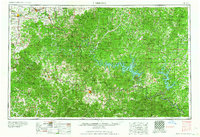 1964 Harrison1964 Print · USGSThe Ozark and Boston Mountains of Arkansas and Missouri are captured here in the mid-sixties, showing the rugged highlands before extensive modern development. Genealogists and historians can trace family-named peaks like Gaither Mountain and follow the St Louis-San Francisco RR through Monett and Purdy.
 - 1964 Map of Calico Rock, 1965 Print
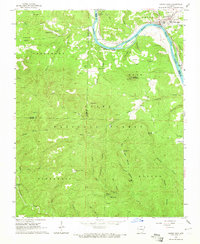 1964 Calico Rock1965 Print · USGSThe White River region at the height of the mid-sixties reveals a landscape of isolated river settlements and high Ozark ridges. Researchers can trace the river's impact through the Ghesmond Ferry and find family sites like the Old Optimus Cem or Bethel Springs Sch.4 unique versions available
 - 1964 Map of Norfork Dam South, 1965 Print
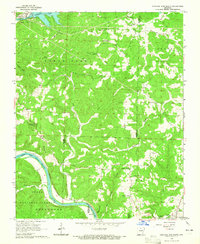 1964 Norfork Dam South1965 Print · USGSThe Ozark highlands of Baxter and Izard counties come alive in the mid-1960s as the White River winds through deep forest. Genealogists and historians can trace the Missouri Pacific rail line past Old Joe to the riverside town of Calico Rock.4 unique versions available
 - 1964 Map of Boswell, 1965 Print
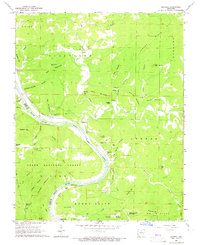 1964 Boswell1965 Print · USGSThe White River loops through the Ozarks in the mid-1960s, marking the boundary between Stone and Izard counties. Genealogists can trace family names at Mount Olive Cem and Optimus Cem or locate the old Missouri Pacific line at Boswell.4 unique versions available
 - 1964 Map of Guion, 1965 Print
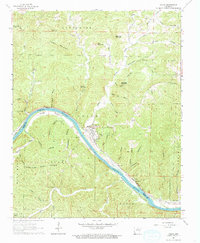 1964 Guion1965 Print · USGSThe White River valley and the industrial riverside town of Guion are captured here in the mid-1960s. Researchers can trace the Missouri Pacific rail line past numerous quarries, finding family history at Jones Bottom Cem or Arnold.
 - 1964 Map of Sylamore, 1965 Print
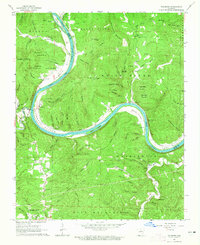 1964 Sylamore1965 Print · USGSThe White River corridor of mid-century Stone County reveals a landscape of isolated mountain settlements and riverside rail industry. Trace family history through the Jeffery Cem and Sylamore Cem, or locate the old Ferry crossing near the Missouri Pacific line.3 unique versions available
 - 1966 Map of Norfork SE, 1967 Print
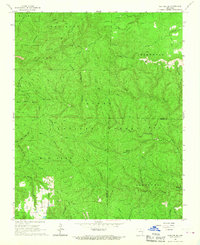 1966 Norfork SE1967 Print · USGSIn the mid-1960s, this area of the Arkansas Ozarks remained a patchwork of national forest and family landmarks near the Baxter and Stone County line. Genealogists and hikers can trace old routes like Advance Road to find the Acklin Cem and the Lookout Tower on Push Mountain.3 unique versions available
 - 1969 Map of Marcella, 1971 Print
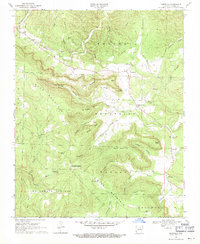 1969 Marcella1971 Print · USGSStone County's rugged Ozark terrain is documented here in the late sixties, showing a landscape of isolated ridges and tight-knit communities. Genealogists and historians can locate family landmarks such as Dugan Cem, Kelly and Ford Cem, and the Arbanna Ch church.2 unique versions available
 - 1969 Map of Mountain View SW, 1971 Print
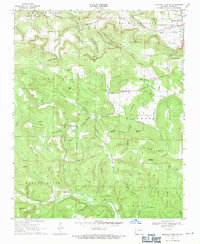 1969 Mountain View SW1971 Print · USGSStone County’s rural Ozark landscape is documented here in the late sixties, showing a terrain defined by ridges and deep hollows. Researchers can locate family landmarks and early congregations like the Mennonite Ch, Fredonia Cem, and the settlement of Sunny Land.
 - 1969 Map of Fox, 1971 Print
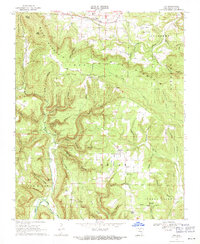 1969 Fox1971 Print · USGSThe Ozark plateau around the communities of Timbo and Fox appears in the late sixties as a network of ridge-top settlements and deep timbered hollows. Researchers can locate remote landmarks like Our Lady of Victory Ch, the Rural Special Sch, and Ramsey Cem.2 unique versions available
 - 1969 Map of Mountain View, 1971 Print
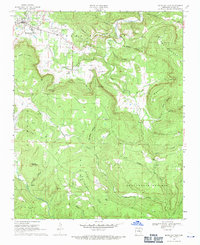 1969 Mountain View1971 Print · USGSStone County life in the late sixties is centered around the growth of Mountain View and the surrounding timbered hollows. Genealogists can trace family roots through numerous sites like Flatwoods Cem, Nirkee Chapel, and the community at Luber.
 - 1972 Map of Onia, 1973 Print
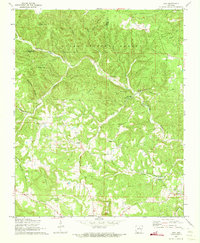 1972 Onia1973 Print · USGSStone County in the early seventies remains a landscape of isolated valleys and tight-knit rural settlements. Genealogists can locate family-named sites such as Stevens Cem and Farris Cem, alongside local congregations like Friendship Ch and Bethany Ch.2 unique versions available
 - 1972 Map of Landis, 1973 Print
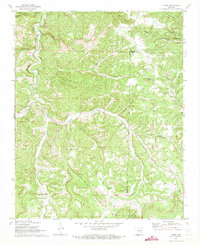 1972 Landis1973 Print · USGSThe Ozark highlands of northern Arkansas are captured here in the early seventies, showcasing a network of remote hollows and mountain ridges. Genealogists can locate several family burial sites and country churches including Landis Cem, Scribner Cem, and Bluff Springs Ch.2 unique versions available
 - 1972 Map of Fiftysix, 1973 Print
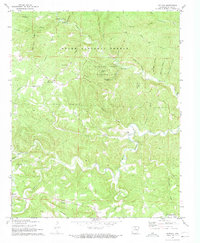 1972 Fiftysix1973 Print · USGSStone County, Arkansas, comes to life in the early seventies, showing the remote ridge-top settlements and cavern systems of the Ozarks. Genealogists and hikers can trace the paths to Fiftysix, Blanchard Caverns, and the Red Doors Cemetery.3 unique versions available
Showing maps 1-25 of 45
Top cities of Stone County
Frequently asked questions
- What are the different types of historical maps available for Stone County?
- What is the oldest map of Stone County?
- Where can I purchase historical maps of Stone County for my home or office?
- Where can I download high-res historical maps of Stone County?
- Are there historical topographic maps available for Stone County?
- Is there historical aerial imagery available for Stone County?
- Where are historical maps of Stone County sourced from?