1940s Maps of Alameda County, California
Explore 38 historic maps of Alameda County from the 1940s. These maps offer a rare glimpse into what life looked like during the 1940s — showing old roads, neighborhoods, homes, and landmarks that have changed or disappeared over time.
Whether you're researching your family's past, planning a metal detecting trip, or studying how Alameda County's landscape evolved across the 1940s, these high-resolution maps are a powerful tool for exploring the history of this region.
- Focus on a specific era: All maps on this page are from the 1940s, giving you a focused view of this time period.
- See what’s changed: Compare century-old streets, trails, and buildings to today's modern landscape using overlays and satellite layers.
- Research with precision: Use these maps for genealogy, historical research, land use analysis, or educational projects.
- View, download, or print: Maps are fully viewable online in high resolution, and can be downloaded or printed for your own records.
Start exploring Alameda County's history through authentic maps from the 1940s. This is your window into the past.
Alameda County, CA maps
(38)- 1940 Map of Byron, 1943 Print
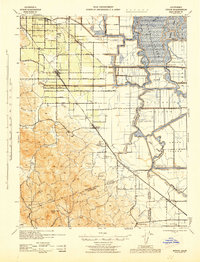 1940 Byron1943 Print · USGSThe California Delta meets the coastal hills during the early 1940s, showing a transition from the orchards of Brentwood to the intricate waterways of the islands. Researchers can trace historic schools like Iron House Sch, rail stops at Knighten Sta, and the famous Byron Hot Springs.
 - 1941 Map of Pleasanton
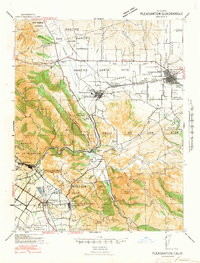 1941 Pleasanton1941 Print · USGSThe Livermore Valley and East Bay hills are captured here in the early 1940s, showing a world of cattle ranchos and railroad towns. You can trace early landmarks like the Mission San Jose de Guadalupe, the Livermore Airport, and several rural one-room schoolhouses like Antone Sch.
 - 1941 Map of Palo Alto
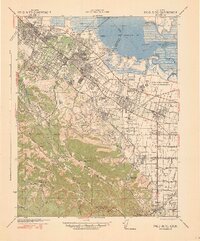 1941 Palo Alto1941 Print · USGSThe Peninsula and Santa Clara Valley are seen here in the early 1940s, just as the region began its mid-century transformation. Researchers can trace the layout of Stanford University, the military grounds of Moffett Field, and local landmarks like Flood Park.
 - 1942 Map of Concord
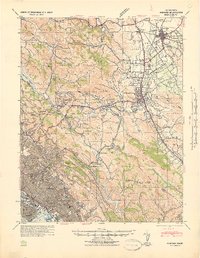 1942 Concord1942 Print · USGSThe East Bay interior was a landscape of expanding valley towns and deep-rooted ranching tracts in the early 1940s. Genealogists and historians can trace rail-era settlements like Concord, Lafayette, and Walnut Creek alongside local landmarks like St Marys College and Sherman Field.
 - 1942 Map of Mt. Hamilton
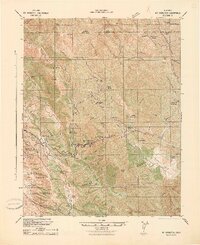 1942 Mt. Hamilton1942 Print · USGSThe Diablo Range heights above San Jose appear here in the early 1940s, centered on the high scientific outpost at Lick Observatory. Researchers can trace old mountain roads and family-held land grants such as the Grant Ranch and Evergreen Ranch.
 - 1942 Map of Carbona
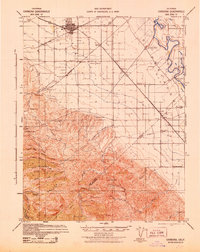 1942 Carbona1942 Print · USGSThe rail-and-river landscape of the San Joaquin Valley is captured here just as Tracy was expanding into a regional hub. Genealogists and historians can trace the rural school system through New Jerusalem School and find local landmarks like the Brichetto Tomb and Buckeye Mines.
 - 1942 Map of Mt. Boardman
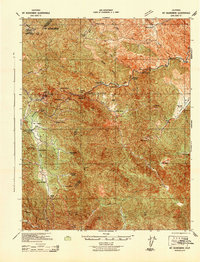 1942 Mt. Boardman1942 Print · USGSThe Diablo Range highlands at the intersection of four counties are captured here in the early 1940s. Genealogists and historians can locate remote family holdings like the Schmidt Ranch and Jordan Ranch or trace the early paths through San Antone Valley.
 - 1942 Map of Hayward
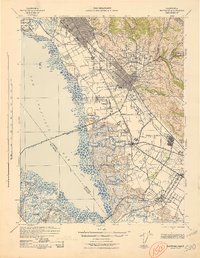 1942 Hayward1942 Print · USGSThe East Bay shoreline and inland foothills come alive in the early 1940s as industry and infrastructure reshape the landscape. Researchers can trace the original footprints of Russell City and Mt Eden or locate the historic Oakland Speedway and Fairmont Hospital.
 - 1942 Map of Altamont, 1964 Print
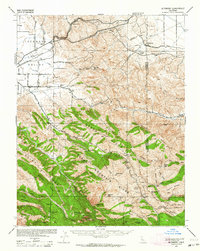 1942 Altamont1964 Print · USGSEastern Alameda County at the start of the war shows a landscape of rail sidings and cattle ranching as the valley meets the ridges. Genealogists and historians can trace family locations like Mendenhall Ranch, rural landmarks like Green School, and the steep rail route through Altamont.
 - 1943 Map of Palo Alto
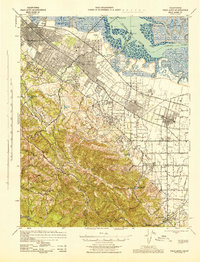 1943 Palo Alto1943 Print · USGSThe San Francisco Peninsula was still a region of orchards and academic outposts in the years following the Great Depression. Researchers can trace the development of early Silicon Valley through the Southern Pacific line and family landmarks like Duveneck Ranch and the Whisman Dist School.
 - 1943 Map of Pleasanton
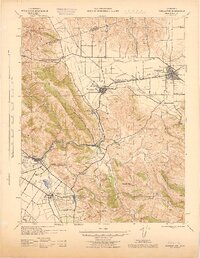 1943 Pleasanton1943 Print · USGSThe Livermore and Amador Valleys are captured during the early 1940s, showing a landscape of ranching, railroads, and early institutional development. Genealogists and historians can locate old schools like Stonybrook Sch and landmarks such as Mission San Jose de Guadalupe.
 - 1943 Map of Tesla
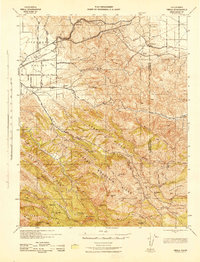 1943 Tesla1943 Print · USGSThe Livermore Valley and the rugged Diablo Range are shown during the early 1940s, featuring the critical rail junction at Altamont. Genealogists and historians can locate rural landmarks like the Green School, the Mendenhall Ranch, and the isolated Pointers Homestead.
 - 1943 Map of Mt. Boardman
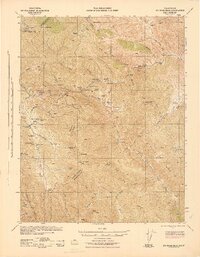 1943 Mt. Boardman1943 Print · USGSThe Diablo Range in the early 1940s reveals a network of remote ranching outposts and mineral extraction sites. Genealogists can locate named homesteads like Winegar Ranch while historians trace the operations of the Westvaco Mine and Adobe Mine.
 - 1943 Map of San Jose
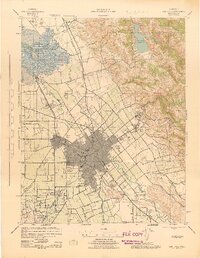 1943 San Jose1943 Print · USGSThe Santa Clara Valley is seen here in the early 1940s, showing a landscape of orchards and rail junctions. Trace family roots in San Jose or locate old landmarks like the Agnew State Hospital and Oak Hill Memorial Park.
 - 1943 Map of Concord
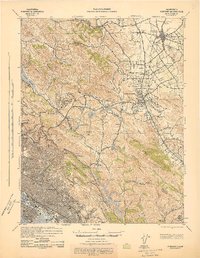 1943 Concord1943 Print · USGSThe East Bay and Contra Costa interior appear here during the wartime era, showing the transition from urban waterfronts to rural valley communities. Researchers can trace early rail lines like the Sacramento Northern RR and locate local landmarks such as St Marys College and Acalanes Sch.
 - 1943 Map of Mt. Diablo
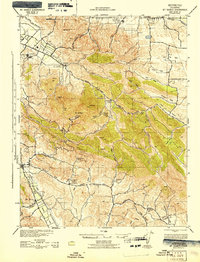 1943 Mt. Diablo1943 Print · USGSThe Mt. Diablo foothills and San Ramon Valley are captured here during the early 1940s, showcasing a landscape of cattle ranches and remote schoolhouses. Genealogists and local historians can locate early landmarks like Blackhawk Ranch, Cowell, and the Morgan Territory Sch.
 - 1943 Map of Mt. Hamilton
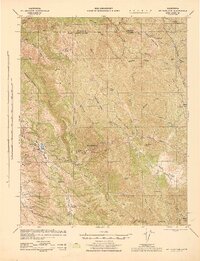 1943 Mt. Hamilton1943 Print · USGSSanta Clara County during the early forties was a land of high-altitude science and isolated ranching outposts. Researchers can trace the winding route to Lick Observatory or locate family landmarks like the Fisher Homestead and Evergreen Ranch.
 - 1943 Map of San Mateo
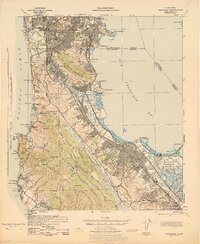 1943 San Mateo1943 Print · USGSThe San Francisco Peninsula during the mid-war years shows a region of expanding shoreline industry and established hillside communities. Researchers can trace historic landmarks like St Josephs Military Academy and the Golden Gate National Cem.
 - 1947 Map of Mt. Hamilton
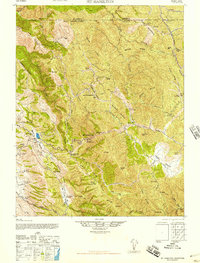 1947 Mt. Hamilton1947 Print · USGSThe Diablo Range rises east of San Jose in the late 1940s, centered on the heights of the Lick Observatory. Genealogists and local historians can trace legacy landholdings such as Evergreen Ranch, Rancho Arroyo Bayo, and the Fisher Homestead.
 - 1947 Map of San Francisco, 1948 Print
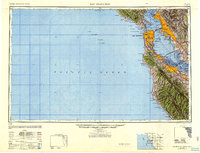 1947 San Francisco1948 Print · USGSThe Bay Area in the late 1940s reveals a region transitioning from wartime intensity to post-war suburban growth. Trace the historic rail lines of the Southern Pacific RR or locate early military footprints at Fort Funston and Moffett Field.
 - 1947 Map of San Jose, 1948 Print
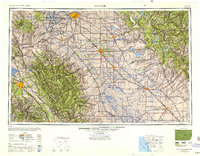 1947 San Jose1948 Print · USGSNorthern California's heartland is captured here just after the war, showing the rapid growth of the Santa Clara and Central Valleys. Researchers can trace the legacy of rail and water at Castle Air Force Base, Stockton, and the Hetch Hetchy Aqueduct.
 - 1947 Map of Richmond, 1952 Print
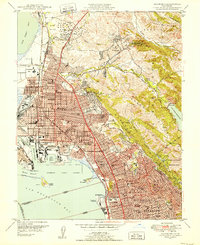 1947 Richmond1952 Print · USGSPost-war development transforms the East Bay shoreline as industry and suburbs expand between the bay and the hills. Trace mid-century landmarks like the Oil Tank Farm, Richmond Union HS, and the sprawling Charles Lee Tilden Regional Park.2 unique versions available
 - 1947 Map of Briones Valley, 1954 Print
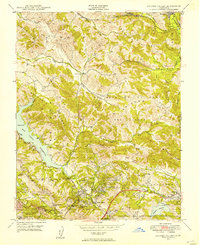 1947 Briones Valley1954 Print · USGSContra Costa County at the dawn of the postwar era shows the early expansion of Orinda and Lafayette into the surrounding hills. Genealogists and hikers can trace the original Briones Valley Sch, the winding path of Bear Creek, and the massive San Pablo Reservoir.
 - 1947 Map of Oakland East, 1954 Print
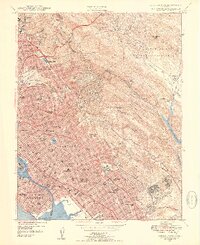 1947 Oakland East1954 Print · USGSThe East Bay waterfront and hills are caught in a moment of rapid postwar expansion during the late 1940s. Genealogists and local historians can locate early neighborhood schools like Cleveland School, historic burial grounds at Mountain View Cemetery, and the extensive Southern Pacific rail network.3 unique versions available
 - 1947 Map of San Leandro, 1956 Print
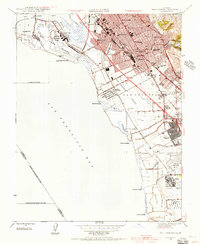 1947 San Leandro1956 Print · USGSThe East Bay shoreline in the late 1940s shows a fascinating mix of industrial salt production and rapid suburban development. Researchers can trace early aviation at the Oakland Municipal Airport or locate community anchors like San Lorenzo Village and the Oakland Speedway.
Showing maps 1-25 of 38
Top cities of Alameda County
- Oakland historical maps
- Fremont historical maps
- Hayward historical maps
- Berkeley historical maps
- San Leandro historical maps
- Livermore historical maps
See more
Frequently asked questions
- What are the different types of historical maps available for Alameda County?
- What is the oldest map of Alameda County?
- Where can I purchase historical maps of Alameda County for my home or office?
- Where can I download high-res historical maps of Alameda County?
- Are there historical topographic maps available for Alameda County?
- Is there historical aerial imagery available for Alameda County?
- Where are historical maps of Alameda County sourced from?