1940s Maps of Napa County, California
Explore 18 historic maps of Napa County from the 1940s. These maps offer a rare glimpse into what life looked like during the 1940s — showing old roads, neighborhoods, homes, and landmarks that have changed or disappeared over time.
Whether you're researching your family's past, planning a metal detecting trip, or studying how Napa County's landscape evolved across the 1940s, these high-resolution maps are a powerful tool for exploring the history of this region.
- Focus on a specific era: All maps on this page are from the 1940s, giving you a focused view of this time period.
- See what’s changed: Compare century-old streets, trails, and buildings to today's modern landscape using overlays and satellite layers.
- Research with precision: Use these maps for genealogy, historical research, land use analysis, or educational projects.
- View, download, or print: Maps are fully viewable online in high resolution, and can be downloaded or printed for your own records.
Start exploring Napa County's history through authentic maps from the 1940s. This is your window into the past.
Napa County, CA maps
(18)- 1940 Map of Carquinez Strait, 1963 Print
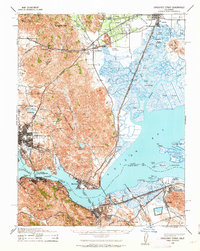 1940 Carquinez Strait1963 Print · USGSThe industrial waterfronts of Solano and Contra Costa counties are captured here just before the mid-century boom. Genealogists and historians can trace the rail-and-water networks of Port Costa, Benicia, and Vallejo, or locate landmarks like the Carquinez Cem and the Benicia Auto Ferry.2 unique versions available
 - 1942 Map of Mare Island
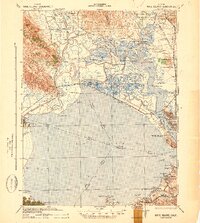 1942 Mare Island1942 Print · USGSThe northern reaches of San Pablo Bay come alive in this wartime survey, showing a landscape of vital naval yards and marshland agriculture. Genealogists and historians can trace rail depots like Napa Junction, rural landmarks like American Canyon School, and the industrial waterfronts of Vallejo and Oleum.
 - 1942 Map of Carquinez
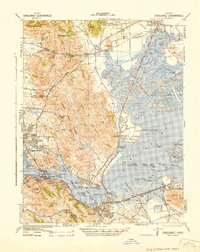 1942 Carquinez1942 Print · USGSThe industrial waterfront of the Carquinez Strait is captured here during the early years of the war. Researchers can trace the complex rail networks of the Southern Pacific and locate established neighborhoods in Vallejo, Benicia, and Crockett.
 - 1942 Map of Sonoma
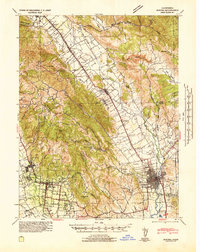 1942 Sonoma1942 Print · USGSThe Napa and Sonoma valleys are captured here during the early 1940s, showing the established rail and agricultural networks of the North Bay. Researchers can trace historic landmarks like the Veterans Home, the Quick Silver Mine, and early vineyard sites at Zinfandel and Rutherford.
 - 1942 Map of Mt. Vaca
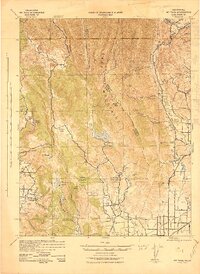 1942 Mt. Vaca1942 Print · USGSThe Vaca Mountains and eastern Napa County are captured during the early 1940s, showing a landscape of deep canyons and rising valley towns. Researchers can trace the rail corridors of the Southern Pacific near Fairfield or locate early water works like the Gordon Valley Dam.2 unique versions available
 - 1942 Map of St. Helena, 1966 Print
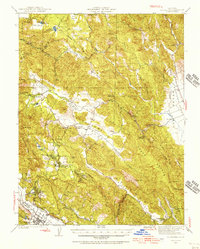 1942 St. Helena1966 Print · USGSNapa County during the early 1940s is defined by its rural school districts and the emerging institutional centers of the Howell Mountain area. Genealogists can trace family footprints through the Silverado Trail, the Aetna Mine, and small schools like Hardin Sch.
 - 1943 Map of Morgan Valley
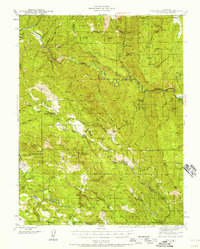 1943 Morgan Valley1943 Print · USGSNorthern California ranching and mining country are captured in the early 1940s at the junction of Lake, Napa, and Yolo counties. Researchers can locate the Morgan Valley Sch and several mines like the Harrison Mine and Red Elephant Mine.
 - 1943 Map of Capay, 1945 Print
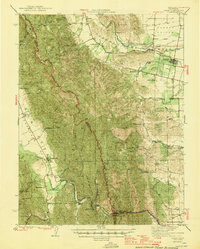 1943 Capay1945 Print · USGSYolo and Napa counties are captured here in the mid-1940s, documenting the valley floor and ridge-lines before the creation of Lake Berryessa. Researchers can trace family ranch lands and lost school sites like Monticello, Oak Grove Sch, and Gunn Ranch.
 - 1943 Map of Calistoga, 1955 Print
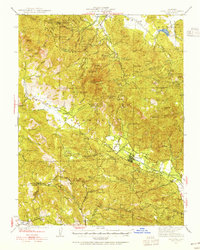 1943 Calistoga1955 Print · USGSUpper Napa Valley and the rugged Lake County border are captured here during the 1940s, a period defined by mercury mining and early tourism. Researchers can trace family-named landmarks and industrial sites like the Oat Hill Mine, Mark West Springs, and the Petrified Forest.
 - 1944 Map of Santa Rosa
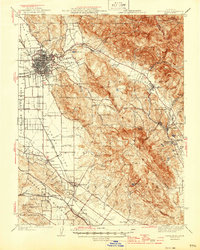 1944 Santa Rosa1944 Print · USGSSonoma County transitions from its early land-grant heritage to a mid-century agricultural hub in the years following the 1942 revision. Genealogists and researchers can locate numerous country schools and family-linked landmarks like Sonoma State Home, Adobe Fort, and Grange Hall.2 unique versions available
 - 1944 Map of Morgan Valley
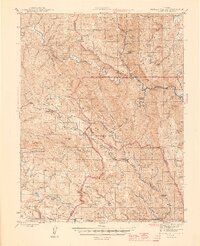 1944 Morgan Valley1944 Print · USGSUpper California ranching and mercury mining country are shown here in the mid-1940s near the corner of Lake, Colusa, and Napa counties. Researchers can trace historic operations like Reid Mine, the old Morgan Valley Sch, and local hubs like Knoxville.2 unique versions available
 - 1945 Map of Capay
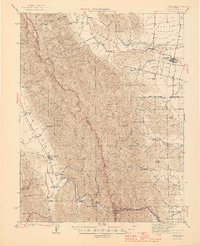 1945 Capay1945 Print · USGSThe Berryessa and Capay valleys appear here in the final years before the creation of Lake Berryessa, documenting a lost agricultural landscape. Genealogists can trace family ranch holdings like Scott Ranch and Corbin Ranch alongside rural landmarks like Monticello and Apricot Sch.
 - 1945 Map of Calistoga
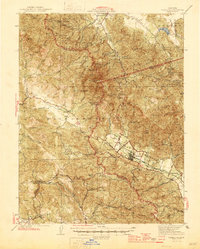 1945 Calistoga1945 Print · USGSCalistoga and the surrounding tri-county ridges are documented here during the mid-forties, capturing a landscape defined by mercury and silver mining. Researchers can trace the Southern Pacific RR and locate rural landmarks like the Silverado Mine or Mark West Springs.2 unique versions available
 - 1945 Map of Rumsey
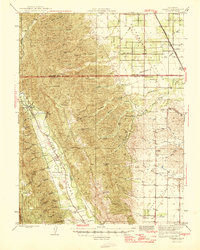 1945 Rumsey1945 Print · USGSThe Capay Valley and northern Sacramento Valley meet here in the mid-1940s, showing a landscape of secluded canyons and rail-side settlements. Genealogists can trace family footprints near Rumsey, Guinda, and rural schoolhouses like Wildwood Sch.2 unique versions available
 - 1945 Map of St. Helena
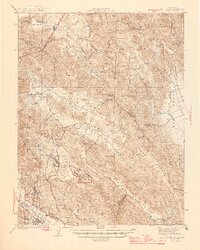 1945 St. Helena1945 Print · USGSNapa County at the end of the war shows a landscape of growing valley towns, mountain colleges, and rural mining outposts. Researchers can trace the path of the Southern Pacific RR or locate family roots near Central Sch and the Aetna Mine.2 unique versions available
 - 1947 Map of Santa Rosa
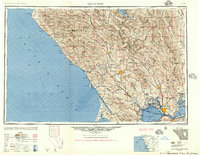 1947 Santa Rosa1947 Print · USGSNorthern California in the late 1940s was a landscape of agricultural valleys and vital rail hubs. Trace the historic routes of the Northwestern Pacific through Healdsburg or explore the mid-century waterfronts of Vallejo and Benicia near Mare Island.
 - 1949 Map of Santa Rosa
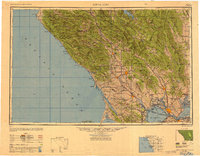 1949 Santa Rosa1949 Print · USGSThe North Bay and Wine Country appear here in the late 1940s, when the Northwestern Pacific RR still dominated regional transit. Genealogists and historians can trace old coastal outposts like Anchor Bay Settlement and the early layout of Santa Rosa.2 unique versions available
 - 1949 Map of Cuttings Wharf, 1956 Print
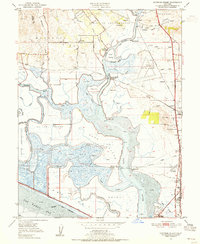 1949 Cuttings Wharf1956 Print · USGSThe Napa River delta in the late 1940s is a maze of tidal sloughs and growing railroad towns. Genealogists can trace family names at Cuttings Wharf, old rural schools like Los Amigos Sch, and early aviation sites like Vallejo Sky Harbor.8 unique versions available
End of results
Showing maps 1-18 of 18
Top cities of Napa County
- Napa historical maps
- American Canyon historical maps
- Calistoga historical maps
- Yountville historical maps
Frequently asked questions
- What are the different types of historical maps available for Napa County?
- What is the oldest map of Napa County?
- Where can I purchase historical maps of Napa County for my home or office?
- Where can I download high-res historical maps of Napa County?
- Are there historical topographic maps available for Napa County?
- Is there historical aerial imagery available for Napa County?
- Where are historical maps of Napa County sourced from?