Old Maps of Yorba Linda, California for Academic Research
Study the evolution of Yorba Linda with 54 high-resolution historic maps. Whether you're teaching, researching, or modeling changes in land use, these maps provide essential visual documentation of urban, environmental, and geographic change.
- Analyze long-term change: Track patterns in development, transportation, and natural features.
- Ideal for environmental or urban studies: Support academic projects with primary historical map data.
- Use in the classroom or lab: Educators and researchers rely on these maps to bring historical context to life.
These maps are a powerful tool for teaching, research, and visualizing how Yorba Linda has changed over the decades.
Yorba Linda, CA maps
(54)- 1896 Map of Anaheim
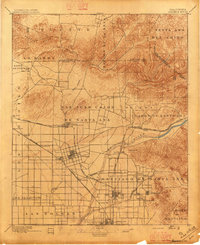 1896 Anaheim1896 Print · USGSThe Orange County basin appears here in the mid-1890s, when iron rails first connected the young citrus towns to the wider world. Genealogists and researchers can trace the early grids of Anaheim, Fullerton, and Orange alongside now-obscure rail stops like Almond and Marlboro.
 - 1898 Map of Anaheim, 1899 Print
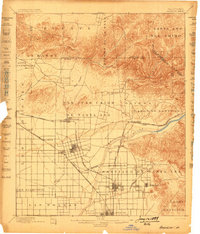 1898 Anaheim1899 Print · USGSNorthern Orange County is captured here at the height of its citrus and rail era. Genealogists and local historians can trace the early footprints of Anaheim, Fullerton, and Orange, alongside smaller vanished stops like McPherson and Almond.
 - 1901 Map of Southern California Sheet No. 1
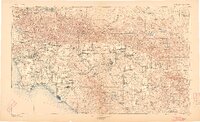 1901 Southern California Sheet No. 11901 Print · USGSGreater Los Angeles at the dawn of the twentieth century is a landscape of growing citrus towns and a burgeoning rail network. Genealogists and historians can trace the early gridded streets of Hollywood and Pasadena or locate landmarks like Bear Lake and the Cahuilla Indian Reservation.6 unique versions available
 - 1901 Map of Anaheim
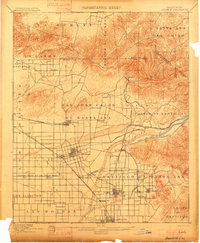 1901 Anaheim1901 Print · USGSOrange County's citrus and rail heartland is meticulously detailed at the start of the century, showing the early layouts of Anaheim and Fullerton. Genealogists can trace early homesteads and rail stops like Loara, Miraflores, and Olinda.6 unique versions available
 - 1902 Map of Corona
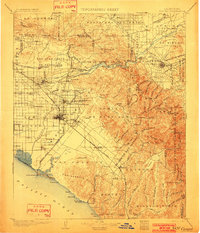 1902 Corona1902 Print · USGSThe Orange County and Riverside borderlands at the start of the 1900s show an era of rapid rail expansion and water engineering. Researchers can trace the early footprints of Anaheim and Orange or find vanished industry at the Santiago Coal Mine.7 unique versions available
 - 1904 Map of Southern California Sheet No. 1, 1905 Print
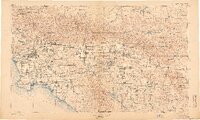 1904 Southern California Sheet No. 11905 Print · USGSSouthern California at the dawn of the twentieth century shows a landscape of citrus groves and coastal towns connected by rail. Genealogists and historians can trace early settlements like San Juan Capistrano, find remote sites like the Rose Mine, and study the original water systems of the Santa Ana River.2 unique versions available
 - 1928 Map of La Brea
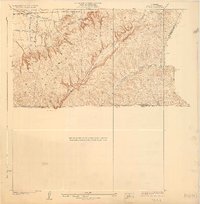 1928 La Brea1928 Print · USGSThe hills of Eastern Los Angeles County are captured here in the late twenties during a period of expanding ranching and early oil exploration. Genealogists and historians can trace family-named sites like Silver Peak Ranch, local landmarks such as Fairview School, and the path of the Union Pacific Railroad.3 unique versions available
 - 1932 Map of Orange
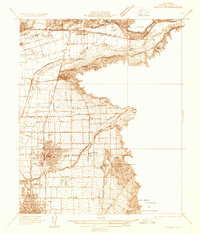 1932 Orange1932 Print · USGSOrange County was a landscape of expanding citrus groves and irrigation works in the early thirties. Local researchers can trace the development of established city grids and outlying communities like Atwood, McPherson, and El Modena alongside the Santa Ana River.
 - 1933 Map of Prado
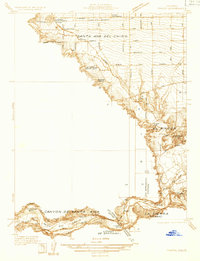 1933 Prado1933 Print · USGSIn the early 1930s, the Chino Valley was a hub of irrigation canals and rail-side settlements before later development changed the landscape. Genealogists and historians can trace old homesteads like Pellissier Ranch and schools like the California Junior Republic School.
 - 1935 Map of Olinda
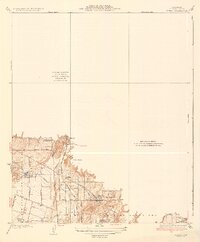 1935 Olinda1935 Print · USGSOrange County in the mid-1930s shows an evolving landscape of rail lines and irrigation networks. Genealogists and local historians can trace the early footprints of Yorba Linda and Placentia, or locate defunct rail stops like Loftus and Carlton.
 - 1935 Map of Orange
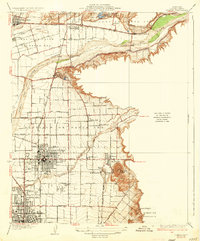 1935 Orange1935 Print · USGSOrange County's citrus-rich heartland is captured in the mid-1930s, revealing a landscape of burgeoning towns and vital rail lines. Genealogists can trace early homesteads near St Johns Cem, the Villa Park Sch, and the El Modena Sta.2 unique versions available
 - 1941 Map of Prado
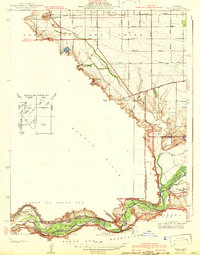 1941 Prado1941 Print · USGSSouthern California's inland corridor is captured here in the 1930s, showing the river valley before the dam changed the landscape forever. Trace the old routes of the Union Pacific through Prado and locate local landmarks like the Pellissier Ranch.2 unique versions available
 - 1942 Map of Anaheim
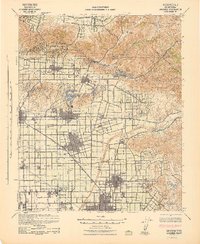 1942 Anaheim1942 Print · USGSOrange County's agricultural heart is captured mid-century during a period of rapid wartime development. Genealogists can locate family landmarks like Diamond Bar Ranch, local schools such as Alamitos Sch, and communities like Garden Grove or Stanton.2 unique versions available
 - 1942 Map of Corona, 1947 Print
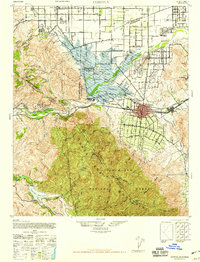 1942 Corona1947 Print · USGSRiverside County at the dawn of the 1940s reveals a unique mix of agricultural roots, mountain canyons, and significant regional infrastructure projects. Genealogists and local historians can trace the early street plans of Corona and Norco, or locate landmarks like the East Vale Sch and the Santiago Reservoir.2 unique versions available
 - 1943 Map of Corona
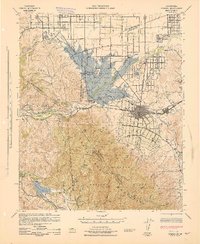 1943 Corona1943 Print · USGSThe Santa Ana River valley during the mid-forties shows a landscape shaped by water management and early inland growth. Trace the development of Corona and Norco alongside the massive Prado Dam and local landmarks like the East Vale Sch.
 - 1947 Map of Santa Ana, 1949 Print
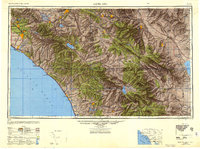 1947 Santa Ana1949 Print · USGSSouthern California is depicted here in the late forties, showing the expansion of the Inland Empire and the Orange County coast. Researchers can trace the early layout of Palm Springs or locate long-standing tribal lands like the Pala Indian Reservation and Rincon Indian Res.
 - 1949 Map of Santa Ana
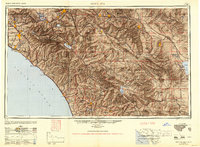 1949 Santa Ana1949 Print · USGSSouthern California underwent a profound transformation in the late 1940s as military installations and citrus groves shared the landscape. Researchers can trace early coastal growth at Laguna Beach, military history at Camp Pendleton, and the rail corridors of the Pacific Electric.
 - 1949 Map of Black Star Canyon, 1955 Print
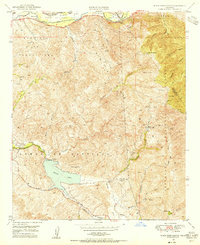 1949 Black Star Canyon1955 Print · USGSThe Orange County backcountry during the post-war era shows a landscape of deep canyons and early mineral works. Researchers can trace historic industrial sites like the Santiago Coal Mine or visit the remote Hidden Ranch near Irvine Lake.2 unique versions available
 - 1949 Map of Orange, 1956 Print
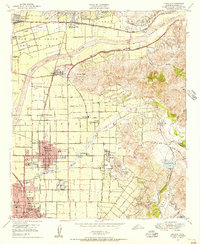 1949 Orange1956 Print · USGSThe Orange and Santa Ana valley floor shows its transition from citrus groves to post-war suburbs during the late 1940s. Researchers can trace historic family burial sites at Fairhaven Cem or follow the old Southern Pacific line past Villa Park and El Modena.
 - 1949 Map of Yorba Linda, 1957 Print
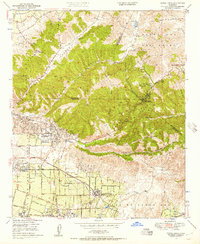 1949 Yorba Linda1957 Print · USGSOrange and Los Angeles counties meet in this postwar survey during a time of industrial oil production and expanding citrus groves. Researchers can trace early infrastructure like the Pacific Electric railroad and landmarks such as La Vida Mineral Springs or the Olinda Oil Field.2 unique versions available
 - 1949 Map of Prado Dam, 1958 Print
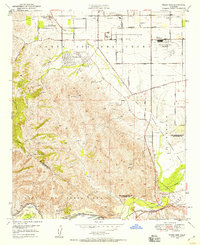 1949 Prado Dam1958 Print · USGSSan Bernardino and Riverside counties meet at the site of the newly completed dam and flood basin in the late 1940s. Trace the footprints of the Cal-Aero Flight Academy, the California Institution for Men, and the Rancho Santa Ana Botanic Gardens.2 unique versions available
 - 1950 Map of Prado Dam
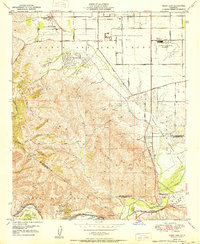 1950 Prado Dam1950 Print · USGSThe Prado Dam area at the start of the 1950s shows a unique mix of institutional expansion, aviation history, and flood control. Local researchers can trace the Cal-Aero Flight Academy, the California Institution for Men, and the Rancho Santa Ana Botanic Gardens.
 - 1950 Map of Yorba Linda
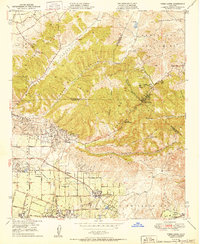 1950 Yorba Linda1950 Print · USGSMid-century Orange County is caught in a moment of transition between its petroleum roots and growing citrus communities. Genealogists and local historians can trace the early grids of Yorba Linda and Placentia or locate sites like La Vida Mineral Springs and the Olinda Oil Field.
 - 1950 Map of Orange
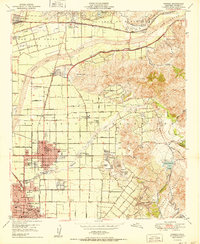 1950 Orange1950 Print · USGSOrange County enters a period of significant growth at mid-century, where citrus groves meet the expansion of Santa Ana and Orange. Researchers can trace old school sites like Lincoln Sch, numerous Oil Wells, and the Yorba Ch (Aban'd) near the river.
 - 1950 Map of Black Star Canyon
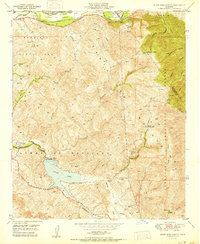 1950 Black Star Canyon1950 Print · USGSThe Orange and Riverside County line was defined by steep canyons and mining prospects at mid-century. Researchers can trace early industrial footprints at the Black Star Coal Mine (Inactive) or locate the Hidden Ranch near the Main Divide Motorway.
Showing maps 1-25 of 54
Top cities near Yorba Linda
- Anaheim historical maps
- Santa Ana historical maps
- Irvine historical maps
- Huntington Beach historical maps
- Ontario historical maps
- Garden Grove historical maps
See more
Top neighborhoods of Yorba Linda
Frequently asked questions
- What are the different types of historical maps available for Yorba Linda?
- What is the oldest map of Yorba Linda?
- Where can I purchase historical maps of Yorba Linda for my home or office?
- Where can I download high-res historical maps of Yorba Linda?
- Are there historical topographic maps available for Yorba Linda?
- Is there historical aerial imagery available for Yorba Linda?
- Where are historical maps of Yorba Linda sourced from?