1900s (20th Century) Maps of Lumpkin County, Georgia
Explore 40 historic maps of Lumpkin County from the 1900s (20th Century). These maps offer a rare glimpse into what life looked like during the 1900s — showing old roads, neighborhoods, homes, and landmarks that have changed or disappeared over time.
Whether you're researching your family's past, planning a metal detecting trip, or studying how Lumpkin County's landscape evolved across the 1900s, these high-resolution maps are a powerful tool for exploring the history of this region.
- Focus on a specific era: All maps on this page are from the 1900s, giving you a focused view of this time period.
- See what’s changed: Compare century-old streets, trails, and buildings to today's modern landscape using overlays and satellite layers.
- Research with precision: Use these maps for genealogy, historical research, land use analysis, or educational projects.
- View, download, or print: Maps are fully viewable online in high resolution, and can be downloaded or printed for your own records.
Start exploring Lumpkin County's history through authentic maps from the 1900s. This is your window into the past.
Lumpkin County, GA maps
(40)- 1903 Map of Dahlonega
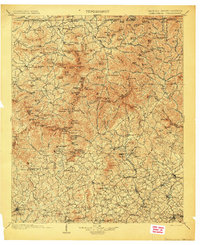 1903 Dahlonega1903 Print · USGSNorth Georgia and the Blue Ridge were defined by mountain settlements and early industry at the turn of the century. Genealogists and historians can trace family locations across the Nacoochee Valley, locate the Asbestos Mines, or find old sites like Loudsville and Porter Springs.5 unique versions available
 - 1911 Map of Ellijay
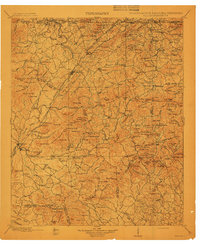 1911 Ellijay1911 Print · USGSNorth Georgia and the Tennessee border are captured here at the turn of the century, showing a mountain landscape of river ferries and early rail. Genealogists can locate family landmarks like Higdons Store, the Pisgah church, or crossings at Bakers Ferry and Shallow Ford.4 unique versions available
 - 1935 Map of Cowrock
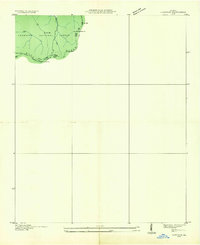 1935 Cowrock1935 Print · USGSThe northern Georgia high country is captured here during the mid-1930s as federal agencies mapped the watershed for the Tennessee Valley Authority. Hikers and historians can trace the early route of the Appalachian Trail through Tesnatee Gap and past the summit of Cowrock Mtn.
 - 1935 Map of Noontootla
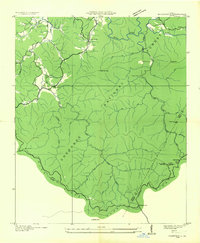 1935 Noontootla1935 Print · USGSNorth Georgia's mountain ridges and valley settlements are captured here in the mid-1930s as the Tennessee Valley Authority and USGS surveyed the region. Researchers can trace the early APPALACHIAN TRAIL past the FIRE TOWER on Hawk Mtn and locate sites like Stock Hill Ch or the Rock Creek Cem.
 - 1935 Map of Suches
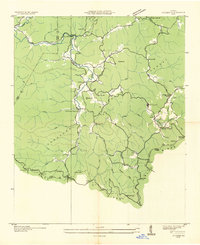 1935 Suches1935 Print · USGSThe North Georgia mountains in the mid-1930s are captured here as federal forestry and New Deal projects began to reshape the Blue Ridge. Genealogists can trace early homesteads near Suches and Gaddistown or locate rural landmarks like Corinth Sch and Gilreath Mill.
 - 1935 Map of Neels Gap
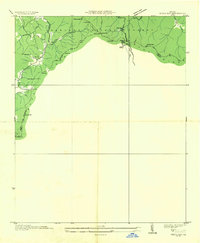 1935 Neels Gap1935 Print · USGSThe high peaks of the Blue Ridge come into focus during the mid-1930s as early park infrastructure and mountain trails are established. Trace the original path of the Appalachian Trail past Blood Mtn, Zion Ch, and the heights of Neels Gap.
 - 1938 Map of Cowrock
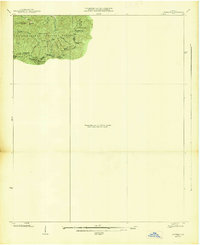 1938 Cowrock1938 Print · USGSHigh in the Blue Ridge during the late thirties, this survey shows the rugged intersection of White, Union, and Lumpkin counties. Hikers and historians can trace the early Appalachian Trail as it crosses through Tesnatee Gap and past Cowrock Mtn.
 - 1938 Map of Neels Gap
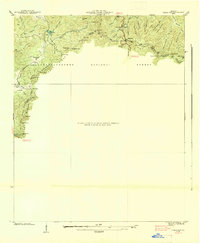 1938 Neels Gap1938 Print · USGSThe high ridges of Lumpkin and Union counties are shown in the late 1930s, just as the region’s modern parks were taking shape. Researchers can trace the early Appalachian Trail, the grounds of Vogel State Park, and the community at Zion Church.
 - 1938 Map of Suches
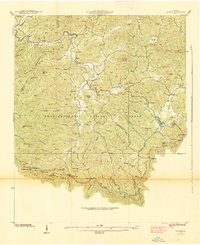 1938 Suches1938 Print · USGSUpper Union County and the Toccoa River valley are captured in the late 1930s, showing a landscape of high mountain gaps and isolated rural communities. Researchers can locate the CCC Camp F1, the Appalachian Trail, and schools like Peggy Hale Sch.
 - 1946 Map of Noontootla, 1956 Print
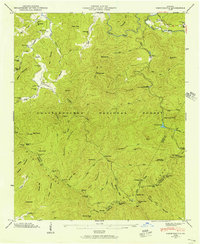 1946 Noontootla1956 Print · USGSFannin County's high ridges and river headwaters are captured here just after the war, showing the mountain communities before modern development. Genealogists and hikers can trace the original Appalachian Trail route past Springer Mtn and locate old landmarks like Noontootla Ch and Bunker Hill Sch.2 unique versions available
 - 1947 Map of Noontootla
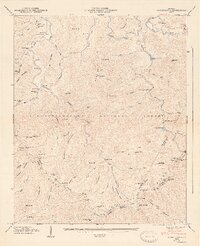 1947 Noontootla1947 Print · USGSFannin County's high ridges and quiet hollows are captured here in the late Forties, showing a landscape of small settlements and national forest land. Researchers can find ancestral sites like Noontootla Ch, Wilson Mill, and the Appalachian Trail as it crossed Big Stamp Gap.2 unique versions available
 - 1950 Map of Neels Gap, 1952 Print
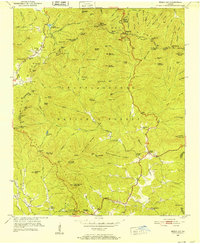 1950 Neels Gap1952 Print · USGSNorth Georgia's high country is captured here at mid-century, as the Appalachian Trail wound through the peaks of the Chattahoochee National Forest. Local historians can trace old community landmarks like Mt Zion Ch, Mt Pisgah Sch, and the high waters of Lake Winfield Scott.4 unique versions available
 - 1950 Map of Suches, 1952 Print
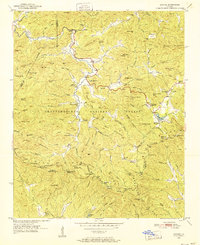 1950 Suches1952 Print · USGSDeep in the Blue Ridge Mountains during the early fifties, this survey captures the rural character of Union and Lumpkin Counties. Genealogists can trace family roots through mountain settlements like Suches and Gaddistown, or locate remote landmarks like Mt Zion Ch and Woody Gap High Sch.4 unique versions available
 - 1950 Map of Campbell Mtn, 1952 Print
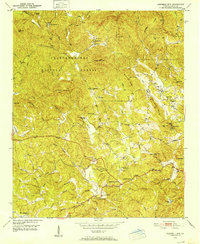 1950 Campbell Mtn1952 Print · USGSLumpkin County in the early fifties shows a mountain landscape transitioning between its mining heritage and reforestation. Researchers can trace family sites like Davis Chapel Cem, locate the historic Buckhorn Tavern, and identify the Barlow Mine (Inactive).6 unique versions available
 - 1950 Map of Cowrock, 1962 Print
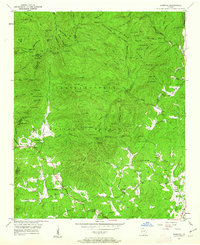 1950 Cowrock1962 Print · USGSWhite County and the Blue Ridge high country are captured here at mid-century, before modern development reached the mountains. Genealogists and hikers can trace the original path of the Appalachian Trail past Corinth Ch and the remote Blue Ridge Sch.2 unique versions available
 - 1951 Map of Cleveland, 1952 Print
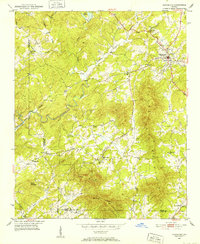 1951 Cleveland1952 Print · USGSNorth Georgia's mountain foothills come to life in the early fifties, centering on the growing community of Cleveland. Researchers can trace the rural landscape of White County through local landmarks like Mt View Ch, Grace Sch, and the waters of Tesnatee Creek.4 unique versions available
 - 1951 Map of Dahlonega, 1953 Print
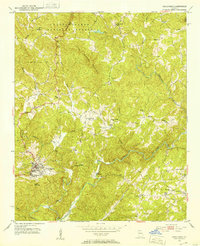 1951 Dahlonega1953 Print · USGSDahlonega and the southern Blue Ridge foothills are captured here in the early fifties, centered on the historic town and its namesake college. Local historians can trace family roots through numerous rural landmarks like Pecks Chapel, Dewey Sch, and the Chestatee River.3 unique versions available
 - 1952 Map of Cowrock
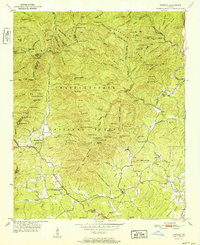 1952 Cowrock1952 Print · USGSWhite County, Georgia, is shown here in the early 1950s as the high ridges of the Blue Ridge Mountains meet quiet rural settlements. Researchers can trace family roots through the many local landmarks, including Loudsville Church, Lawrence Cemetery, and the Blue Ridge School.2 unique versions available
 - 1954 Map of Greenville, 1965 Print
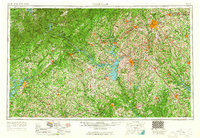 1954 Greenville1965 Print · USGSThe Upstate and Northeast Georgia are captured here during a decade of massive transformation as new reservoirs reshaped the Piedmont. Genealogists and hikers can trace the Appalachian Trail over Brasstown Bald or locate old community centers like Demorest, Westminster, and Royston.3 unique versions available
 - 1955 Map of Rome
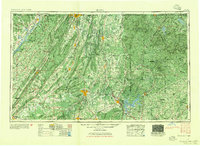 1955 Rome1955 Print · USGSThe tri-state borderlands of Georgia, Alabama, and Tennessee appear in the mid-fifties as a landscape of ridge-and-valley industry and river navigation. Genealogists can trace family footprints near Chattanooga, the iron works of Gadsden, and textile towns like Trion or Summerville.
 - 1958 Map of Greenville
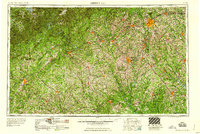 1958 Greenville1958 Print · USGSThe Piedmont and Blue Ridge foothills come alive in this mid-century survey of the Upstate and Northeast Georgia. Trace the regional rail-and-river economy through the Southern Railway corridors and early reservoir developments like Lake Sidney Lanier.
 - 1958 Map of Rome, 1966 Print
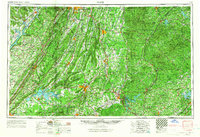 1958 Rome1966 Print · USGSNorthwest Georgia and neighboring Tennessee and Alabama are captured here in the late fifties, showcasing a landscape of high ridges and river valleys. Researchers can trace historic rail lines like the Seaboard Air Line RR and explore the bounds of Cloudland Canyon State Park or Fort Oglethorpe.3 unique versions available
 - 1961 Map of Rome
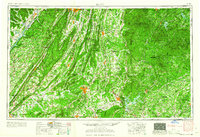 1961 Rome1961 Print · USGSNorthwest Georgia and neighboring Tennessee and Alabama are shown here at a moment of significant mid-century growth. Researchers can trace the rail networks of the Central of Georgia or locate landmarks within Chickamauga and Chattanooga Nat Military Park.
 - 1963 Map of Rome
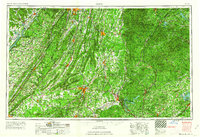 1963 Rome1963 Print · USGSThe tri-state corner of Georgia, Alabama, and Tennessee is captured here during a period of massive reservoir expansion and post-war growth. Genealogists and historians can trace the rail corridors of the Southern Ry or locate landmarks like Fort Oglethorpe and Cloudland Canyon State Park.
 - 1964 Map of Murrayville, 1965 Print
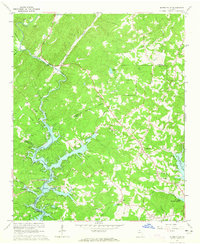 1964 Murrayville1965 Print · USGSUpper Georgia’s river valleys were undergoing a major transformation in the mid-sixties as the newly formed Lake Sidney Lanier reshaped the terrain. Genealogists and local historians can trace family-named sites like the Calhoun Gold Mine, Soules Chapel, and Yellow Creek Cem.4 unique versions available
Showing maps 1-25 of 40
Top cities of Lumpkin County
Frequently asked questions
- What are the different types of historical maps available for Lumpkin County?
- What is the oldest map of Lumpkin County?
- Where can I purchase historical maps of Lumpkin County for my home or office?
- Where can I download high-res historical maps of Lumpkin County?
- Are there historical topographic maps available for Lumpkin County?
- Is there historical aerial imagery available for Lumpkin County?
- Where are historical maps of Lumpkin County sourced from?