1920s Maps of Cook County, Illinois
Explore 24 historic maps of Cook County from the 1920s. These maps offer a rare glimpse into what life looked like during the 1920s — showing old roads, neighborhoods, homes, and landmarks that have changed or disappeared over time.
Whether you're researching your family's past, planning a metal detecting trip, or studying how Cook County's landscape evolved across the 1920s, these high-resolution maps are a powerful tool for exploring the history of this region.
- Focus on a specific era: All maps on this page are from the 1920s, giving you a focused view of this time period.
- See what’s changed: Compare century-old streets, trails, and buildings to today's modern landscape using overlays and satellite layers.
- Research with precision: Use these maps for genealogy, historical research, land use analysis, or educational projects.
- View, download, or print: Maps are fully viewable online in high resolution, and can be downloaded or printed for your own records.
Start exploring Cook County's history through authentic maps from the 1920s. This is your window into the past.
Cook County, IL maps
(24)- 1923 Map of Barrington
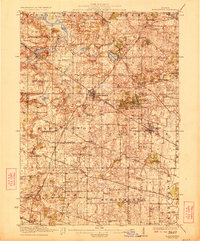 1923 Barrington1923 Print · USGSNorthwest of Chicago in the early twenties, these townships were a network of farm-to-market roads and lakefront resorts. Trace the early boundaries of the Cook County Forest Preserve and find long-gone rural landmarks like Speeck Resort or Quentins Corners.4 unique versions available
 - 1923 Map of Joliet
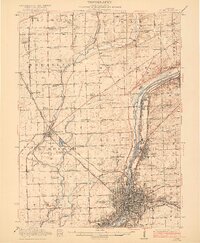 1923 Joliet1923 Print · USGSJoliet and the Des Plaines River valley are shown here in the 1920s, a hub of heavy industry and vital shipping canals. Genealogists and local historians can trace family roots through numerous country schools like Spaulding School, the Du Page Church, and the expansive State Penitentiary Farm.5 unique versions available
 - 1925 Map of Elgin
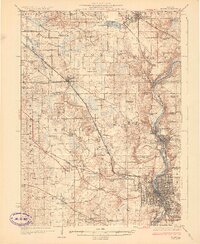 1925 Elgin1925 Print · USGSThe Fox River valley and the surrounding Kane County prairie are captured here during the mid-twenties, a time of established rail lines and manufacturing growth. Genealogists can trace early twentieth-century schools and junctions like Munshawville School, Pingree Grove, and Hickory Grove School.4 unique versions available
 - 1927 Map of Hinsdale
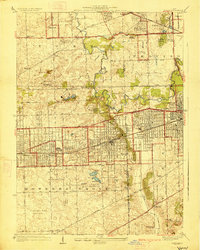 1927 Hinsdale1927 Print · USGSThe western Chicago suburbs emerged as a hub of transit and leisure in the late twenties, where rail lines met rising commuter towns. Genealogists can trace family names and institutions from St Joseph Institute to the vanished crossroads of Utopia and Lace.3 unique versions available
 - 1927 Map of Arlington Heights
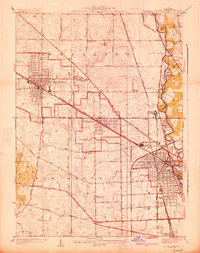 1927 Arlington Heights1927 Print · USGSCook County in the mid-1920s shows a landscape of emerging rail suburbs and quiet prairie farmland. Genealogists and local historians can trace family-named sites and vanished landmarks like the English Cemetery, Schnells Corner, and St Johns Church.3 unique versions available
 - 1928 Map of Elmhurst
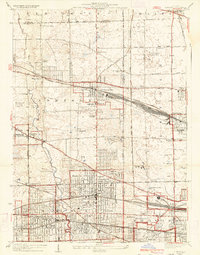 1928 Elmhurst1928 Print · USGSWestern suburbs like Elmhurst and Bensenville appear in the late 1920s as thriving rail hubs before the postwar housing boom. Researchers can trace early family sites at Friedens Cemetery, locate the Lutheran Orphanage, and see the original layout of Elmhurst College.3 unique versions available
 - 1928 Map of Wheeling
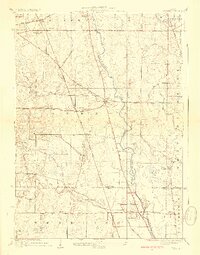 1928 Wheeling1928 Print · USGSNortheastern Illinois appears in the mid-twenties as a landscape of rural schoolhouses and expanding rail lines along the Des Plaines River. Genealogists and local historians can locate early landmarks like Diamond Lake Cemetery, Tripp School, and the settlement of Aptakisic.4 unique versions available
 - 1928 Map of Palos Park
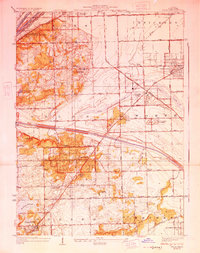 1928 Palos Park1928 Print · USGSSouthwest of Chicago in the late twenties, this landscape is a complex network of industrial canals and developing suburbs. Genealogists can locate several large burial grounds like Holy Sepulchre Cemetery while tracing local history through old landmarks such as McClaughry School and Spring Forest.4 unique versions available
 - 1928 Map of Sag Bridge
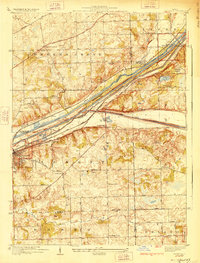 1928 Sag Bridge1928 Print · USGSThe Des Plaines valley in the late 1920s reveals a complex network of canals and railways connecting Lemont and Willow Springs. Trace early twentieth-century landmarks like Visitation Boys Camp, Fairmont Cemetery, and the Derby School.4 unique versions available
 - 1928 Map of Highland Park
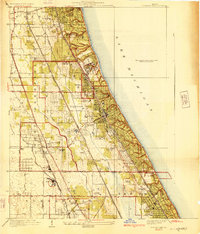 1928 Highland Park1928 Print · USGSThe North Shore was entering a golden age of suburban development and leisure in the late twenties. Trace the expansion of Highland Park and Lake Forest through their numerous estate clubs and historic schools like Lake Forest Academy.4 unique versions available
 - 1928 Map of Berwyn
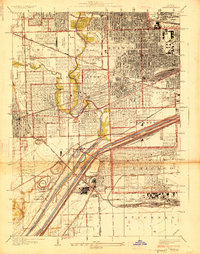 1928 Berwyn1928 Print · USGSThe suburban expansion west of Chicago is in full swing in the late twenties as industrial and rail networks reshape the land. Trace family history at Waldheim Cemetery or explore early aviation at the Maywood U S Mail Airport.3 unique versions available
 - 1928 Map of Evanston
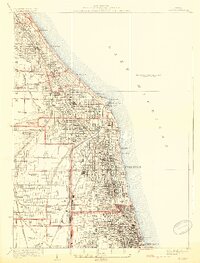 1928 Evanston1928 Print · USGSThe North Shore suburbs and the northern edge of Chicago are seen in detail during the late 1920s. Local researchers can trace early residential growth near Northwestern University and locate landmarks like the Gross Pt L H or Calvary Cemetery.5 unique versions available
 - 1928 Map of River Forest
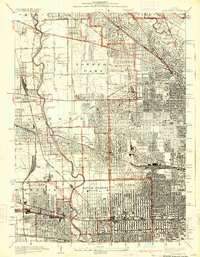 1928 River Forest1928 Print · USGSIn the late twenties, the Chicago city limits pushed westward toward the Des Plaines River, transforming prairie and farmland into a dense suburban grid. Genealogists and historians can trace family plots in St Joseph Cemetery or locate early landmarks like Rosary College and the Chicago State Hospital.4 unique versions available
 - 1929 Map of Park Ridge
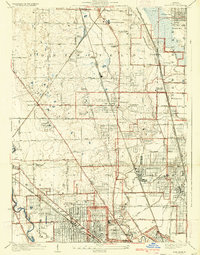 1929 Park Ridge1929 Print · USGSNorth of Chicago in the late twenties, this area was rapidly evolving from agricultural land into a network of suburban settlements. Genealogists and historians can trace institutional sites like the St Marys Mission House and early cemeteries such as Maine Cemetery or Sunset Cemetery.3 unique versions available
 - 1929 Map of Tinley Park
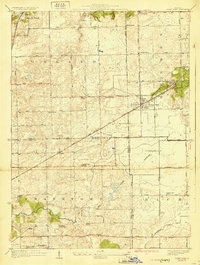 1929 Tinley Park1929 Print · USGSThe Cook and Will County borderlands appear here in the late twenties, showing the early suburban footprints of Tinley Park and Orland Park. Researchers can trace rural school locations like Sedan Prairie School or family sites near the Frankfort Cemetery.3 unique versions available
 - 1929 Map of Calumet Lake
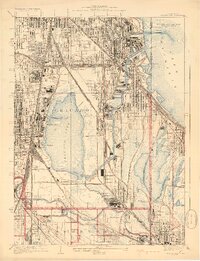 1929 Calumet Lake1929 Print · USGSThe industrial heart of the South Side and the Indiana borderlands comes alive in this survey of the Calumet region. Genealogists and historians can trace the streets of Pullman, the extensive rail yards of the Belt Ry of Chicago, and early features like the Pullman Training School.3 unique versions available
 - 1929 Map of Calumet City
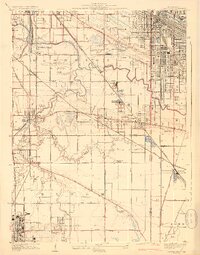 1929 Calumet City1929 Print · USGSThe Calumet region during the late twenties shows a landscape transitioning from rural townships to industrial hubs. Genealogists and historians can trace the early rail networks, numerous family-named cemeteries like Oak Hill Cem, and local landmarks such as the Brickyard and Sunnybrook School.3 unique versions available
 - 1929 Map of Blue Island
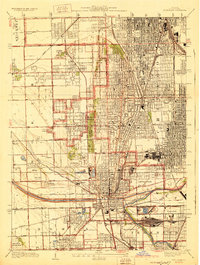 1929 Blue Island1929 Print · USGSSouth Chicago and its suburbs are captured in the late twenties during a period of rapid industrial and rail expansion. Genealogists can trace family plots across Mt Hope and Oak Hill, or locate local landmarks like Bremen School and Blue Island.3 unique versions available
 - 1929 Map of Mokena
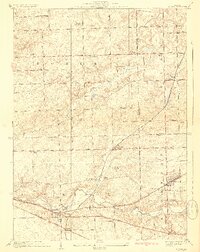 1929 Mokena1929 Print · USGSWill County's rural landscape is captured here in the late 1920s, when small schoolhouses and railroads defined the community. Researchers can trace family history at Brooks Cemetery or follow the Wabash tracks through Hadley and Alpine.3 unique versions available
 - 1929 Map of Harvey
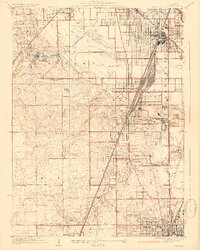 1929 Harvey1929 Print · USGSSouthern Cook County emerges as a major rail and residential hub in the late twenties. Genealogists and historians can trace the development of Markham Yards, find the Glenwood Manual Training School, and locate St Johns Sch and local cemeteries.4 unique versions available
 - 1929 Map of Jackson Park
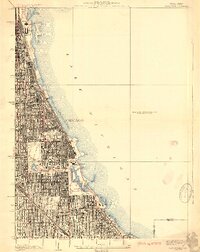 1929 Jackson Park1929 Print · USGSThe South Side of Chicago during the late 1920s reveals a sophisticated network of grand parks and lakefront landmarks. Genealogists and urban historians can trace the grid from Oakwoods Cemetery to iconic sites like Soldiers Field and the Field Museum.3 unique versions available
 - 1929 Map of Englewood
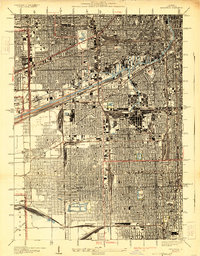 1929 Englewood1929 Print · USGSThe South Side of Chicago in the mid-twenties shows a landscape transformed by heavy industry and rail transport. Genealogy and local history researchers can trace the dense grid around the Union Stock Yards, Englewood, and the sprawling Corwith Yards.3 unique versions available
 - 1929 Map of Chicago Loop, 1939 Print
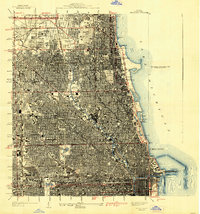 1929 Chicago Loop1939 Print · USGSChicago and its lakefront are captured here between the world wars, showing a city defined by its rigid grid and grand public parks. Genealogists and historians can trace old neighborhoods near Rose Hill Cemetery, the grounds of Loyola University, or the original layout of the Municipal Pier.2 unique versions available
 - 1929 Map of Dyer, 1946 Print
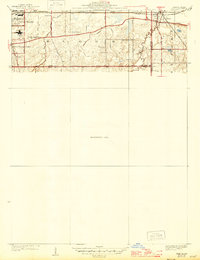 1929 Dyer1946 Print · USGSThe industrial suburbs and agricultural lands of the Illinois-Indiana border are captured here in the late 1920s. Researchers can trace the path of the Lincoln Highway and locate long-standing landmarks like the Cats Corner School or Strassburg School.
End of results
Showing maps 1-24 of 24
Top cities of Cook County
- Chicago historical maps
- Cicero historical maps
- Arlington Heights historical maps
- Evanston historical maps
- Des Plaines historical maps
- Berwyn historical maps
See more
Frequently asked questions
- What are the different types of historical maps available for Cook County?
- What is the oldest map of Cook County?
- Where can I purchase historical maps of Cook County for my home or office?
- Where can I download high-res historical maps of Cook County?
- Are there historical topographic maps available for Cook County?
- Is there historical aerial imagery available for Cook County?
- Where are historical maps of Cook County sourced from?