1950s Maps of Coal City, Illinois
Explore 6 historic maps of Coal City from the 1950s. These maps offer a rare glimpse into what life looked like during the 1950s — showing old roads, neighborhoods, homes, and landmarks that have changed or disappeared over time.
Whether you're researching your family's past, planning a metal detecting trip, or studying how Coal City's landscape evolved across the 1950s, these high-resolution maps are a powerful tool for exploring the history of this region.
- Focus on a specific era: All maps on this page are from the 1950s, giving you a focused view of this time period.
- See what’s changed: Compare century-old streets, trails, and buildings to today's modern landscape using overlays and satellite layers.
- Research with precision: Use these maps for genealogy, historical research, land use analysis, or educational projects.
- View, download, or print: Maps are fully viewable online in high resolution, and can be downloaded or printed for your own records.
Start exploring Coal City's history through authentic maps from the 1950s. This is your window into the past.
Coal City, IL maps
(6)- 1950 Map of Dwight
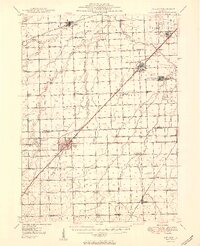 1950 Dwight1950 Print · USGSNortheastern Illinois at mid-century shows a landscape shaped by coal mining and a dense network of rural school districts. Genealogists can trace family footprints through dozens of local landmarks like Round Grove Cemetery, Goodfarm School, and the State Reformatory for Women.2 unique versions available
 - 1953 Map of Coal City, 1955 Print
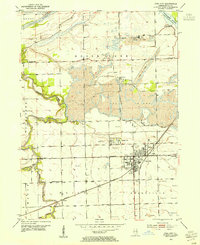 1953 Coal City1955 Print · USGSGrundy County mining operations and rail hubs are caught in detail during the early fifties. Researchers can trace the industrial landscape through strip mines and mine dumps near settlements like Carbon Hill, Coal City, and Eileen.5 unique versions available
 - 1954 Map of Wilmington, 1955 Print
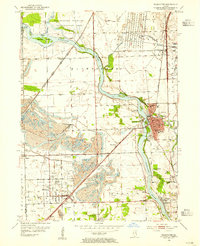 1954 Wilmington1955 Print · USGSWill County’s river-driven industry and coal mining heritage are captured here in the mid-fifties as the landscape transitioned between wilderness and extraction. Genealogists can locate family names at Mt Olive Cem or trace the early community footprints of Wilmington, Braidwood, and Lorenzo.4 unique versions available
 - 1954 Map of Morris, 1960 Print
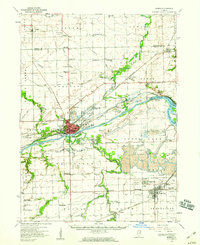 1954 Morris1960 Print · USGSGrundy County in the mid-fifties is a landscape of industrial transition, where coal mining and river navigation drive local growth. Researchers can trace the extensive Strip Mine works around Coal City or locate family roots at Evergreen Cem and Sulphur Springs Sch.2 unique versions available
 - 1954 Map of Wilmington, 1960 Print
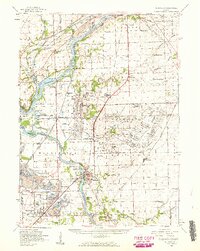 1954 Wilmington1960 Print · USGSWill and Grundy counties in the mid-fifties show a landscape of industrial convergence where major railroads meet the state's storied canal systems. Researchers can trace the Old Indian Boundary or locate family sites like the Soldiers Widows Home and Willard Grove Cem.3 unique versions available
 - 1958 Map of Aurora, 1969 Print
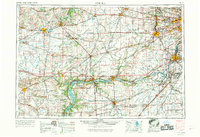 1958 Aurora1969 Print · USGSNorthern Illinois in the late fifties shows a landscape of powerful river industry and expanding transport corridors. Genealogists and historians can trace the development of Aurora and Joliet or locate sites like the Elwood Ordnance Plant and Starved Rock.3 unique versions available
End of results
Showing maps 1-6 of 6
Top cities near Coal City
- Joliet historical maps
- Channahon historical maps
- Shorewood historical maps
- Morris historical maps
- Minooka historical maps
- Aux Sable historical maps
See more
Top neighborhoods of Coal City
Frequently asked questions
- What are the different types of historical maps available for Coal City?
- What is the oldest map of Coal City?
- Where can I purchase historical maps of Coal City for my home or office?
- Where can I download high-res historical maps of Coal City?
- Are there historical topographic maps available for Coal City?
- Is there historical aerial imagery available for Coal City?
- Where are historical maps of Coal City sourced from?