1940s Maps of Jackson County, Illinois
Explore 18 historic maps of Jackson County from the 1940s. These maps offer a rare glimpse into what life looked like during the 1940s — showing old roads, neighborhoods, homes, and landmarks that have changed or disappeared over time.
Whether you're researching your family's past, planning a metal detecting trip, or studying how Jackson County's landscape evolved across the 1940s, these high-resolution maps are a powerful tool for exploring the history of this region.
- Focus on a specific era: All maps on this page are from the 1940s, giving you a focused view of this time period.
- See what’s changed: Compare century-old streets, trails, and buildings to today's modern landscape using overlays and satellite layers.
- Research with precision: Use these maps for genealogy, historical research, land use analysis, or educational projects.
- View, download, or print: Maps are fully viewable online in high resolution, and can be downloaded or printed for your own records.
Start exploring Jackson County's history through authentic maps from the 1940s. This is your window into the past.
Jackson County, IL maps
(18)- 1941 Map of Carbondale, 1955 Print
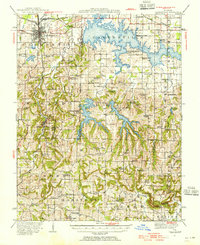 1941 Carbondale1955 Print · USGSSouthern Illinois was undergoing a transformation in the early 1940s as new reservoirs reshaped the topography near Carbondale. Researchers can trace rural life through dozens of named sites like Clemmenstown School and South County Line Church.2 unique versions available
 - 1947 Map of Alto Pass, 1954 Print
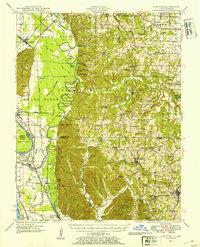 1947 Alto Pass1954 Print · USGSSouthern Illinois in the late 1940s is defined by the high ridges of the Shawnee Hills and the sweeping Mississippi floodplains. Researchers can trace rural life through sites like Dutch Ridge Church, the Macedonia School, and the river crossing at Rattlesnake Ferry.2 unique versions available
 - 1947 Map of Crosstown, 1960 Print
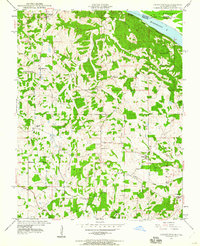 1947 Crosstown1960 Print · USGSSoutheast Missouri was still a landscape of scattered rural schools and river-rail commerce just after the war. Local researchers can trace the locations of the Schalls Sch, identify the family-named Hager Sch, or follow the St Louis San Francisco line along the Mississippi River.3 unique versions available
 - 1947 Map of Gorham, 1966 Print
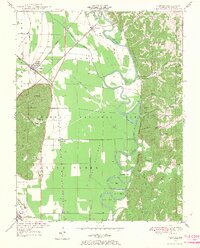 1947 Gorham1966 Print · USGSJackson County during the late 1940s is defined here by the winding Big Muddy River and the busy rail junction at Gorham. Researchers can trace the river's many curves like Mill Bend or locate rural landmarks including Fairview Ch and the Rattlesnake Ferry.4 unique versions available
 - 1947 Map of Wolf Lake, 1966 Print
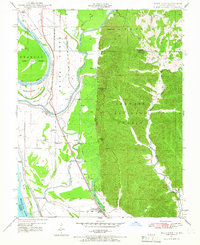 1947 Wolf Lake1966 Print · USGSThe Mississippi River bottoms and Shawnee National Forest hills meet in the late 1940s, showing a landscape shaped by rail and river. Genealogists can trace local landmarks like Galilee Ch and rural schoolhouses such as Cauble Sch and McCann Sch.3 unique versions available
 - 1947 Map of Cobden, 1970 Print
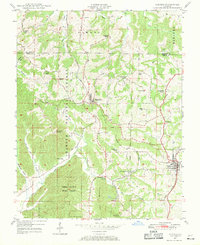 1947 Cobden1970 Print · USGSSouthern Illinois fruit and timber country is well-documented in the late 1940s, showing the ridge-top settlements of the Shawnee National Forest. Trace the old rail lines through Alto Pass and Mountain Glen or locate family sites like Lyerle Chapel and Rendleman School.3 unique versions available
 - 1947 Map of Altenburg, 1976 Print
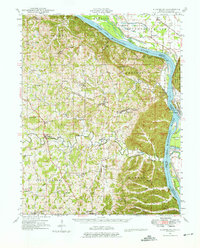 1947 Altenburg1976 Print · USGSSoutheastern Missouri's river bluffs and Lutheran heritage are documented here in the mid-forties, showing the close-knit network of river landings and small-town commerce. Genealogists can trace family footprints across Altenburg, Frohna, and dozens of rural schools like Fiehler Sch or Buckeye Sch.
 - 1947 Map of Altenburg, 1976 Print
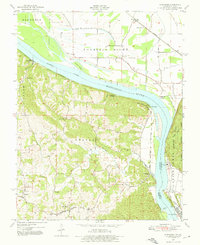 1947 Altenburg1976 Print · USGSThe Mississippi River valley at mid-century is captured here, showing the river-and-rail hub of the Missouri and Illinois border. Genealogists can trace the rural communities of Altenburg, Frohna, and Seventysix alongside landmarks like Union Sch and Tower Rock.4 unique versions available
 - 1948 Map of Cobden
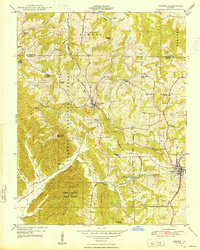 1948 Cobden1948 Print · USGSSouthern Illinois hill country appears in the late 1940s as a region of dense forests and vital rail corridors. Genealogists can locate family names and rural landmarks like Jerusalem Church, Rendleman School, and the Bald Knob Lookout Tower.2 unique versions available
 - 1948 Map of Crosstown
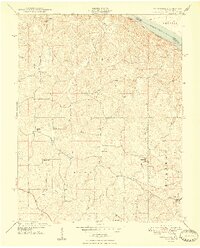 1948 Crosstown1948 Print · USGSThe rural uplands of Perry County are captured here in the late 1940s as a network of farming hamlets and local school districts. Researchers can locate vanished landmarks like Trickey Sch and Schalls Sch or trace the early paths through Farrar and Brazeau.2 unique versions available
 - 1948 Map of Wolf Lake
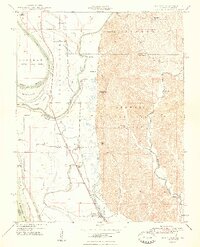 1948 Wolf Lake1948 Print · USGSThe Illinois-Missouri borderlands at the end of the 1940s reveal a landscape of river-driven commerce and scattered rural schoolhouses. Genealogists can trace family footprints at Galilee Ch, Bennett Landing, and the many namesake schools like McCann Sch and McGuire Sch.2 unique versions available
 - 1948 Map of Neelys Landing
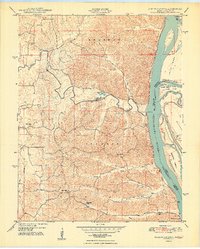 1948 Neelys Landing1948 Print · USGSThe Missouri-Illinois river border is captured here in the late 1940s, showing a landscape of small river landings and ridge-top farms. Genealogists can trace family footprints at New Wells, the New Bethel Ch, and several rural schoolhouses like Oak Hill Sch.5 unique versions available
 - 1948 Map of Gorham
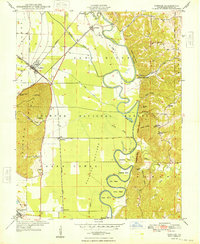 1948 Gorham1948 Print · USGSThe Illinois riverfront and the Big Muddy River bottomlands are captured here in the late 1940s. Genealogists can locate family landmarks such as Goodbread Cem, old school sites like Shoal Creek School, and the historic Rattlesnake Ferry crossing.2 unique versions available
 - 1948 Map of Altenburg
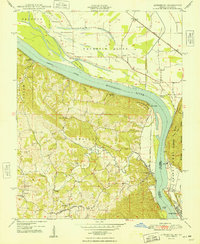 1948 Altenburg1948 Print · USGSThe Missouri-Illinois borderlands come alive in the late 1940s, showcasing the riverfront culture and inland farming life of Perry and Jackson Counties. Researchers can trace ancestral footprints through historic landings like Star Landing or locate rural schools such as Solomon Sch and Union Sch.2 unique versions available
 - 1948 Map of Pomona
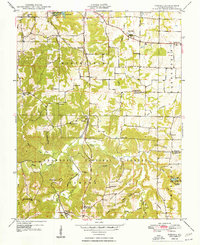 1948 Pomona1948 Print · USGSJackson County settlement and the timbered ridges of the southern Illinois hills are captured here just after the war. Local researchers can trace family roots at County Farm, locate the Bostick Cem, or follow the winding Mobile and Ohio RR through Pomona.5 unique versions available
 - 1949 Map of Alto Pass
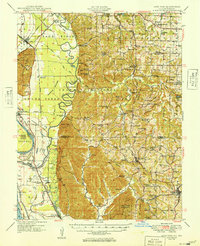 1949 Alto Pass1949 Print · USGSSouthern Illinois river life and hill country are captured here shortly after the war, showing the Mississippi corridor in detail. You can trace old river crossings like Rattlesnake Ferry and locate rural landmarks such as Bald Knob, Lyerle Chapel, and the Hickory Ridge School.
 - 1949 Map of Paducah
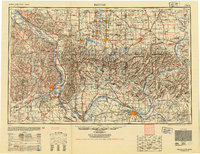 1949 Paducah1949 Print · USGSThe confluence of the Ohio, Mississippi, Tennessee, and Cumberland rivers at the close of the 1940s reveals a region bound by water and rail. Researchers can trace historic river landings, timberlands in the Shawnee National Forest, and the coal-mining infrastructure around West Frankfort and Herrin.2 unique versions available
 - 1949 Map of Altenburg
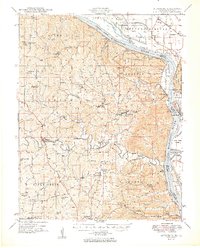 1949 Altenburg1949 Print · USGSMid-century Perry and Cape Girardeau counties show a landscape of tight-knit rural communities along the Mississippi River just after the war. Family historians can trace ancestral roots through numerous local landmarks like Uniontown Sch, New Wells School, and the river landings at Wittenberg and Hines Landing.3 unique versions available
End of results
Showing maps 1-18 of 18
Top cities of Jackson County
- Carbondale historical maps
- Murphysboro historical maps
- De Soto historical maps
- Elkville historical maps
- Pomona historical maps
- Sand Ridge historical maps
See more
Frequently asked questions
- What are the different types of historical maps available for Jackson County?
- What is the oldest map of Jackson County?
- Where can I purchase historical maps of Jackson County for my home or office?
- Where can I download high-res historical maps of Jackson County?
- Are there historical topographic maps available for Jackson County?
- Is there historical aerial imagery available for Jackson County?
- Where are historical maps of Jackson County sourced from?