1950s Maps of Will County, Illinois
Explore 29 historic maps of Will County from the 1950s. These maps offer a rare glimpse into what life looked like during the 1950s — showing old roads, neighborhoods, homes, and landmarks that have changed or disappeared over time.
Whether you're researching your family's past, planning a metal detecting trip, or studying how Will County's landscape evolved across the 1950s, these high-resolution maps are a powerful tool for exploring the history of this region.
- Focus on a specific era: All maps on this page are from the 1950s, giving you a focused view of this time period.
- See what’s changed: Compare century-old streets, trails, and buildings to today's modern landscape using overlays and satellite layers.
- Research with precision: Use these maps for genealogy, historical research, land use analysis, or educational projects.
- View, download, or print: Maps are fully viewable online in high resolution, and can be downloaded or printed for your own records.
Start exploring Will County's history through authentic maps from the 1950s. This is your window into the past.
Will County, IL maps
(29)- 1953 Map of Tinley Park, 1955 Print
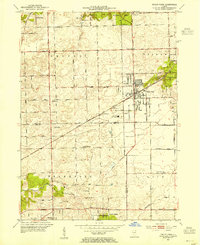 1953 Tinley Park1955 Print · USGSThe Cook and Will County border areas are shown here during the early fifties growth of Tinley Park and Orland Park. Researchers can find family-named landmarks like Hickory Cem and long-standing schools such as Summit Hill Sch and Kirby Sch.
 - 1953 Map of Mokena, 1955 Print
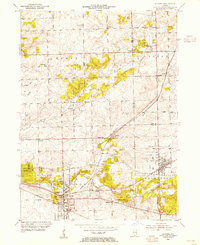 1953 Mokena1955 Print · USGSWill County's agricultural heartland is captured mid-century as the rail-centered towns of Mokena and New Lenox began to expand. Genealogists and historians can locate numerous rural landmarks, including St Johns Cem, the Wabash railroad, and Wells Corner Sch.
 - 1953 Map of Steger, 1955 Print
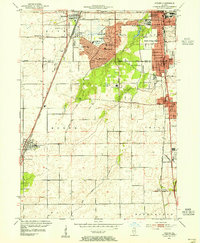 1953 Steger1955 Print · USGSSouthern Cook and Will Counties are shown in the early fifties as new suburban developments began to reshape the prairie landscape. Genealogists can trace family roots through numerous local landmarks, including Lincoln Fields Sta, Adams Cem, and the Sauk Trail Sch.4 unique versions available
 - 1953 Map of Beecher West, 1955 Print
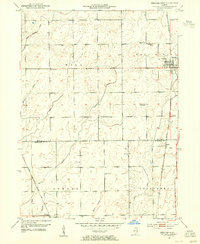 1953 Beecher West1955 Print · USGSThe eastern Illinois prairie near the Kankakee border comes to life in this mid-century survey of the rural landscape. Genealogists and historians can trace the foundations of local life through the St Pauls Ch, Heusing Cem, and several schoolhouses like Sumner Sch.2 unique versions available
 - 1953 Map of Beecher East, 1955 Print
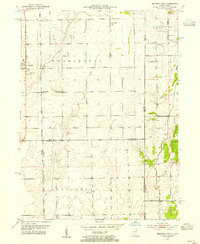 1953 Beecher East1955 Print · USGSThe Illinois and Indiana borderlands are captured here in the early fifties, showing a rural landscape defined by rail and farm. Genealogists can locate family landmarks like Deeke Sch, St Johns Ch, and the settlements of Klaasville and Beecher.3 unique versions available
 - 1953 Map of Peotone, 1955 Print
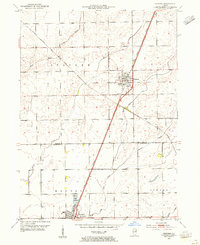 1953 Peotone1955 Print · USGSNorthern Illinois prairie life in the early fifties is defined by the rail crossing at Peotone and the nearby Manteno. Trace family history at Elmwood Cem or follow the path of the Illinois Central through the heart of Will County.3 unique versions available
 - 1953 Map of Frankfort, 1955 Print
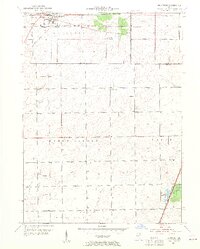 1953 Frankfort1955 Print · USGSWill and Cook County farm country is captured here in the early fifties, before suburban expansion transformed the outskirts of Chicago. Researchers can trace rural lineages through numerous local sites including St Peters Cem, Rahm Sch (Abandoned), and the Green Garden Sch.4 unique versions available
 - 1953 Map of Manhattan, 1955 Print
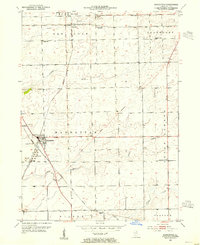 1953 Manhattan1955 Print · USGSWill County's agricultural heartland is documented here in the early fifties, showing the busy rail junctions and prairie townships of the era. Genealogists can trace family roots at St Joseph Cem, Green Garden Ch, or the rural Reiter Sch.3 unique versions available
 - 1953 Map of Dyer, 1955 Print
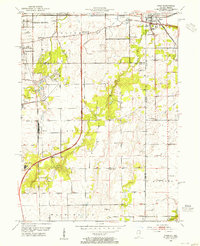 1953 Dyer1955 Print · USGSThe Illinois-Indiana border during the early fifties reveals a landscape of growing suburbs and traditional crossroads. Researchers can trace historic family roots at Eagle Lake Cem or locate lost landmarks like Klemme Sch and Lincoln Fields.
 - 1953 Map of Wilton Center, 1955 Print
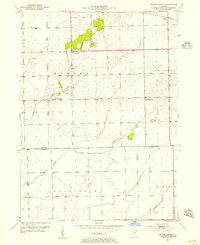 1953 Wilton Center1955 Print · USGSWilton Center and the surrounding townships of Will and Kankakee Counties are shown here during the early fifties, before the expansion of the modern highway system. Genealogists and local historians can locate family plots at Wilton Cem or West Peotone Cem and trace the rail path of the C M St P & P near Andres.2 unique versions available
 - 1953 Map of Yorkville SE, 1955 Print
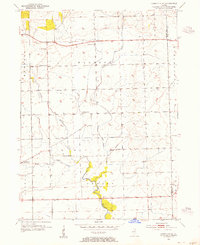 1953 Yorkville SE1955 Print · USGSIn the early 1950s, the rural border between Kendall and Will counties remained a landscape of family farms and local school districts. Genealogists can locate community landmarks such as Naausay Cem, Marysville Sch, and the village of Plattville.3 unique versions available
 - 1953 Map of Normantown, 1955 Print
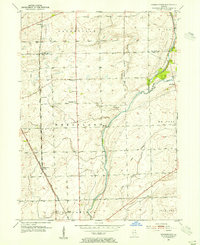 1953 Normantown1955 Print · USGSThe rural prairies of Du Page and Will counties are shown in the early fifties as the region transitioned toward modernization. Genealogists can trace early family sites like Vermont Cem, Wheatland Sch, and the rail stop at Normantown.
 - 1953 Map of Symerton, 1955 Print
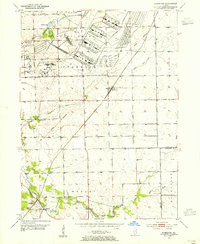 1953 Symerton1955 Print · USGSWill County’s rural townships meet the massive industrial presence of the Joliet Arsenal in the early fifties. Local historians can trace the Old Indian Boundary and find lost landmarks like Oak Grove Sch and Ritchie Sta.2 unique versions available
 - 1953 Map of Elwood, 1955 Print
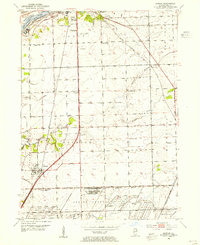 1953 Elwood1955 Print · USGSNear the village of Elwood in the early fifties, the landscape was defined by the massive expansion of the Joliet Arsenal and a heavy rail network. Local historians can trace old schoolhouse sites like Rose Hill Sch and Brown Sch alongside the Old Indian Bdy.3 unique versions available
 - 1953 Map of Sag Bridge, 1955 Print
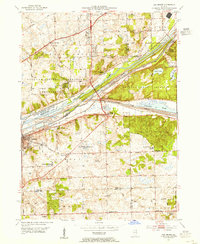 1953 Sag Bridge1955 Print · USGSThe Des Plaines River valley transitions from industrial canal corridors to preserved forest land in the early fifties. Genealogists and historians can locate family plots at Mount Vernon Memorial Park Cemetery and trace old school districts like Derby Sch and Trinity Sch.2 unique versions available
 - 1953 Map of Chicago, 1964 Print
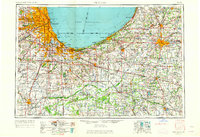 1953 Chicago1964 Print · USGSThe southern Lake Michigan shoreline was rapidly modernizing in the mid-fifties, balancing heavy industry with its famous academic centers. Researchers can trace the footprints of Notre Dame University or locate vanished sites like the Kingsbury Ordnance Plant and Meigs Field.5 unique versions available
 - 1954 Map of Minooka, 1955 Print
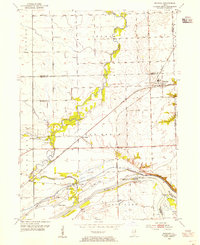 1954 Minooka1955 Print · USGSThe rail-and-river crossroads at Minooka are captured here in the 1950s, documenting a landscape shaped by three major rivers and heavy industry. Genealogists and researchers can locate St Marys Cem, trace the canal to the Aux Sable Lock, or find family-named sites like Walley Sch.4 unique versions available
 - 1954 Map of Romeoville, 1955 Print
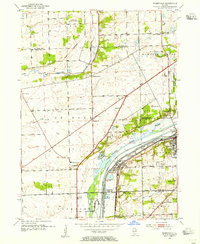 1954 Romeoville1955 Print · USGSThe Des Plaines River valley transitions from rural farming to a heavy industrial corridor in the mid-1950s. Genealogists can locate family burial sites at St Alphonsus Cem and Alexander Cem, or trace early schools like Bromberek Sch.
 - 1954 Map of Aurora South, 1955 Print
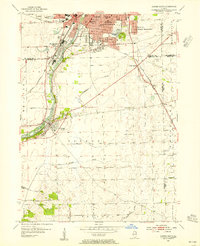 1954 Aurora South1955 Print · USGSThe Fox River valley and the southern reaches of Aurora are captured in the mid-fifties, showing a landscape of growing suburbs and rural prairie. Genealogists can trace family names at Mt Olivet Cem or locate the rural Oswego Prairie Ch and Scotch Sch.4 unique versions available
 - 1954 Map of Wilmington, 1955 Print
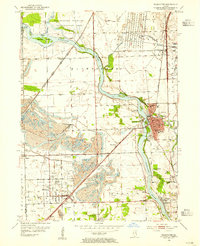 1954 Wilmington1955 Print · USGSWill County’s river-driven industry and coal mining heritage are captured here in the mid-fifties as the landscape transitioned between wilderness and extraction. Genealogists can locate family names at Mt Olive Cem or trace the early community footprints of Wilmington, Braidwood, and Lorenzo.4 unique versions available
 - 1954 Map of Joliet, 1955 Print
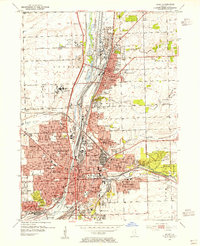 1954 Joliet1955 Print · USGSThe industrial heart of the Des Plaines River corridor comes alive in the mid-1950s. Trace the complex rail and canal networks through Lockport and Joliet, finding historic landmarks like Stateville State Prison and Lewis College.
 - 1954 Map of Plainfield, 1955 Print
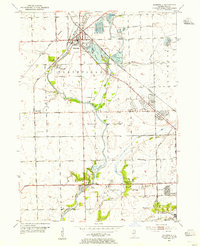 1954 Plainfield1955 Print · USGSWill County during the mid-fifties reveals a landscape defined by the Du Page River and the bustling industrial corridors of the Elgin Joliet and Eastern Railroad. Researchers can locate family landmarks like Caton Farm, trace historic burials at St Marys Cem, or find early rural schools such as Van Horn Sch.
 - 1954 Map of Channahon, 1955 Print
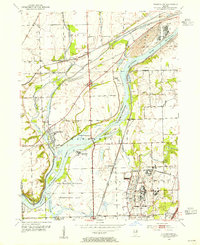 1954 Channahon1955 Print · USGSWill County at mid-century reveals a landscape shaped by major river junctions and the legacy of the canal era. Researchers can trace historical property lines and infrastructure through Channahon, finding detail on landmarks like Willard Grove Cem, Smith Bridge, and the Schweizer Sch.4 unique versions available
 - 1954 Map of Yorkville, 1959 Print
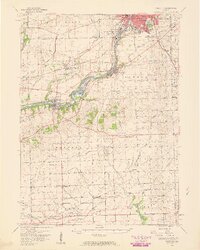 1954 Yorkville1959 Print · USGSKendall County in the mid-1950s shows a balance between growing riverside towns and an expansive agricultural interior. Genealogists can trace family roots through rural landmarks like Naausay Ch, Jericho Cem, and the long-standing diagonal of the Old Indian Boundary.2 unique versions available
 - 1954 Map of Morris, 1960 Print
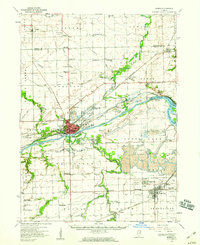 1954 Morris1960 Print · USGSGrundy County in the mid-fifties is a landscape of industrial transition, where coal mining and river navigation drive local growth. Researchers can trace the extensive Strip Mine works around Coal City or locate family roots at Evergreen Cem and Sulphur Springs Sch.2 unique versions available
Showing maps 1-25 of 29
Top cities of Will County
- Joliet historical maps
- Bolingbrook historical maps
- Romeoville historical maps
- New Lenox historical maps
- Homer Glen historical maps
- Lockport historical maps
See more
Frequently asked questions
- What are the different types of historical maps available for Will County?
- What is the oldest map of Will County?
- Where can I purchase historical maps of Will County for my home or office?
- Where can I download high-res historical maps of Will County?
- Are there historical topographic maps available for Will County?
- Is there historical aerial imagery available for Will County?
- Where are historical maps of Will County sourced from?