1900s (20th Century) Maps of Reno County, Kansas
Explore 50 historic maps of Reno County from the 1900s (20th Century). These maps offer a rare glimpse into what life looked like during the 1900s — showing old roads, neighborhoods, homes, and landmarks that have changed or disappeared over time.
Whether you're researching your family's past, planning a metal detecting trip, or studying how Reno County's landscape evolved across the 1900s, these high-resolution maps are a powerful tool for exploring the history of this region.
- Focus on a specific era: All maps on this page are from the 1900s, giving you a focused view of this time period.
- See what’s changed: Compare century-old streets, trails, and buildings to today's modern landscape using overlays and satellite layers.
- Research with precision: Use these maps for genealogy, historical research, land use analysis, or educational projects.
- View, download, or print: Maps are fully viewable online in high resolution, and can be downloaded or printed for your own records.
Start exploring Reno County's history through authentic maps from the 1900s. This is your window into the past.
Reno County, KS maps
(50)- 1901 Map of Cheney, 1910 Print
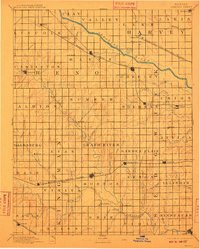 1901 Cheney1910 Print · USGSSouth Central Kansas was a landscape of budding rail towns and rural post offices at the turn of the century. Genealogists can trace family roots through now-vanished locales like Stella P.O. and Mona P.O. or early hubs like Cheney and Mt. Hope.2 unique versions available
 - 1955 Map of Wichita, 1959 Print
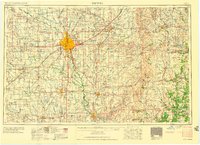 1955 Wichita1959 Print · USGSSouth-central Kansas comes alive in the mid-1950s as Wichita grows into its role as a regional industrial and military powerhouse. Trace the rail-and-river network connecting El Dorado and Arkansas City through the Atchison Topeka and Santa Fe lines.3 unique versions available
 - 1955 Map of Great Bend, 1966 Print
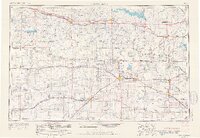 1955 Great Bend1966 Print · USGSCentral Kansas during the mid-sixties transition reveals a landscape defined by new reservoirs and enduring rail corridors. Researchers can trace the development of towns like Hays and Great Bend or locate natural landmarks such as Round Mound and the wetlands of the Quivira National Wildlife Refuge.3 unique versions available
 - 1955 Map of Hutchinson, 1967 Print
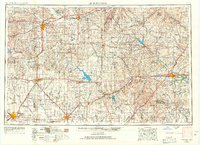 1955 Hutchinson1967 Print · USGSCentral Kansas in the mid-sixties reveals a landscape of growing reservoirs and evolving transportation corridors. Trace the development of towns like Hutchinson and Abilene alongside the Union Pacific Railroad and the expanding Interstate 70.3 unique versions available
 - 1955 Map of Pratt, 1968 Print
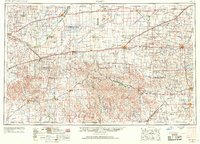 1955 Pratt1968 Print · USGSSouth-central Kansas during the mid-fifties presents a landscape of sprawling oil fields and critical rail junctions. Researchers can trace the paths of the Atchison Topeka and Santa Fe railroad or locate local landmarks like the Blue Ridge Community House and Camp Carlisle.3 unique versions available
 - 1957 Map of Great Bend
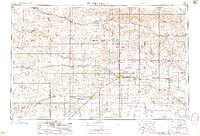 1957 Great Bend1957 Print · USGSCentral Kansas at the peak of the postwar era shows a landscape of growing rail hubs and massive new water projects. Trace the routes of the Union Pacific through Hays or locate the newly formed shorelines of Cedar Bluff Reservoir and Kanopolis Reservoir.
 - 1958 Map of Wichita
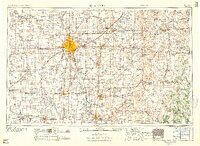 1958 Wichita1958 Print · USGSSouth Central Kansas in the late fifties was a landscape of aviation industry, oil exploration, and expanding turnpikes. Researchers can trace mid-century growth through McConnell Air Force Base, major facilities for Cessna Aircraft Company, and the active El Dorado Oil Field.
 - 1958 Map of Great Bend
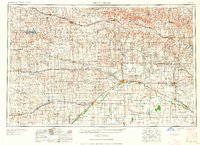 1958 Great Bend1958 Print · USGSCentral Kansas in the late fifties reveals a landscape of high-plains agriculture and vital river crossings. Researchers can trace the development of regional hubs like Hays and Russell, or locate historic sites such as Fort Larned and the Cheyenne Bottoms wildlife area.2 unique versions available
 - 1958 Map of Patterson, 1959 Print
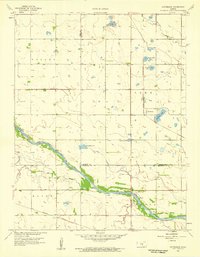 1958 Patterson1959 Print · USGSIn the late fifties, this Harvey County landscape centered on the rail junction at Patterson and the flood-controlled banks of the Arkansas River. Genealogists can locate several local burial grounds including Township Cem, Hunt Cem, and Star Cem.2 unique versions available
 - 1959 Map of Hutchinson
 1959 Hutchinson1959 Print · USGSCentral Kansas thrives at the intersection of rail and river in the mid-1950s, as post-war aviation infrastructure reshapes the prairie. Genealogists and historians can trace the paths of the AT&SF RR through Newton and Hutchinson, or locate military sites like Smoky Hill Air Force Base.2 unique versions available
 - 1959 Map of Pratt
 1959 Pratt1959 Print · USGSSouth-central Kansas thrived as a rail and agricultural hub in the late fifties, where the Arkansas River meets a vast grid of section roads. Researchers can trace the path of the Missouri Pacific railroad through settlements like Turon and Stafford, or locate family landmarks like the Prairie Oak School.2 unique versions available
 - 1959 Map of Burrton, 1960 Print
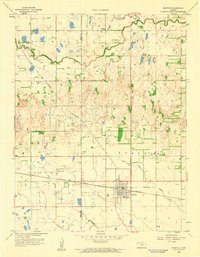 1959 Burrton1960 Print · USGSMid-century Burrton serves as a central hub for Kansas rail and energy development during the late fifties. Genealogists and local historians can locate early rural schools such as Lily Dale Sch and Willis Sch, or trace the path of the Atchison Topeka and Santa Fe railroad.
 - 1959 Map of Mount Hope, 1960 Print
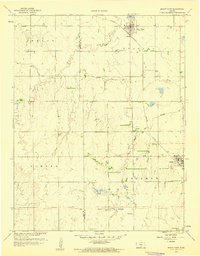 1959 Mount Hope1960 Print · USGSThe Kansas prairie south of the Arkansas River is captured here in the late fifties, showing the rural grid just as modern industrial features began to appear. Researchers can trace the Old Indian Boundary, locate early Oil Wells, and explore the rail-side layouts of Mount Hope and Andale.2 unique versions available
 - 1960 Map of Yaggy, 1961 Print
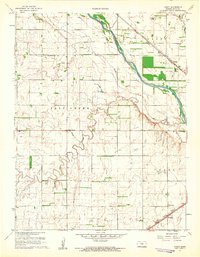 1960 Yaggy1961 Print · USGSReno County's agricultural heartland is documented here at the start of the 1960s, showing a landscape shaped by the Arkansas River and several major railroads. Genealogists and historians can locate old rural schools like Centennial Sch and trace the paths of the Missouri Pacific and other historic rail lines.3 unique versions available
 - 1960 Map of Hutchinson, 1961 Print
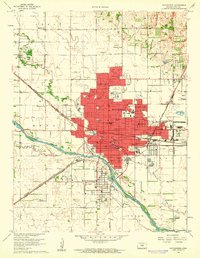 1960 Hutchinson1961 Print · USGSHutchinson and the Arkansas River valley appear in the early sixties as a bustling rail and industrial center. Researchers can trace dozens of local landmarks, including the State Fairground, the city Reformatory, and Fairlawn Cemetery.2 unique versions available
 - 1961 Map of Haven, 1962 Print
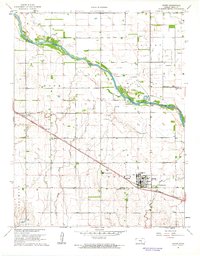 1961 Haven1962 Print · USGSReno County's agricultural and industrial landscape is captured here in the early sixties, centered on the vital Arkansas River corridor. Researchers can trace family history at the Mennonite Cem or follow the Missouri Pacific rails past Yoder and Haven.
 - 1961 Map of Hutchinson SE, 1962 Print
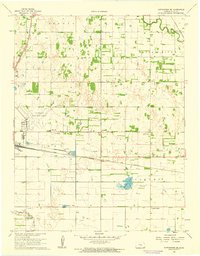 1961 Hutchinson SE1962 Print · USGSSoutheast of Hutchinson in the early sixties, the Kansas prairie was a crossroads of major rail lines and emerging aviation. Trace the vanished local footprints of Obeeville, Kent, and Punkin Center alongside the shores of Brandy Lake.2 unique versions available
 - 1961 Map of Elmer, 1963 Print
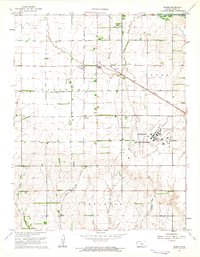 1961 Elmer1963 Print · USGSReno County during the early sixties is characterized by the significant presence of the Hutchinson Air Force Station and a busy rail network. Researchers can trace the intersection of two major railroads and locate rural landmarks like Cruppers Corner, Fairview Cem, and Darlow.
 - 1964 Map of Cheney, 1966 Print
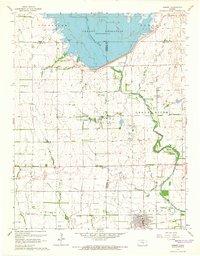 1964 Cheney1966 Print · USGSCheney and the surrounding Kansas plains appear here just as the landscape was being reshaped by the waters of the Cheney Reservoir. Researchers can trace the legacy of the Atchison Topeka and Santa Fe railroad or locate family roots at the Mt Vernon Cem and Cheney Cem.2 unique versions available
 - 1965 Map of Garden Plain, 1966 Print
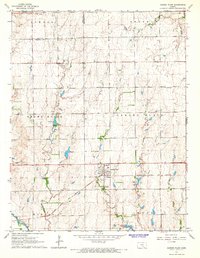 1965 Garden Plain1966 Print · USGSGarden Plain and the surrounding Sedgwick County countryside are captured here in the mid-1960s, showing a landscape defined by rail and river. Family historians can locate St Anthony Cem, St Pauls Ch, and the small settlements of St Joe and St Marys.2 unique versions available
 - 1965 Map of Waterloo, 1966 Print
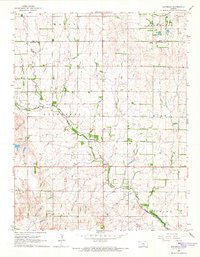 1965 Waterloo1966 Print · USGSThe rural agricultural landscape of Kingman and Reno Counties is captured here in the mid-1960s. Genealogists and local historians can trace the foundations of the Waterloo and Midway communities, locating family plots at Waterloo Cem and St Louis Cem.2 unique versions available
 - 1965 Map of Halstead NW, 1966 Print
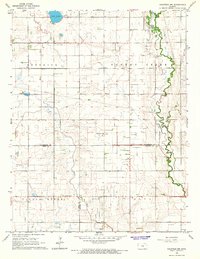 1965 Halstead NW1966 Print · USGSCentral Kansas farm country across McPherson and Harvey counties is captured here in the mid-sixties, showing a landscape defined by prairie streams and section roads. Genealogists can trace family footprints through numerous local sites like Hoffnungsau Ch, Hebron Cem, and the Turkey Creek Sch.
 - 1965 Map of Castleton, 1966 Print
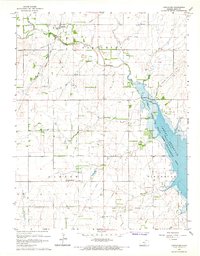 1965 Castleton1966 Print · USGSReno County's landscape changed forever in the mid-sixties as Cheney Reservoir took shape along the North Fork Ninnescah River. Genealogists and historians can trace the Old Indian Treaty Boundary and locate landmarks like St Agnes Cem and Castleton.2 unique versions available
 - 1965 Map of Hutchinson NW, 1966 Print
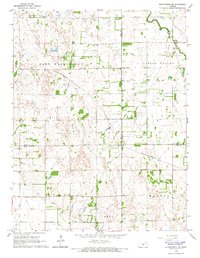 1965 Hutchinson NW1966 Print · USGSThe rural borderlands of Rice, Reno, and McPherson counties are captured here in the mid-1960s as a landscape of prairie agriculture and energy production. Researchers can locate the Welch Bornholdt Oil Field, the Thomas Grove Sch, and the winding Little Arkansas River.2 unique versions available
 - 1965 Map of Buhler, 1966 Print
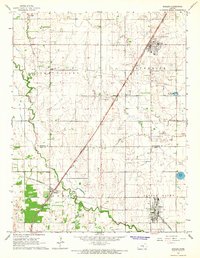 1965 Buhler1966 Print · USGSCentral Kansas rail and river life is captured here in the mid-sixties, showing the agricultural plains at a moment of steady growth. Researchers can trace family-named schools and churches like Hillcrest Sch and Bethel Ch or the path of the Little Arkansas River.
Showing maps 1-25 of 50
Top cities of Reno County
- Hutchinson historical maps
- South Hutchinson historical maps
- Medora historical maps
- Buhler historical maps
- Haven historical maps
- Nickerson historical maps
See more
Frequently asked questions
- What are the different types of historical maps available for Reno County?
- What is the oldest map of Reno County?
- Where can I purchase historical maps of Reno County for my home or office?
- Where can I download high-res historical maps of Reno County?
- Are there historical topographic maps available for Reno County?
- Is there historical aerial imagery available for Reno County?
- Where are historical maps of Reno County sourced from?