1900s (20th Century) Maps of Morgan County, Kentucky
Explore 49 historic maps of Morgan County from the 1900s (20th Century). These maps offer a rare glimpse into what life looked like during the 1900s — showing old roads, neighborhoods, homes, and landmarks that have changed or disappeared over time.
Whether you're researching your family's past, planning a metal detecting trip, or studying how Morgan County's landscape evolved across the 1900s, these high-resolution maps are a powerful tool for exploring the history of this region.
- Focus on a specific era: All maps on this page are from the 1900s, giving you a focused view of this time period.
- See what’s changed: Compare century-old streets, trails, and buildings to today's modern landscape using overlays and satellite layers.
- Research with precision: Use these maps for genealogy, historical research, land use analysis, or educational projects.
- View, download, or print: Maps are fully viewable online in high resolution, and can be downloaded or printed for your own records.
Start exploring Morgan County's history through authentic maps from the 1900s. This is your window into the past.
Morgan County, KY maps
(49)- 1915 Map of Paintsville
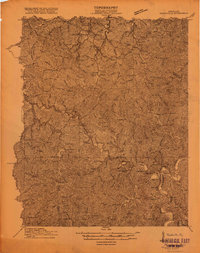 1915 Paintsville1915 Print · USGSEastern Kentucky during the first World War is captured here as the river-and-rail economy takes hold. Genealogists can trace family names through dozens of rural school districts and communities like Flatgap, Van Lear, and Staffordsville.
 - 1917 Map of Paintsville
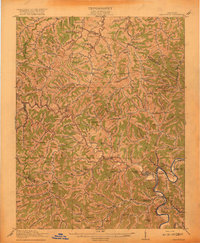 1917 Paintsville1917 Print · USGSEastern Kentucky during the first World War is meticulously documented here, showing the densely packed hollows of Johnson County. Genealogists can trace family roots through numerous numbered schools and rural settlements like Oil Springs, Flat Gap, and Hager Hill PO Johnson Sta.3 unique versions available
 - 1929 Map of Morehead
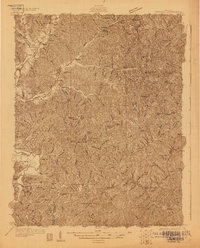 1929 Morehead1929 Print · USGSRowan and Morgan counties were centers of rail and clay production when this late-1920s survey was conducted. Local historians can locate early post offices like Elliottville PO (Hogtown) and trace the paths of the Chesapeake and Ohio through the Clack Mtn Tunnel.
 - 1935 Map of Morehead
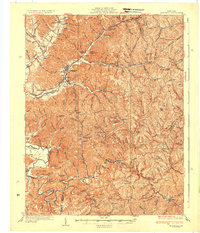 1935 Morehead1935 Print · USGSIn the mid-1930s, the mountain hollows around Morehead were connected by a dense network of country schools and the Chesapeake and Ohio railroad. Trace family sites at Blairs Mills PO, Zilpo, and the tunnels through Clack Mountain.
 - 1950 Map of Isonville, 1952 Print
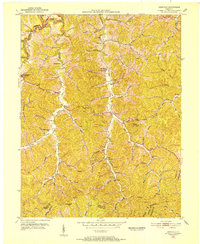 1950 Isonville1952 Print · USGSMid-century Elliott County is mapped here during a period of active rural life and early oil exploration. Researchers can trace ancestral locations through numerous schools like Fairview Sch and landmarks including Peters Hill Lookout Tower and Isonville.
 - 1950 Map of Sandy Hook, 1952 Print
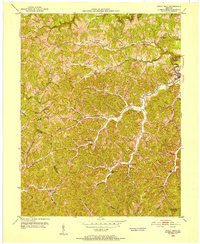 1950 Sandy Hook1952 Print · USGSThe hills of Elliott County were home to a dense network of valley settlements and country schools in the early fifties. Genealogists can trace family-named landmarks and rural hubs like Sandy Hook, Redwine, and Fannin Sch.
 - 1950 Map of Lenox, 1953 Print
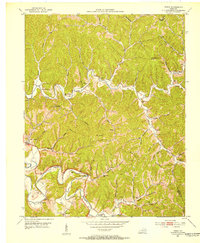 1950 Lenox1953 Print · USGSMorgan County in the early fifties is captured here through its intricate river valleys and remote ridge-top settlements. Researchers can locate numerous family-named landmarks like Adkins Cem, the community at Cottle Bend, and the historic Gordon Ford.
 - 1951 Map of Cannel City, 1952 Print
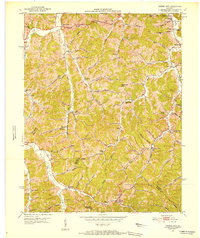 1951 Cannel City1952 Print · USGSThe Morgan and Wolfe County borderlands come to life in the early fifties, showing a landscape defined by narrow hollows and ridge-top knobs. Genealogists can locate family landmarks like Wells Cem or trace the old post offices at Buskirk (P O) and Insko (PO).
 - 1951 Map of White Oak, 1953 Print
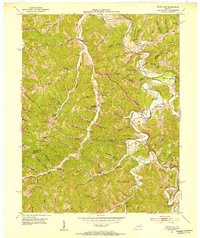 1951 White Oak1953 Print · USGSMagoffin and Morgan counties are shown in the early fifties as traditional rural life met the growing extraction industry. Genealogists can locate family landmarks like Millard Cem and Patrick Cem or early schoolhouses such as Trace Fork Sch.
 - 1951 Map of Ezel, 1953 Print
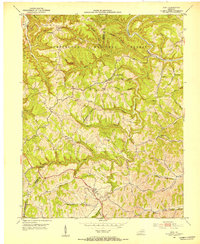 1951 Ezel1953 Print · USGSMorgan County is shown in the early fifties as a landscape of deep hollows and high timber within the Cumberland National Forest. Researchers can trace old family names and community centers through sites like Ezel, Broke Leg Falls, and Whites Branch Sch.2 unique versions available
 - 1951 Map of Hazel Green, 1953 Print
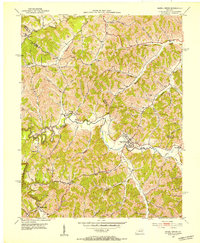 1951 Hazel Green1953 Print · USGSHazel Green and the surrounding hollows of Wolfe and Morgan counties are shown here in the early fifties. Local historians can trace the foundations of these communities through landmarks like the Hazel Green Academy, the Flat Rock Ch, and the Sandfield Sch.
 - 1951 Map of Dingus, 1953 Print
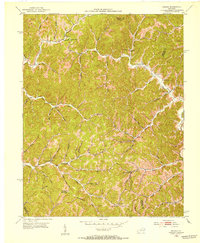 1951 Dingus1953 Print · USGSThe Morgan County backcountry in the early fifties reveals a network of tight-knit hollows defined by the coal and creek-bottom economy. Researchers can trace family history through numerous rural landmarks like Peddler Gap Sch, Lenton Ch, and the Daniel Cem.
 - 1951 Map of Salyersville North, 1953 Print
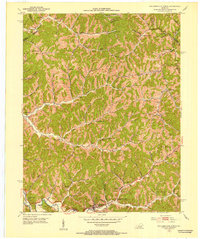 1951 Salyersville North1953 Print · USGSMagoffin County was a landscape of remote mountain schoolhouses and family cemeteries in the early fifties. Local historians can trace dozens of rural landmarks, from Salyersville on the Licking River to the numerous Oil Wells and the Rockhouse Ch in the northern hollows.
 - 1951 Map of Pomeroyton, 1953 Print
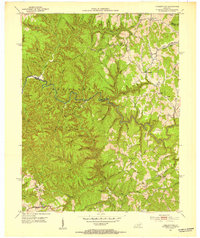 1951 Pomeroyton1953 Print · USGSThe winding Red River corridor defines this 1950s look at Wolfe County, Kentucky. Genealogists and local historians can locate early homesteads and trace rural life around the settlements of Pomeroyton and Valeria.2 unique versions available
 - 1951 Map of Lenox, 1953 Print
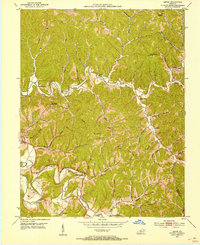 1951 Lenox1953 Print · USGSMorgan County's river valleys and ridgelines are captured here in the early fifties, showing a rural landscape organized around its creeks and hollows. Genealogists can locate family landmarks like Cottle Cem, Patton Cem, and the crossing at Gordon Ford.2 unique versions available
 - 1951 Map of Seitz, 1953 Print
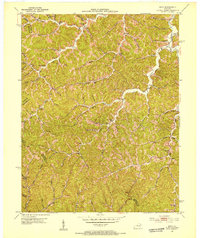 1951 Seitz1953 Print · USGSMagoffin County at mid-century reveals a landscape of isolated hollows and creek-side communities before major modernization. Genealogists can trace family landmarks and schools like Puncheon Cem, Wagers Sch, and the settlements at Seitz and Netty.
 - 1951 Map of West Liberty, 1953 Print
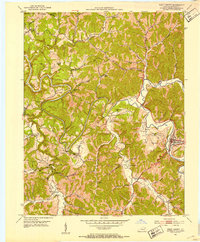 1951 West Liberty1953 Print · USGSMorgan County life centered on the winding Licking River during the early fifties, showing a tightly knit network of ridge-top farms and valley settlements. Genealogists can locate family landmarks such as Grassy Valley Ch and numerous burial sites like Henry Cem or Fugitt Cem.2 unique versions available
 - 1951 Map of Lee City, 1965 Print
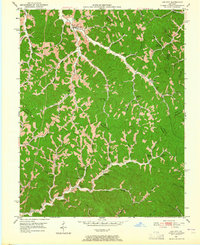 1951 Lee City1965 Print · USGSWolfe County in the early fifties is captured here as a landscape of tight-knit hollows and ridge-line communities. Genealogists and local historians can trace family locations through numerous landmarks like Wheel Rim (Elam Cem), Magoffin Institute, and Lee City.
 - 1953 Map of Bangor, 1954 Print
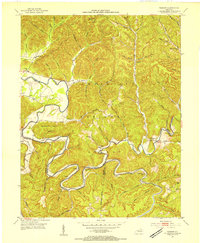 1953 Bangor1954 Print · USGSRowan County in the early fifties is defined by the winding Licking River and the small upland communities of the Cumberland National Forest. Researchers can locate several rural schools like Cave Branch Sch and unusual landmarks such as Poppin Rock Tunnel.2 unique versions available
 - 1953 Map of Wrigley, 1954 Print
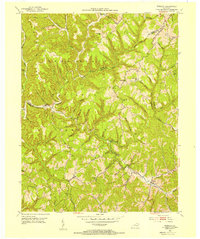 1953 Wrigley1954 Print · USGSEastern Kentucky's mountain communities were still centered on local valley schools and remote post offices in the early fifties. Genealogists and historians can trace family locations through Blairs Mills Sch, Oak Hill Sch, and the settlement at Wrigley.2 unique versions available
 - 1954 Map of Oil Springs, 1955 Print
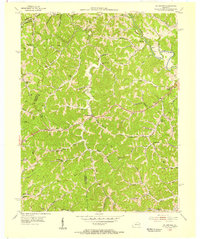 1954 Oil Springs1955 Print · USGSJohnson County was a hub of energy production and rural community life in the mid-fifties. You can trace the historic locations of Mashfork PO, local landmarks like the Lookout Tower, and numerous schools including Tick Lick Sch and Fairview Sch.
 - 1954 Map of Redbush, 1955 Print
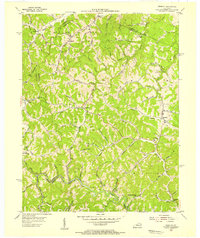 1954 Redbush1955 Print · USGSThe rural landscape of Johnson and Lawrence Counties is captured in the mid-1950s during a period of active energy production. Genealogists can trace family footprints near Old Bethel Ch, Burchett Flat, and the small community of Redbush.
 - 1957 Map of Huntington, 1966 Print
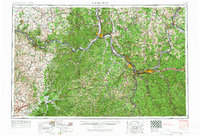 1957 Huntington1966 Print · USGSThe industrial heart of the Ohio River valley is captured here in the mid-sixties, showing the growth of Huntington and Ashland. Researchers can trace the extensive rail networks of the Chesapeake and Ohio RR and locate sites like the Chief Cornstalk Hunting Ground.3 unique versions available
 - 1957 Map of Jenkins, 1974 Print
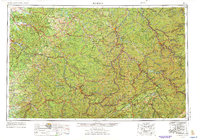 1957 Jenkins1974 Print · USGSThe Cumberland Plateau in the mid-twentieth century reveals a complex landscape of winding river valleys and deep-seated industry. Genealogists and historians can trace the development of Hazard, Jenkins, and Pikeville alongside extensive Numerous Oil and Gas Fields and the routes of the Chesapeake & Ohio Railway.
 - 1960 Map of Jenkins
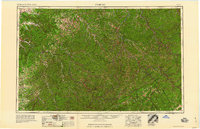 1960 Jenkins1960 Print · USGSEastern Kentucky and the West Virginia borderlands are captured at a mid-century peak of the coal and rail era. Trace the industrial corridors of the Chesapeake and Ohio RR through mountain hubs like Hazard and Jenkins.
Showing maps 1-25 of 49
Top cities of Morgan County
Frequently asked questions
- What are the different types of historical maps available for Morgan County?
- What is the oldest map of Morgan County?
- Where can I purchase historical maps of Morgan County for my home or office?
- Where can I download high-res historical maps of Morgan County?
- Are there historical topographic maps available for Morgan County?
- Is there historical aerial imagery available for Morgan County?
- Where are historical maps of Morgan County sourced from?