1960s Maps of Kenner, Louisiana
Explore 12 historic maps of Kenner from the 1960s. These maps offer a rare glimpse into what life looked like during the 1960s — showing old roads, neighborhoods, homes, and landmarks that have changed or disappeared over time.
Whether you're researching your family's past, planning a metal detecting trip, or studying how Kenner's landscape evolved across the 1960s, these high-resolution maps are a powerful tool for exploring the history of this region.
- Focus on a specific era: All maps on this page are from the 1960s, giving you a focused view of this time period.
- See what’s changed: Compare century-old streets, trails, and buildings to today's modern landscape using overlays and satellite layers.
- Research with precision: Use these maps for genealogy, historical research, land use analysis, or educational projects.
- View, download, or print: Maps are fully viewable online in high resolution, and can be downloaded or printed for your own records.
Start exploring Kenner's history through authentic maps from the 1960s. This is your window into the past.
Kenner, LA maps
(12)- 1961 Map of Baton Rouge, 1966 Print
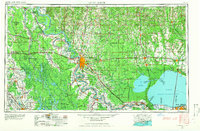 1961 Baton Rouge1966 Print · USGSSoutheastern Louisiana in the early sixties remains a landscape of deep river bends and sprawling coastal lakes. Genealogists and historians can trace the rail-and-river economy through landmarks like Free-Nigger Point, Donaldsonville, and the Illinois Central Railroad.
 - 1962 Map of Baton Rouge
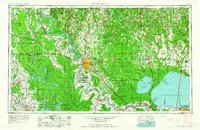 1962 Baton Rouge1962 Print · USGSSouth Louisiana in the early sixties reveals a landscape of river-bend parishes and emerging interstate corridors. Genealogists and historians can trace family roots through historic river towns like Donaldsonville and Plaquemine, or follow the path of the Illinois Central Railroad through the swamp basins.
 - 1963 Map of New Orleans
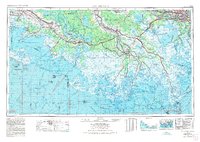 1963 New Orleans1963 Print · USGSCoastal Louisiana in the mid-twentieth century reveals a complex world of bayou settlements, expanding oil fields, and vital rail networks. Genealogists and historians can trace family roots through river towns like Thibodaux or follow the Southern Pacific line through Franklin and Patterson.4 unique versions available
 - 1965 Map of New Orleans West, 1966 Print
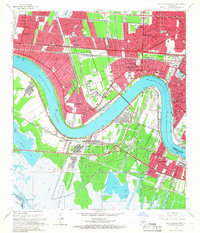 1965 New Orleans West1966 Print · USGSThe Jefferson Parish suburbs and Mississippi West Bank are shown here during a period of intense mid-century growth. Genealogists and historians can trace the development of Bonnabel Place, identify family plots in Providence Memorial Park, and locate the old Westwego Airport.5 unique versions available
 - 1965 Map of Indian Beach, 1966 Print
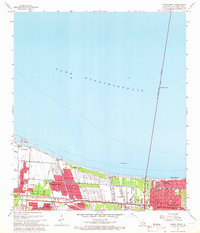 1965 Indian Beach1966 Print · USGSJefferson Parish residential growth and critical levee engineering are on display in the mid-sixties. Researchers can trace neighborhood development in Bissonet Plaza and Indian Beach or locate landmarks like the Old Courthouse.4 unique versions available
 - 1966 Map of New Orleans
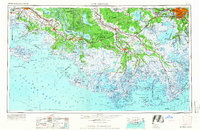 1966 New Orleans1966 Print · USGSCoastal Louisiana in the mid-1960s reveals a transition from traditional bayou life to an intensive offshore oil and gas economy. Researchers can trace the rail lines of the Southern Pacific RR through Morgan City or locate the Eugene Island Lighthouse among the delta's shifting marshes.
 - 1967 Map of Luling, 1968 Print
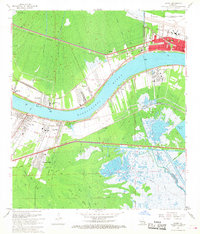 1967 Luling1968 Print · USGSLife along the Mississippi River in the late sixties is defined by busy industrial corridors and deep-rooted riverbank communities. Genealogists and researchers can trace local landmarks like St. Charles Cem, Destrehan High Sch, and the historical site of the Davis Crevasse.4 unique versions available
 - 1967 Map of La Branche, 1968 Print
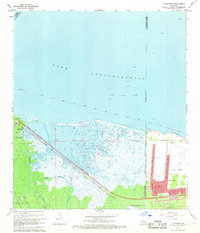 1967 La Branche1968 Print · USGSThe Louisiana shoreline meets suburban expansion in the late sixties as the area around Kenner begins to modernize. Genealogists and historians can trace the early layout of Moisant Field and the industrial activity near Good Hope.3 unique versions available
 - 1967 Map of New Orleans, 1969 Print
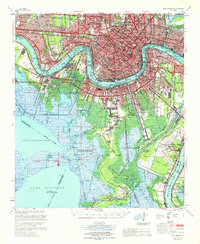 1967 New Orleans1969 Print · USGSGreater New Orleans in the mid-1960s reveals a landscape of massive engineering and urban expansion along the Mississippi River. Genealogists and local historians can trace family roots through the grids of Metairie, Gretna, and Harvey, or locate specific sites like Metairie High Sch and St Vincent de Paul Cem.
 - 1967 Map of Spanish Fort, 1969 Print
 1967 Spanish Fort1969 Print · USGSThe Jefferson and Orleans Parish lakefronts are shown here in the late sixties as suburban expansion reached the shores of Lake Pontchartrain. Trace the development of neighborhoods like Bucktown and Indian Beach alongside the New Orleans Lakefront Airport.
 - 1969 Map of Bonnet Carre, 1971 Print
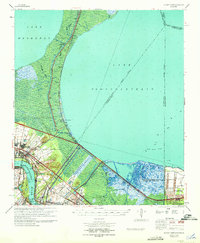 1969 Bonnet Carre1971 Print · USGSThe Louisiana river parishes are shown in a transitional era of flood control and petroleum expansion during the late sixties. Genealogists and historians can trace riverside settlements like Montz and Lucy, or follow the industrial corridor near the Bonnet Carre Spillway.
 - 1969 Map of Hahnville, 1971 Print
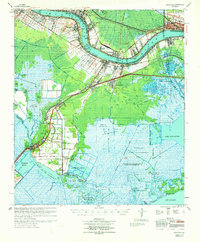 1969 Hahnville1971 Print · USGSSt. Charles Parish in the late sixties shows the industrial evolution of the river corridor from Hahnville to Kenner. Genealogists and researchers can trace family landmarks like St Charles Cem, Antioch Ch, and the many oil fields throughout the Salvador Game Management Area.
End of results
Showing maps 1-12 of 12
Top cities near Kenner
- New Orleans historical maps
- Metairie historical maps
- Algiers historical maps
- Gretna historical maps
- Waggaman historical maps
- Westwego historical maps
See more
Top neighborhoods of Kenner
Frequently asked questions
- What are the different types of historical maps available for Kenner?
- What is the oldest map of Kenner?
- Where can I purchase historical maps of Kenner for my home or office?
- Where can I download high-res historical maps of Kenner?
- Are there historical topographic maps available for Kenner?
- Is there historical aerial imagery available for Kenner?
- Where are historical maps of Kenner sourced from?