Old Maps of New Orleans, Louisiana for Genealogy
Trace your family roots with 158 historic maps of New Orleans. These high-res maps reveal old neighborhoods, homesites, landmarks, and streets — helping you uncover where your ancestors lived and how the area evolved over time.
- Explore historic neighborhoods: Identify where your relatives may have lived in the 1800s or 1900s.
- Compare maps over time: Trace the changes in streets, buildings, and landmarks for multi-generational research.
- Perfect for genealogy & ancestry research: Used by family historians and researchers to map out lineage and migration.
These maps are an incredible resource for exploring your personal connection to New Orleans's past.
New Orleans, LA maps
(158)- 1891 Map of Spanish Fort
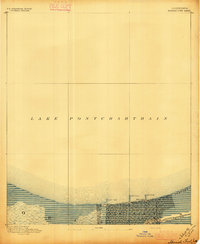 1891 Spanish Fort1891 Print · USGSThe New Orleans lakefront in the early 1890s was a landscape of emerging rail hubs and shoreline outposts. Trace the early footprints of Milneburg, Spanish Fort, and the lighthouse stations along Lake Pontchartrain during this pivotal era of coastal growth.4 unique versions available
 - 1891 Map of New Orleans
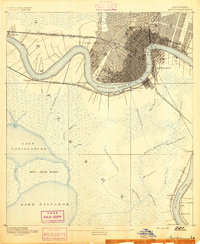 1891 New Orleans1891 Print · USGSGreater New Orleans and the surrounding bayous are captured in the late Victorian era as the city's rail and canal networks expanded. Researchers can trace the development of riverfront communities like Gretna and Algiers or locate now-obscure landings such as Jesuit Bend and Amesville.5 unique versions available
 - 1892 Map of Chef Menteur
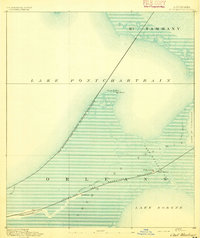 1892 Chef Menteur1892 Print · USGSThe marshlands of eastern Orleans Parish appear here in the 1890s as a strategic coastal corridor of railroads and water passages. Researchers can trace the early rail stops at Micheaud and Lee, or locate the historic site of Ft Macomb near the Chef Menteur crossing.5 unique versions available
 - 1892 Map of St. Bernard
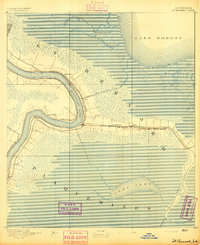 1892 St. Bernard1892 Print · USGSCoastal Louisiana in the early 1890s is captured here as a landscape of river-bend settlements and expanding rail lines. Genealogists and historians can trace family land and depots at Poydras, St Bernard, and the New Orleans and Gulf Railroad stops.4 unique versions available
 - 1893 Map of Rigolets
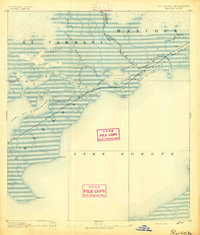 1893 Rigolets1893 Print · USGSCoastal Louisiana and Mississippi meet at the turn of the century along a labyrinth of marshlands and railroad trestles. Researchers can trace the early path of the Louisville and Nashville Railroad past Ft. Pike and through the Little Lake region.5 unique versions available
 - 1932 Map of New Orleans NE
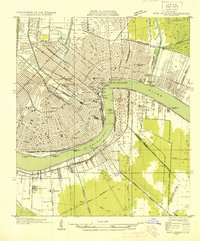 1932 New Orleans NE1932 Print · USGSNew Orleans and the West Bank riverfront are seen in the early thirties, showing the dense grid of the French Quarter and the sprawling medical and university districts. Researchers can find old landmarks like St Louis Cathedral, the Custom House, and Gretna High School.
 - 1932 Map of New Orleans NW
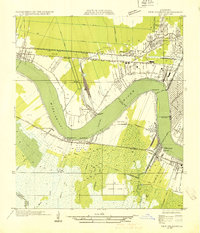 1932 New Orleans NW1932 Print · USGSJefferson Parish is caught in a moment of rapid transformation in the early thirties as New Orleans expands westward. Researchers can trace the rise of early suburbs like Bonnabel Place, the construction of the Huey P Long Bridge, and the location of the historic Wedell Williams Airport.
 - 1936 Map of North Shore
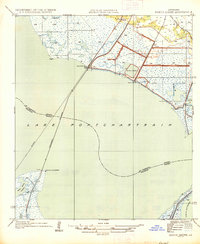 1936 North Shore1936 Print · USGSCoastal St. Tammany Parish in the mid-thirties is defined by its sprawling wetlands and the early infrastructure crossing the water. Researchers can trace the original rail lines of the Southern and Southern Pontchartrain as they connect landings like North Shore and Howze Beach.
 - 1936 Map of South Point
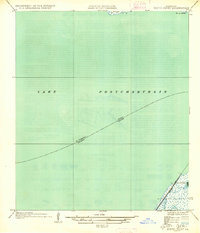 1936 South Point1936 Print · USGSCoastal Orleans Parish in the mid-1930s is a landscape of expansive water and critical rail links along the shore. Researchers can trace the path of the Southern railroad as it reaches South Point and locate marshland features like Irish Lagoon.
 - 1936 Map of Chef Menteur, 1938 Print
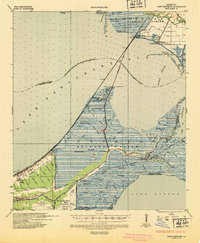 1936 Chef Menteur1938 Print · USGSCoastal New Orleans and the Rigolets area are shown in the mid-1930s as drainage projects and rail lines reshaped the marshlands. Researchers can trace early settlements at Little Woods and Micheaud, or locate sites like Fort Macomb and the Dead Cypress Swamp.2 unique versions available
 - 1936 Map of Spanish Fort, 1938 Print
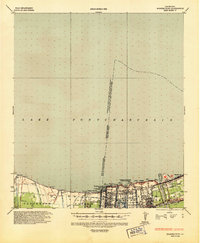 1936 Spanish Fort1938 Print · USGSThe New Orleans lakefront in the mid-1930s reveals a landscape of leisure and engineering as the city expanded toward the water. Trace the footprints of Pontchartrain Beach Amusement Park, the historic docks at Milneburg, and the path of the Old Spanish Trail.
 - 1936 Map of Rigolets, 1949 Print
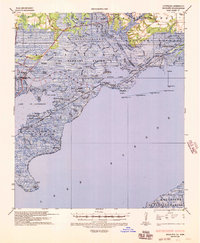 1936 Rigolets1949 Print · USGSCoastal Louisiana and Mississippi meet in the mid-1930s where the Pearl River delta fragments into a maze of islands and bayous. Researchers can trace the early path of Highway No 90, the defenses at Fort Pike, and settlements like Pearlington or Baldwin Lodge.
 - 1937 Map of Chef Menteur
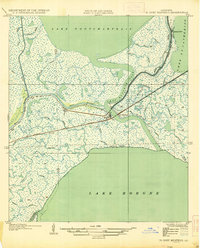 1937 Chef Menteur1937 Print · USGSCoastal Orleans Parish in the late 1930s was a critical junction of rail and water traffic between the great lakes of the Gulf. You can trace the historic site of Ft Mc Comb and the original path of the Louisville and Nashville railroad across Chef Menteur Pass.
 - 1938 Map of Little Woods
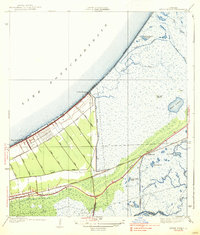 1938 Little Woods1938 Print · USGSThe eastern reaches of New Orleans are shown in the late 1930s as modern drainage and rail lines began to transform the coastal marsh. Researchers can trace the development of Little Woods, Edge Lake, and the rail-side industries near Micheaud and Sugar Mill Lake.2 unique versions available
 - 1938 Map of Spanish Fort
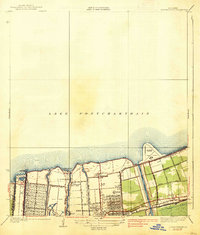 1938 Spanish Fort1938 Print · USGSThe southern shore of Lake Pontchartrain comes alive in the late 1930s as New Orleans expands toward the water. Trace the footprints of Shushan Airport, the historic Milneburg settlement, and leisure landmarks like Pontchartrain Beach and the Southern Yacht Club.2 unique versions available
 - 1938 Map of New Orleans West
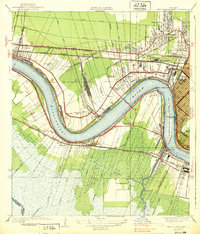 1938 New Orleans West1938 Print · USGSJefferson Parish emerges as a vital transportation hub during the mid-thirties, dominated by the massive river bend and the rise of suburban Metairie. Genealogists and historians can trace the early footprints of Bonnabel Place and Kenner, or locate the historic Deckbar Sch and the U S Marine Hospital.3 unique versions available
 - 1939 Map of New Orleans East
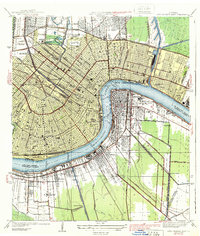 1939 New Orleans East1939 Print · USGSThe crescent city and its surrounding river parishes are captured in the late 1930s, showing New Orleans' transition into a modern port and educational hub. Genealogists can trace family roots through neighborhoods like Algiers and Arabi, or locate ancestors in St Louis Cem and Metairie Cemetery.3 unique versions available
 - 1939 Map of Chalmette
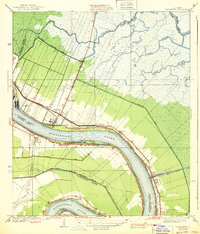 1939 Chalmette1939 Print · USGSSt. Bernard Parish during the late 1930s reveals a world of riverfront plantations and growing rail corridors along the Mississippi. Genealogists and local historians can trace early settlements like Versailles and Meraux, or locate landmarks such as the Chalmette Nat Cem and Sinclair Ch.3 unique versions available
 - 1940 Map of Belle Chasse
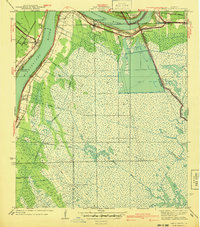 1940 Belle Chasse1940 Print · USGSCoastal Louisiana during the late 1930s is defined here by its intricate canal systems and riverside rail hubs. Trace the local economy through the Sea Train Terminal at Belle Chasse or the marshland paths near Tigers Ridge and Lake Lery.
 - 1942 Map of St. Bernard, 1949 Print
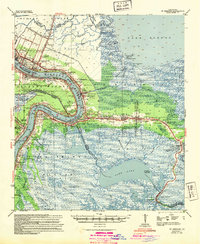 1942 St. Bernard1949 Print · USGSCoastal St. Bernard and Plaquemines Parishes are shown during the early 1940s, capturing the delta’s transition from rural settlements to an industrial oil and rail corridor. Researchers can trace family roots at the Delacroix Island School or locate historic sites like Chalmette National Monument and the Martello Tower.
 - 1943 Map of Little Woods
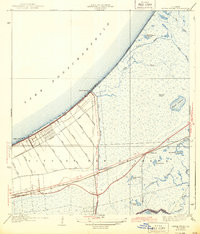 1943 Little Woods1943 Print · USGSThe eastern reaches of New Orleans in the early 1940s reveal a landscape in transition as drainage canals began to reshape the historic marshlands. Genealogists and historians can trace early lakeside settlements like Little Woods and Micheaud, as well as the paths of the Southern Railway and the winding Bayou Sauvage.
 - 1945 Map of New Orleans
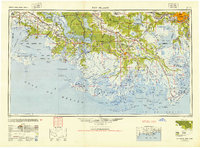 1945 New Orleans1945 Print · USGSCoastal Louisiana and the Mississippi delta are captured here just after the war, showing the region's transition into a modern industrial and transit hub. Genealogists can trace family settlements along Bayou Teche or identify rail stops for the Illinois Central and Texas & Pacific lines.
 - 1946 Map of Rigolets
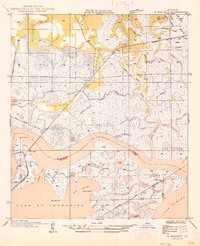 1946 Rigolets1946 Print · USGSCoastal St. Tammany Parish at the end of the Second World War was a labyrinth of tidal passes and marsh ridges. Genealogists and historians can trace the strategic layout of Ft Pike, the small settlement at Rigolets, and the remote W Rigolets L H light station.
 - 1947 Map of Martello Castle
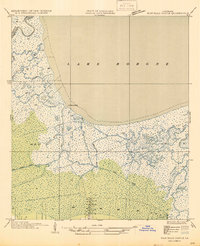 1947 Martello Castle1947 Print · USGSThe St. Bernard Parish wetlands appear in high detail during the 1940s, just as the coast began to see major industrial changes. Researchers can trace the original paths of Bayou Dupre and Shell Beach Bayou or locate the historic Martello Castle.
 - 1949 Map of Alligator Point
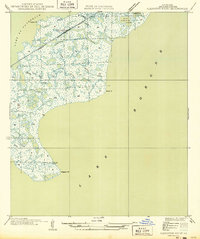 1949 Alligator Point1949 Print · USGSThe marshlands of Orleans Parish are seen here in the late 1940s, dominated by coastal bayous and the lone corridor of the Louisville and Nashville rail line. Researchers can trace the winding paths of Bayou Truloix and Bayou Sapath as they meet the shores of Lake Borgne.
Showing maps 1-25 of 158
Top cities near New Orleans
Top neighborhoods of New Orleans
- Kingswood historical maps
- Lake Carmel historical maps
- Ferncrest historical maps
- Versailles historical maps
- Village de L’Est historical maps
- Little Woods historical maps
See more
Frequently asked questions
- What are the different types of historical maps available for New Orleans?
- What is the oldest map of New Orleans?
- Where can I purchase historical maps of New Orleans for my home or office?
- Where can I download high-res historical maps of New Orleans?
- Are there historical topographic maps available for New Orleans?
- Is there historical aerial imagery available for New Orleans?
- Where are historical maps of New Orleans sourced from?